The Winds of Change

Wheat and WindsScripture Text:  John 12: 20-36 (Holy Tuesday)

Now among those who went up to worship at the festival were some Greeks. They came to Philip, who was from Bethsaida in Galilee, and said to him, “Sir, we wish to see Jesus.” Philip went and told Andrew; then Andrew and Philip went and told Jesus. Jesus answered them, “The hour has come for the Son of Man to be glorified. Very truly, I tell you, unless a grain of wheat falls into the earth and dies, it remains just a single grain; but if it dies, it bears much fruit. Those who love their life lose it, and those who hate their life in this world will keep it for eternal life. Whoever serves me must follow me, and where I am, there will my servant be also. Whoever serves me, the Father will honor.  “Now my soul is troubled. And what should I say—‘Father, save me from this hour’? No, it is for this reason that I have come to this hour. Father, glorify your name.” Then a voice came from heaven, “I have glorified it, and I will glorify it again.” The crowd standing there heard it and said that it was thunder. Others said, “An angel has spoken to him.” Jesus answered, “This voice has come for your sake, not for mine. Now is the judgment of this world; now the ruler of this world will be driven out. And I, when I am lifted up from the earth, will draw all people to myself.” He said this to indicate the kind of death he was to die. The crowd answered him, “We have heard from the law that the Messiah remains forever. How can you say that the Son of Man must be lifted up? Who is this Son of Man?” Jesus said to them, “The light is with you for a little longer. Walk while you have the light, so that the darkness may not overtake you. If you walk in the darkness, you do not know where you are going. While you have the light, believe in the light, so that you may become children of light.” After Jesus had said this, he departed and hid from them.

And now the conversation turns to this talk of death and loss.  We’d like to run now, to hastily make our exit back through that heavy gate behind us.  We’re not sure that our journey really prepared us at all.  But it is too late.  The hour has come. 

The reading starts by telling us of the arrival of some Greeks. Now this may seem to us to be sort of periphery to the point of the story but it’s not. For you see, this arrival of the Greeks is something new. It marks the beginning of an entirely new section of the Gospel. These are not merely Greek-speaking Jews, but Gentiles who have made the pilgrimage to Jerusalem for the Passover feast. These are non-Jews, Gentiles from across the sea who wanted to meet the Hebrew holy man. This is the beginning of the world seeing Jesus and knowing who he is.  They approach Philip and request to “see” Jesus, to have a meeting with him. Perhaps they want to know more of who this Jesus is. Perhaps they just want to talk to him. Or perhaps they want to become disciples. But regardless of why they are here, their arrival points to the fulfillment of the church’s future mission—to make disciples of Jesus Christ for the redemption of the world. This is the decisive dividing line between Jesus coming as a Jewish Messiah and Christ, through his death and resurrection, fulfilling God’s promise for the renewal and redemption of all of Creation. Now is the time for the Son of Man to be glorified.  Jesus did not just come to save you and me.  Remember, Jesus is the Savior of the World.  Jesus has begun to draw the world into the Cross.

Change is all around us.  Our world is beginning to shake a bit.  Sure, we could run, go back to our old ways, to the comfort and safety of home.  We could yell and scream and demand that someone put it back the way it was.  The problem is that nothing stays the same.  Even if we could return, it would not feel like home.  For you see, this journey has changed us.  We have lived this season of clearing and surrender.  We are different.  We don’t look different but we do see differently.

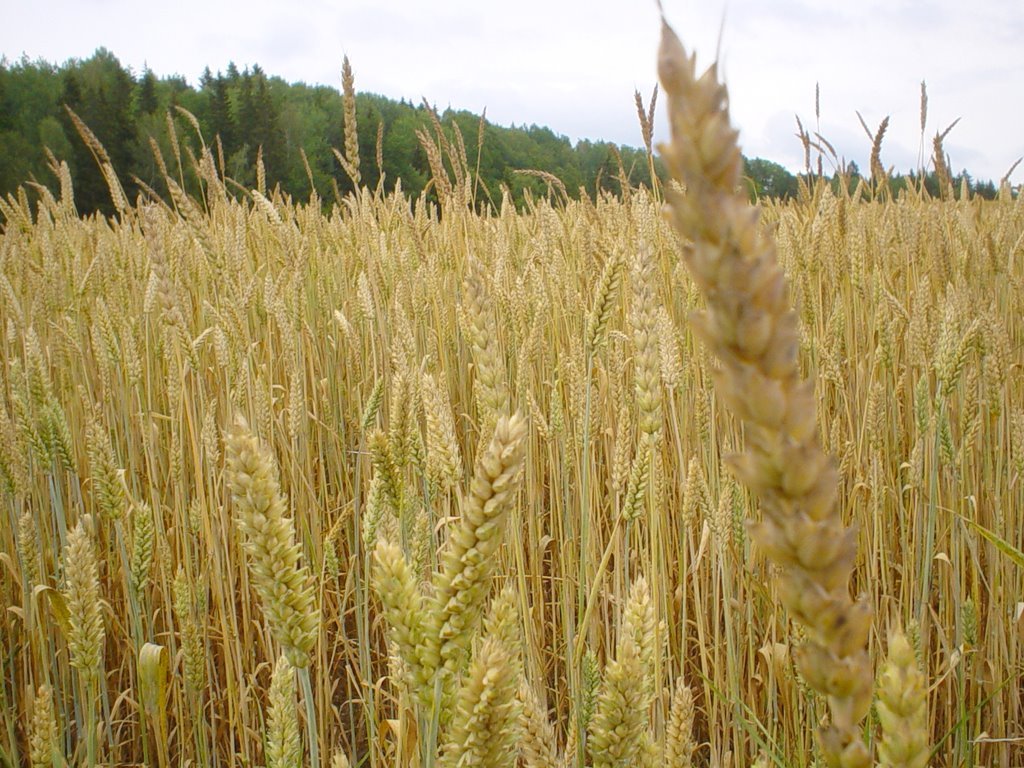
But what is this thing with wheat?  (OK, to the end, Jesus seemed to continue speaking in confusing parables!)  Well, wheat is a caryopsis, meaning that the outer “seed” and the inner fruit are connected. The seed essentially has to die so that the fruit can emerge. If you were to dig around in the ground and uproot a stalk of wheat, you would not find the original seed. It is dead and gone. In essence, the grain must allow itself to be changed.  So what Jesus is trying to tell us here is that if we do everything in our power to protect our lives the way they are—if we successfully thwart change, avoid conflict, prevent pain—then at the end we will find that we have no life at all.  He goes on…”Those who love their life lose it, and those who hate their life in this world will keep it for eternal life. Whoever serves me must follow me, and where I am, there will my servant be also. And whoever does this, God will honor.” This is the only time that the Gospel speaks of God honoring someone. And we begin to see the connection unfolding. Whoever follows Jesus through his death, will become part of his everlasting life.

You, we can’t go back to what we know because it is not longer ours.  The Light has become part of us.  Jesus wanted us to understand not just that he was leaving, not just that his death was imminent, but that this journey to the cross was not just his to make, but ours. This lifting up and this drawing in is all ours.  We ARE the Children of the Light.  Now is the time to walk with Jesus to the cross.

Discipleship is not limited to what you can understand – it must transcend all comprehension. Plunge into the deep waters beyond your own understanding, and I will help you to comprehend. Bewilderment is the true comprehension. Not to know where you are going is the true knowledge. In this way Abraham went forth from his father, not knowing where he was going. That is the way of the cross. You cannot find it in yourself, so you must let me lead you as though you were a blind man. Not the work which you choose, not the suffering you devise, but the road which is contrary to all that you choose or contrive or desire – that is the road you must take. It is to this path that I call you, and in this sense that you must be my disciple. (Martin Luther)

This Lenten journey was not preparing us for this by building us an armor to protect us.  It was preparing us by stripping away all that we know, all that we have planned.  It was preparing us to truly see Jesus and to realize that the journey to the Cross is not something that we watch, not something that we just walk along offering Jesus moral support; rather, the journey to the Cross is ours.  What does it mean to you to die to self?  Of what do you need to let go?  What must you put down so that you can pick up the Cross?  The air has changed.  Jesus is walking to the Cross.  Where are you?

Grace and Peace,

Shelli

You, Resurrected


The Raising of Lazarus, Duccio de Buoninsegna, 1308-11

Scripture Text:  John 11: (1-16) 17-44 (45) (Lent 5A)

When Jesus arrived, he found that Lazarus had already been in the tomb four days. Now Bethany was near Jerusalem, some two miles away, and many of the Jews had come to Martha and Mary to console them about their brother. When Martha heard that Jesus was coming, she went and met him, while Mary stayed at home. Martha said to Jesus, “Lord, if you had been here, my brother would not have died. But even now I know that God will give you whatever you ask of him.” Jesus said to her, “Your brother will rise again.” Martha said to him, “I know that he will rise again in the resurrection on the last day.” Jesus said to her, “I am the resurrection and the life. Those who believe in me, even though they die, will live, and everyone who lives and believes in me will never die. Do you believe this?” She said to him, “Yes, Lord, I believe that you are the Messiah, the Son of God, the one coming into the world.” When she had said this, she went back and called her sister Mary, and told her privately, “The Teacher is here and is calling for you.” And when she heard it, she got up quickly and went to him. Now Jesus had not yet come to the village, but was still at the place where Martha had met him. The Jews who were with her in the house, consoling her, saw Mary get up quickly and go out. They followed her because they thought that she was going to the tomb to weep there. When Mary came where Jesus was and saw him, she knelt at his feet and said to him, “Lord, if you had been here, my brother would not have died.”

When Jesus saw her weeping, and the Jews who came with her also weeping, he was greatly disturbed in spirit and deeply moved. He said, “Where have you laid him?” They said to him, “Lord, come and see.” Jesus began to weep. So the Jews said, “See how he loved him!” But some of them said, “Could not he who opened the eyes of the blind man have kept this man from dying?” Then Jesus, again greatly disturbed, came to the tomb. It was a cave, and a stone was lying against it. Jesus said, “Take away the stone.” Martha, the sister of the dead man, said to him, “Lord, already there is a stench because he has been dead four days.” Jesus said to her, “Did I not tell you that if you believed, you would see the glory of God?” So they took away the stone. And Jesus looked upward and said, “Father, I thank you for having heard me. I knew that you always hear me, but I have said this for the sake of the crowd standing here, so that they may believe that you sent me.” When he had said this, he cried with a loud voice, “Lazarus, come out!” The dead man came out, his hands and feet bound with strips of cloth, and his face wrapped in a cloth. Jesus said to them, “Unbind him, and let him go.”

This has always been at the very least a strange story to me.  I think I once had some image of Lazarus walking out of the tomb, with tattered grave clothes dangling and an unbearable stench following him, and then dressing and sitting down for a nice fish dinner with Jesus and his sisters.  But the Scripture is not here to show us magic or to in some way depict a God that with the veritable snap of a finger can just put everything back like it was before. (Well, I don’t know, I supposed God CAN, but why?  That’s not really the way God works.  God has something much better in store.)  This story is taken as a precursor to Jesus’ own Resurrection.  It was Jesus’ way of promising life.  But, ironically, it is also the act that turns the tables toward Jesus’ demise.  Here, standing within two miles or so from Jerusalem, the journey as we know it begins to wind to an end.  Even now, the Sanhedrins are gathering their swords and the night is beginning to fall.

So, why would Jesus do that?  Surely he knew what might happen.  Surely he knew how many red flags his presence near Jerusalem had already raised.  And what about Lazarus?  Who was this mysterious man whose main part in the whole Biblical story is to die and be raised?  Why do this with someone as seemingly insignificant as this?  Maybe its because Lazarus is us–you and me.  Maybe the whole point of the passage is not to point to Jesus’ Resurrection but to our own.  Do you think of yourself as journeying toward resurrection?  Do you believe this?  Sure, we talk about journeying to God, about journeying to the Promised Land, whatever that might be, and about journeying to where God call us.  But do you think of it as resurrection?  Do you think of yourself dying and then raised?  Maybe each of us is Lazarus.  Maybe that’s what Jesus wanted us so badly to believe and live.

We talk a lot of this Lenten journey as our journey to the Cross, our journey with Christ.  So, does it stop there?  I think the story goes on.  Jesus is Resurrected.  Maybe that’s what Jesus was trying to show us–not that we would be somehow plucked from death in the nick of time and not that God really has need of putting our lives back together like some sort of Humpty-Dumpty character, but that we, too, are journeying toward resurrection, toward new life.  Lent is the journey that shows us that.  Lent shows us that the journey is sometimes hard, sometimes painful. Lent shows us not that death will not claim us but that death will not have the final word.  Lent shows us that our faith tells us that there is more.  Lent shows us what it means for Christ to unbind even us–even you and me–and let us go.  Through all of life’s transitions, through all of life’s sad endings, through all of life’s unbearable turns, there is always a beginning.  There is always resurrection–over and over and over again.

There was, indeed, something I had missed about Christianity, and now all of a sudden I could see what it was.  It was the Resurrection!  How could I have been a church historian and a person of prayer who loved God and still not known that the most fundamental Christian reality is not the suffering of the cross but the life it brings?…The foundation of the universe for which God made us, to which God draws us, and in which God keeps us is not death, but joy.  (Roberta Bondi)

As our Lenten Journey begins to turn toward Jerusalem, what does it mean to be a part of it?  And what does it mean to envision you, resurrected?

Grace and Peace,

Shelli


A Feast of Fools

April FoolLectionary Text:  1 Corinthians 1: 18-20 (21-24) 25
For the message about the cross is foolishness to those who are perishing, but to us who are being saved it is the power of God. For it is written, “I will destroy the wisdom of the wise, and the discernment of the discerning I will thwart.” Where is the one who is wise? Where is the scribe? Where is the debater of this age? Has not God made foolish the wisdom of the world?..For God’s foolishness is wiser than human wisdom, and God’s weakness is stronger than human strength.

What an odd day this is!  We have set aside and declared an entire day dedicated to nothing but pranks and fools.  If someone were looking at this world from afar, they would surely think us more than odd. Precursors of our April Fools’ Day include the Roman festival of Hilaria, held on March 25th (which, interestingly enough, is also the Feast of the Anunciation) and the Medieval Feast of Fools set of December 28th, when pranks are played in Spanish-speaking countries. In Iran, jokes are played on the 13th day of the Persian new year (Nowruz), which falls on April 1 or 2.  This day, celebrated as far back as 536 B.C.E. is called Sizdah Bedar and is the oldest prank tradition in the world still alive today.  In Poland, Prima Aprilis (“April 1st”, in Lat.) is a day full of jokes.  Hoaxes are prepared by people, media, and even public institutions.  Serious activities are usually avoided.  This conviction is so strong that the anti-Turkish alliance with Leopold I, signed on April 1, 1683, was backdated to March 31st.  Did I say that we were an odd bunch? 

So what is this “foolishness” of which Paul writes?  He was really the only one that really ever dated to speak of the foolishness of the Cross, of the foolishness of God.  And he’s right, because in terms of the world, the Cross is utter foolishness.  The world says “mind your own business”; Jesus says “there is no such thing as your own business”.  The world says “buy low, sell high”; Jesus says “give it all away”.  The world says “take care of your health”; Jesus says “surrender your life to me”.  The world says “Drive carefully—the life you save may be your own”; Jesus says “whoever would save his life will lose it, and whoever loses his life for my sake will find it.”  The world says “get what you are due”; Jesus says, “love your neighbor as yourself”.  Essentially, if someone were looking at us from afar, they would just think us a bit odd.  After all, who gives up what they’ve gained, changes one’s life completely, and follows someone to an instrument of death?  That, indeed, is just foolishness in terms of the world.

In his book, The Faces of Jesus, Frederick Buechner says that “if the world is sane, then Jesus is mad as a hatter and the Last Supper is the Mad Tea Party…In terms of the world’s sanity, Jesus is crazy as a coot, and anybody who thinks he can follow him without being a little crazy too is laboring less under a cross than under delusion.” (Buechner, The Faces of Jesus, p. 61)  Think about it.  It is really pretty ludicrous.  (At first glance, it probably resembles an April Fool’s prank.)  It’s actually downright absurd.  Here in this season, we are called to enter Christ’s suffering, called to follow Christ to the Cross.  Are we nuts?  That could get someone killed!

And yet, there…there up on the altar every single Sunday is that beautiful gleaming cross.  Yeah, we all have them.  We polish them, we wear them, and we hang them on our walls.  I’ve seen them on bumper stickers, billboards, tattoos, and cupcakes. (You know, I guess you can put anything on top of a cupcake!)  But maybe sometimes we clean it (the cross, not the cupcake) up too much.  Maybe we have forgotten the stench of death emanating from it or the sight of a mangled body hanging from it.  Maybe we have forgotten the foolishness of it all.  Maybe it is just too much for us.  After all, we’re good Methodists, people of the “empty cross”.  But it’s NOT empty; it’s full of life–life born from death, life recreated from despair and hopelessness and the end of all we knew.  But this promise of life did not just pop out of a cupcake.  It did not just appear in the midst of an array of carefully-placed lilies one Easter morning surrounded by spirited renditions of Handel’s best music.  God took something so horrific, so dirty, so unacceptable and recreated it into Hope Everlasting.  Daniel Migliore calls it God’s greatest act of Creation yet.  But in terms of what we know, what we expect, even what we deserve, it is an act of utter foolishness.  Who writes this stuff?  In terms of this world, it is fool’s gold; but in terms of God’s Kingdom coming into being, it is a veritable Feast of Fools because it takes us and turns us into the wise.  But perhaps wisdom is not about worshipping a gleaming, pristine cross but rather looking at an instrument of death and seeing the life it holds.  I know…none of it makes sense.  If it all made sense, we wouldn’t need it at all.

And, truth be told, the Scriptures are full of accounts of the wise and powerful ones mocking and getting mocked, never really understanding this lowly carpenter’s son born of a scared young girl from a no-name town.  But notice that it is the ones who are considered fools–the outsiders, the shunned, the ones who do not measure up to society’s standards–that get it.  So, maybe you have to be a fool. After all, don’t you think that those who followed Jesus to the Cross thought to the very end that something else would happen.  Perhaps they thought that at the last moment, someone would jump up and yell “April Fool’s”, implying that it would have been the most tasteless prank ever.  But that’s not how it happened.  Jesus died that day and in that moment, Creation changed as the Sacred and the Holy poured into this foolish world.  And we, we have been gathered in, into a Feast of Fools.  Thanks be to God!

Faith, you see, is largely an intuitive process, not a summing up of “data.” Faith listens to life and hears something new. Faith drifts off during a sermon and lands on new terrain. Faith sings a new song and suddenly knows more. Faith feeds a stranger and responds differently to one’s own meal. Faith makes wild leaps, risks strange thoughts, dashes outside the box, asks foolish questions, hears unexpected voices. Little by little, faith’s “whole being”grows deeper and deeper, broader and broader.  (Tom Ehrich)

On this Lenten journey, think what it means to play the fool.  Think what it means to let go of the wisdom of this world and take on the Wisdom that is God.  (No joke!)

Grace and Peace,

Shelli

Turning the Page

Cross and LightLECTIONARY GOSPEL PASSAGE: Luke 23: 33-43 (Click to read)

All of the Scriptures for this week lead us to this Sunday, known as “Christ the King” Sunday.  It is the final Sunday of our Lectionary year, the end of the season of Pentecost, when as the community of faith, we move through the season of building the church and its journey toward sanctification in the fullness of God’s Kingdom.  The Sunday after next begins the season of Advent, when we will begin the whole cycle again.

But if you think that this is merely an annual repeating motion of the same thing over and over, think again.  Our liturgical calendar invites us into an ongoing cycle of preparing, birthing, seeing, emptying, rebirth, and becoming, as we journey toward the fullness of the Kingdom of God, lived, as Rainer Maria Rilke said, in “ever widening circles”, reaching farther and farther beyond ourselves, encompassing all of Creation. Over the past few months, we have recounted the rich stories of the Old Testament through the eyes of many  of the Prophets as they sought to illuminate what it was those early people of God were meant to become.  And we once again read many of Jesus’ parables, this time from the Gospel According to Luke, those incredible stories of wisdom found in everyday life.  The reason that we read these stories over and over again from Creation through the cycle of life is because, as we’ve said before, they are our story, they are the recounting of our own becoming who we are, they are our journey toward being the people of God.  Perhaps it gives us more and more of a sense that we are not, as we might think, the center of the universe; rather, we are part of the story.  Henry Van Dyke said that “if the meaning could be put into a sentence, there would be no need of telling the story,” so each liturgical cycle we tell our story. 

This week is not the end.  It is the beginning, a new beginning.  The Gospel passage that the Lectionary assigns us this week probably feels a little odd.  I mean, really, look around.  The Christmas season is bombarding us from all sides (even though my Thanksgiving turkey has yet to be purchased!…yeah, I know…get on that, Shelli!) and we are reading a Good Friday passage.  This is just messed up. But we read of a thief or a criminal (depending on your translation) hanging there with Jesus that asked for mercy from this one who in this moment he truly knew was the Christ.  Jesus’ response did not include asking him what he had done with his life.  He did not demand either a confession or a profession.  There was no “if” attached to his answer—no condition of “if you clean up your life” or “if you promise to stop doing what you do or being who you are” or “if you become someone different so that you will fit in with what we think we are all supposed to look like”.  None of that mattered.  Because in this moment, the man that history has never named anything but “Thief” entered the story that we call the Gospel and was promised eternal life.  THIS was Jesus’ crowning glory.  THIS was the true coronation of Christ as King!

You see, it’s not about what we do or who we are.  It’s about becoming the story, becoming the Gospel, the Good News of Jesus Christ.  It’s not about placing a crown on the head of our King but about becoming part of the Coronation, part of that image of Christ the King.  It’s not about proclaiming Christ as King but about being the presence of Christ in this world.  O Come, O Come, Emmanuel, God with Us.  And now we know that’s exactly where God is.  It’s about entering the story.

Mortals, join the mighty chorus which the morning stars began;

Love divine is reigning o’er us, binding all within its span.

Ever singing, march we onward, victors in the midst of strife;

Joyful music leads us sunward, in the triumph song of life.

(Henry Van Dyke, “Joyful, Joyful, We Adore Thee”, alt. st. 4, 1989)

Look, the light is just over the horizon.  The world is with child.  For this we were created.  All we have to do is turn the page and follow the story.

What does it mean to you to proclaim Christ the King?

What does it mean to you to become part of the story?

Grace and Peace,

Shelli

And now for some program notes…yes, I know it’s been too long since I’ve posted on “Dancing to God”, but I’ve promised that I would come back for Advent (and it’s been publicized in the church paper, so I have to stick with it!), so here’s a way for us to “turn the page” (aaarrrggghh….aaarrrggghhh…aaarrrggghhh).  I’ll post some entries next week that will cover the Lectionary passages for the first Sunday in Advent and then beginning December 1, the first Sunday of Advent, we’ll do something every day.  Thanks for joining me!  Also, if you’re interested, my weekly Lectionary notes are posted on another blog that can be found at http://journeytopenuel.com/.  I usually post those on Sunday evening or Monday morning for the following week.  There is some overlap with this blog because I only have one brain, but I’d love for you to follow that one too!  Shelli

On the Steps of Death

???????????Lectionary Passage for Today:

To read the Passion account assigned for today’s Lectionary Reading, go to John 18:1-19:42

How did we get here?  How did we so quickly move from the teachings on the hillside in Galilee to this?  I guess we kept thinking that he could make it better.  After all, he always made so much sense, always drawing us out of ourselves, out of the life that we thought we were supposed to have.  What could we have done differently?  It was right there, right in our hands.  Life was right there.  Why didn’t we pay more attention?  Why didn’t we dispense with silly arguing over who was greatest?  And what do we do now?  We can’t go back.  Everything has changed.  We have changed.  We are different.

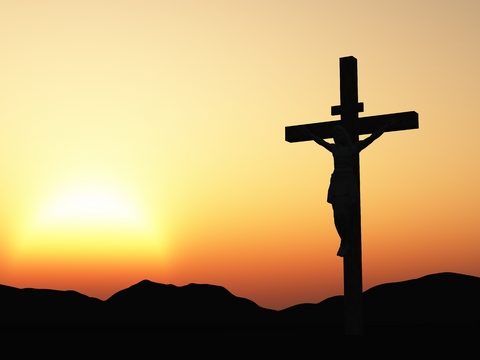
The last three stations are the hardest.  The twelfth station depicts Jesus’ death on the cross.  “It is finished.” As Jesus breathed his last, the temple curtain tore in two, revealing a new world in which holiness was no longer separate and hidden from view.  Trembling and shaking in the darkness, the earth opened to reveal a glimpse of a future yet to be.  And through our grief and tears, God entered the heartbreak and brokenness of the world and in that moment began recreating it.  In this moment, God’s future enters our present.  And in the most unfathomable act of love, the cross becomes God’s highest act of Creation.  Because with it, we and all of Creation are made new.  That which is finished is the beginning of life.  In this moment, our own eternity is conceived.    

Station 13 of this Via Dolorosa has Jesus being taken down from the cross and his body given to his mother.  There is no documentation of this in canonical Scripture.  Perhaps it was skipped.  It is a hard thing, after all because, after all, it is indeed over.  There is a sickening finality to it all.  Why did it have to end like this?  Why did it have to end at all?  We were just beginning to understand.  We were just beginning to get what we were supposed to be doing.  And now it is over.  And then there’s this darkness.  It’s never been this dark at this time of day.  It adds to the pall of our souls.  We have to go back now.  But to what?  After all, deep down we know that he changed us.  How can we live now in the world?  How can we go back?  And yet, in this moment of our deepest despair, we remember that we have found love.  Life will be different because we have found love.

Station 14 is the burial of Jesus in the Garden Tomb.  Joseph of Arimathea, a “secret disciple”, we are told, provided a tomb that no one had ever used.  It was appropriate, this virgin tomb, a fitting ending as someone finally made room.  How can we leave?  We have walked away from graves before and left the remains of a life behind us.  But this…this is different.  And so we strip our altars and we strip our lives and we try to make room for you.  And then we wait.  We wait for you to come.  We wait for you to rise.  We keep vigil and we enter into deep prayer,
knowing the day will come.  And we wait.  We wait for our eternity to be born.  We waited for your coming once before, for your birth.  But this is
different.  Now we wait for our own.

And she gave birth to her firstborn son and wrapped him in bands of cloth, and laid him in a manger, because there was no place for them in the inn.

In what seemed no time at all, Bethlehem has become Golgotha, swaddling clothes have become burial cloths, and the manger?  The manger has become a cross.  God did not send Jesus to die but to love.  And he did that to the end.  And somewhere along the way, we have changed.  We haven’t become who we are called to be yet but the road has turned and we know that Life is up ahead.

Where Are You Christmas? (Faith Hill, How the Grinch Stole Christmas)

The pilgrims sit on the steps of death.  Undanced, the music ends.  Only the children remember that tomorrow’s stars are not yet out.  (Ann Weems, “It is Finished”, from Kneeling in Jerusalem, 77)

Grace and Peace,

Shelli

Splitting Seeds

Public domain image, royalty free stock photo from www.public-domain-image.comToday’s Lectionary Passage: John 12: 20-36

20Now among those who went up to worship at the festival were some Greeks. 21They came to Philip, who was from Bethsaida in Galilee, and said to him, “Sir, we wish to see Jesus.” 22Philip went and told Andrew; then Andrew and Philip went and told Jesus. 23Jesus answered them, “The hour has come for the Son of Man to be glorified. 24Very truly, I tell you, unless a grain of wheat falls into the earth and dies, it remains just a single grain; but if it dies, it bears much fruit. 25Those who love their life lose it, and those who hate their life in this world will keep it for eternal life. 26Whoever serves me must follow me, and where I am, there will my servant be also. Whoever serves me, the Father will honor.  27“Now my soul is troubled. And what should I say—‘Father, save me from this hour’? No, it is for this reason that I have come to this hour. 28Father, glorify your name.” Then a voice came from heaven, “I have glorified it, and I will glorify it again.” 29The crowd standing there heard it and said that it was thunder. Others said, “An angel has spoken to him.” 30Jesus answered, “This voice has come for your sake, not for mine. 31Now is the judgment of this world; now the ruler of this world will be driven out. 32And I, when I am lifted up from the earth, will draw all people to myself.” 33He said this to indicate the kind of death he was to die. 34The crowd answered him, “We have heard from the law that the Messiah remains forever. How can you say that the Son of Man must be lifted up? Who is this Son of Man?” 35Jesus said to them, “The light is with you for a little longer. Walk while you have the light, so that the darkness may not overtake you. If you walk in the darkness, you do not know where you are going. 36While you have the light, believe in the light, so that you may become children of light.” After Jesus had said this, he departed and hid from them.

The twelfth chapter of John contains most of what Jesus had to say about his own death in that Gospel. And this is where we sort of start shutting down, isn’t it?  We liked sitting there listening to accounts of his birth, the stories of his calling the disciples, and those wonderful little parables that fill the Gospel-readings with drama and wisdom and sometimes leaving us with a knot in our stomach as we begin to see ourselves through Jesus’ eyes.  We even liked the beautiful story yesterday of the extravagant anointing of our Savior.  But this…this is coming a little too close to the edge.

Do you remember running through the sprinkler when you were kids?  You want to do it.  You want to feel that cool, refreshing feeling right after you do it.  But it’s that first blast of cold, paralyzing water that takes your breath away that you dread and so you put it off.  And then, finally, you hold your breath and run through it as fast as you can.  That’s almost what we have a tendency to do with the cross.  We dread it as we slowly walk toward it, dragging our feet a bit, not really wanting to experience it again—the memories and reliving of the horror, the violence, the suffering, the pain, the loss, the grief, the ending of all we know.  And as we approach, we then let our minds run quickly through it toward Easter morning when everything will be OK again.

But now is the time for the Son of Man to be glorified.  For, as Jesus says, unless a grain of wheat falls to the earth and dies, it remains just single lone grain, worth nothing; but if it dies, it bears fruit and lives on.  You see, wheat is as a caryopsis, meaning that the outer “seed” and the inner fruit are connected.  The seed essentially has to die so that the fruit can emerge.  If you were to dig around in the ground and uproot a stalk of wheat, you would not find the original seed.  It is dead and gone.  In essence, the grain must allow itself to be changed. So what Jesus is trying to tell us here is that if we do everything in our power to protect our lives the way they are—if we successfully thwart change, avoid conflict, prevent pain; in other words, if we expect everything to go back to the way it was before—then at the end we will find that we have no life at all.

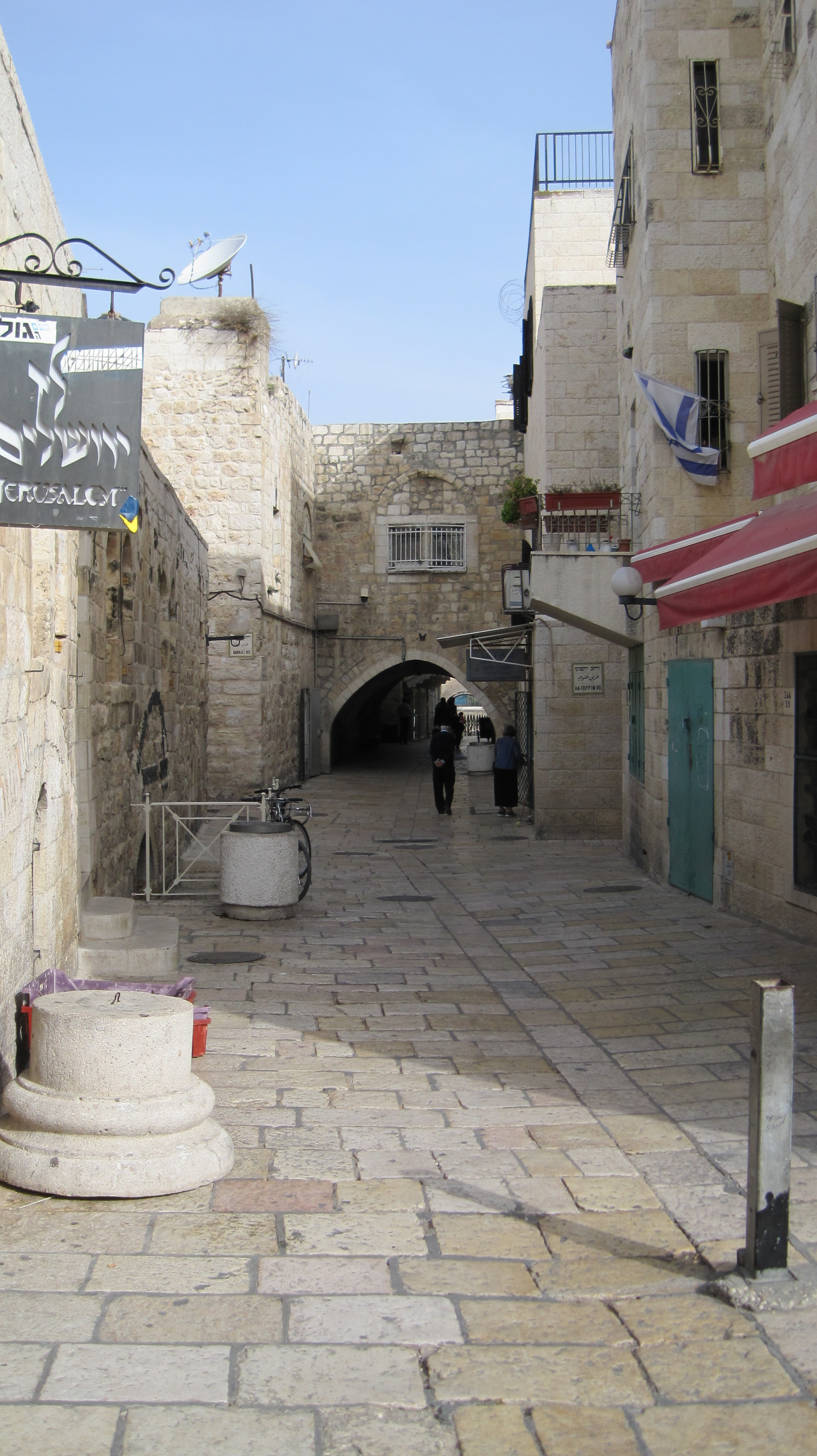
Jerusalem 17This week of remembering is not an historical accounting of the events so long ago;  this is not only Jesus’ journey to the cross; it is ours.  You see, the tide has turned.  Jerusalem is there before us, the cross probably almost fully constructed at this point.  The problem is that we’re supposed to believe without faltering in the cross. We look at that big gleaming cross in the front of the sanctuary.  We see them on the doors to the church and on the sign outside.  Good grief, we even hang them around our necks. But, contrary to what most of Christianity holds out there as “belief”, I don’t think we were meant to worship the cross.  We were meant to worship God, to hunger and thirst in the deepest parts of our being to encounter God.  Well, we can’t see God.  If we could there’d be no need for faith.  But we can see Jesus, the One who points the Way to God.  But this Jesus is more than a leader.  He is more than a teacher.  Jesus is the One on the Cross.  And at that moment, God will do something incredible.  God will take the worst of this world, the worst of humanity, the worst of proof or sensibility, at a cost that no one can fathom…and recreate it.  In that moment on the Cross, God takes the worst of us and the best of God and reconciles them, redeeming us into oneness with God, pouring the Divine into humanity for all time.  But you have to be willing to let go, willing to change; you have to allow that seed that you are right now holding so tightly die away.

So as we walk through this holiest of weeks, remember that this is not Jesus’ journey that you walk; it is yours.  Let go that you might finally see what God has in store.

Grace and Peace,

Shelli

Station XI: Regrets

crucifixion-22Scripture Passage: Mark 15: 22-32

22Then they brought Jesus to the place called Golgotha (which means the place of a skull).23And they offered him wine mixed with myrrh; but he did not take it.24And they crucified him, and divided his clothes among them, casting lots to decide what each should take.  25It was nine o’clock in the morning when they crucified him.26The inscription of the charge against him read, “The King of the Jews.”27And with him they crucified two bandits, one on his right and one on his left.29Those who passed by derided him, shaking their heads and saying, “Aha! You who would destroy the temple and build it in three days,30save yourself, and come down from the cross!”31In the same way the chief priests, along with the scribes, were also mocking him among themselves and saying, “He saved others; he cannot save himself.32Let the Messiah, the King of Israel, come down from the cross now, so that we may see and believe.” Those who were crucified with him also taunted him.

The eleventh station of the Via Dolorosa is marked by a beautiful Latin shrine.  This is the place where tradition tells us that soldiers nailed Jesus’ hands and feet to the cross.  It is only 9:00 in the morning.  For us, the thought of arriving at this eleventh station seems much longer, days really.  But it is still only mid-morning.  The sounds are deafening.  The clanging rings out over the land and settles into our hearts–a nail of greed, a nail of selfishness, nails of betrayal and hatred and war, nails of hunger and poverty, nails of not accepting and loving each other, nails of being so sure of one’s beliefs, so sure of one’s understanding of who God is and what God desires, that we miss seeing what God is trying to show us.  It is finished.  In the Name of Jesus Christ, you are forgiven.

It is here that our regrets sink in. It is here that we want to go back, we want a redo.  We would do it differently next time. We would not ask so many questions as to why he was doing what he was doing and to whom.  We would just watch and listen and learn from him how to love.  We would not fight and grapple with each other over who was in charge, over who was the most important, over who was his favorite.  Instead, we would bask in his spirit and his radiance and his love of equality for all.  And when asked if we knew who he was, we would not betray him.  Rather, we would step forward no matter the cost.  Because grace is not cheap.  But now we know how incredibly rich it really is.  Yes, we would stand up and be counted as one who follows him, who brings healing and love to the world, who doesn’t need credit or acclaim, and who is willing to lose one’s life to find it.  But there are no redos just now.

Regrets can be debilitating.  They can pull us into the past and keep us there.  It is not healthy.  Regrets can also be life-giving if we allow them to compel us to change, to perhaps turn a corner that we did not see before, to become something new, a New Creation, to become the one that God calls us to be.  And, yet, we still want the easy way out.  After all, we are empty cross people, Resurrection people!  And so maybe we walk away from this moment entirely too quickly.  After all, it makes us uncomfortable and God offers us life.  So too quickly we let it go, too quickly we move past our regrets without letting them change us.

The most difficult thing for us to face is that so little has changed.  We still try to be the one on top.  We still shut the door to those who are not like us.  We still close our doors so we don’t have to think about poverty or homelessness.  We still justify war.  We still will do anything it takes to defend the life that we have created.  We still betray.  We forget to love; we forget to bring healing; we forget to lose our life.  So, would we crucify Jesus today?  Would things go differently?  Only we can tell…

So on this Lenten journey, stop for a moment.  Look at the cross.  And let your regrets of what should have been done differently change your pathway.

Grace and Peace,

Shelli