And They Took Joseph to Egypt

Lectionary Text:  Genesis 37: (1-4, 12-22) 23-28:
So when Joseph came to his brothers, they stripped him of his robe, the long robe with sleeves that he wore;and they took him and threw him into a pit. The pit was empty; there was no water in it.Then they sat down to eat; and looking up they saw a caravan of Ishmaelites coming from Gilead, with their camels carrying gum, balm, and resin, on their way to carry it down to Egypt.Then Judah said to his brothers, “What profit is it if we kill our brother and conceal his blood?Come, let us sell him to the Ishmaelites, and not lay our hands on him, for he is our brother, our own flesh.” And his brothers agreed.When some Midianite traders passed by, they drew Joseph up, lifting him out of the pit, and sold him to the Ishmaelites for twenty pieces of silver. And they took Joseph to Egypt.

And they took Joseph to Egypt…so matter-of-fact, so simple, so explanatory.  But far from being merely historical data, this six word sentence represents a turning point in the story.  With these words the Genesis story turns the corner, moving from a story of a somewhat dysfunctional family as their lives are intricately woven with the breath of God to the story of a people growing into God’s people.  We begin to prepare for the Exodus story.  Nothing will ever be the same again.  We know what is to come–slavery, plagues, wilderness, and, finally, deliverance, redemption.  This is the stuff of transformation.

When this Scripture (sorry, I cut off the first part!) was read this morning, I was struck by these words.  I know that I’ve passed them over time and time again. After all, this is an important story and there’s a lot to grasp–favorite sons, dreams, beautiful coats, family squabbles, murder, intrigue, conspiracy, enemies, slavery, lies.  (And just for the record, I would like it to be noted that no matter what I did to my brother Donnie growing up, I NEVER sold him into slavery!)  And then you take a breath and, oh yeah, “and they took Joseph to Egypt.”  What struck me is how similar those words are to some others:

Text:  Matthew 17: 1-9
Six days later, Jesus took with him Peter and James and his brother John and led them up a high mountain, by themselves.And he was transfigured before them, and his face shone like the sun, and his clothes became dazzling white.Suddenly there appeared to them Moses and Elijah, talking with him.Then Peter said to Jesus, “Lord, it is good for us to be here; if you wish, I will make three dwellings here, one for you, one for Moses, and one for Elijah.”While he was still speaking, suddenly a bright cloud overshadowed them, and from the cloud a voice said, “This is my Son, the Beloved; with him I am well pleased; listen to him!”When the disciples heard this, they fell to the ground and were overcome by fear.But Jesus came and touched them, saying, “Get up and do not be afraid.”And when they looked up, they saw no one except Jesus himself alone.As they were coming down the mountain, Jesus ordered them, “Tell no one about the vision until after the Son of Man has been raised from the dead.”

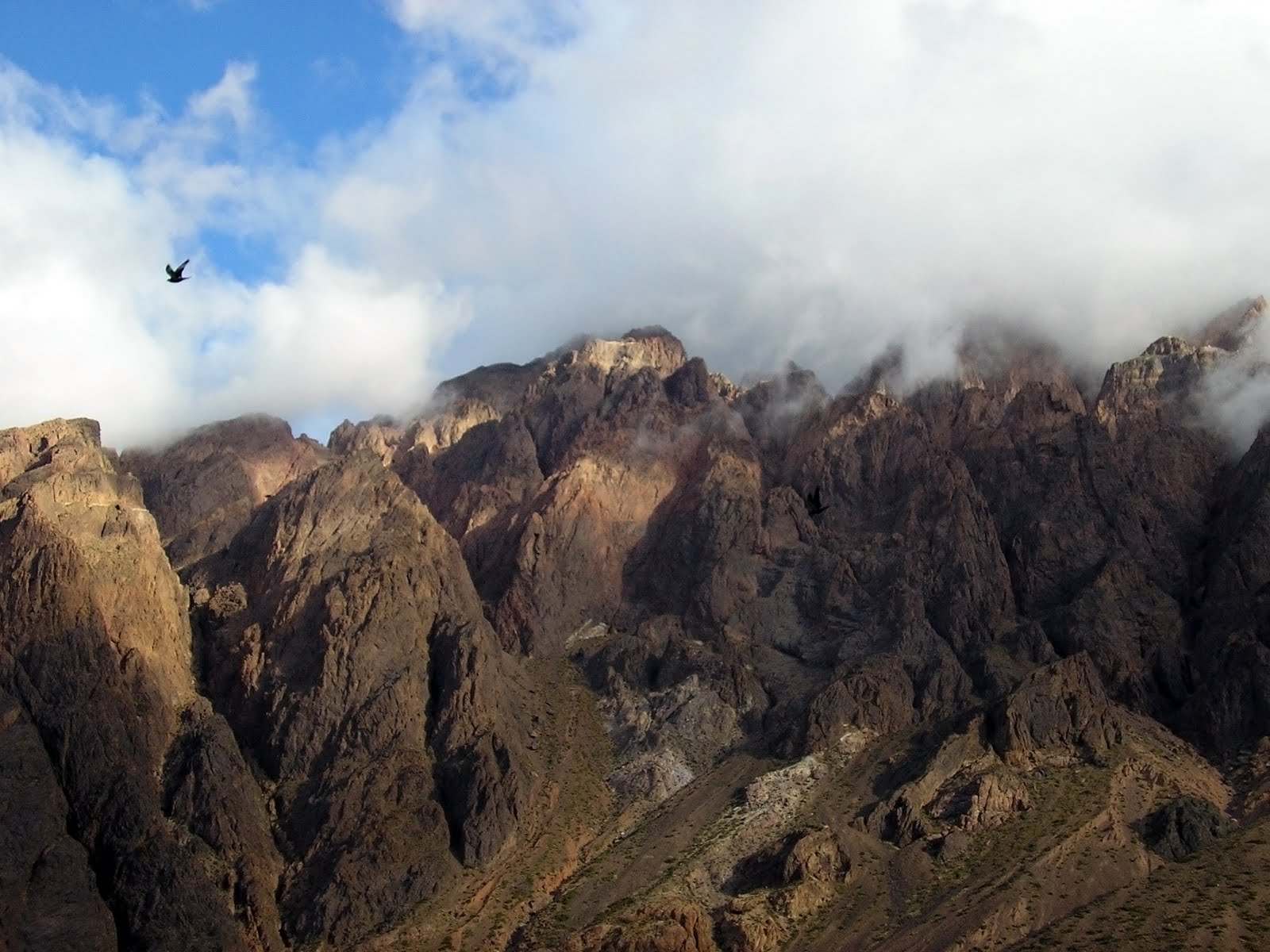
Today is the Feast of the Transfiguration.  When I realized that earlier this week, I thought it was just odd.  I mean, really, don’t we celebrate that right before Lent begins?  But the abrupt ending to today’s Old Testament Scripture made me think a little bit more about it.  In this Matthean account of the Transfiguration, the writer has Jesus and the disciples headed down the mountain.  They were talking.  Jesus warned them to be quiet about what they had just seen.  And in the same breath, he gave them a foretaste of what would come.  So, we have Jesus walking down the mountain.  Where is he going?  He’s going to Jerusalem.  And we know what happens there.  This is the turning point.  There is no going back.  A new way of being has begun.

And they took Joseph to Egypt…And they took Jesus to Jerusalem.

We all have Egypts.  We all have Jerusalems.  They are those watershed moments in our lives that are bumpy and rough and uncomfortable.  They are that way because it means that we have changed.  We have been through a transition; we have been transformed; we have been transfigured into something else.

We don’t know what Monday morning will hold for our economy.  There are those who will say that our “best years” are behind us, those who yearn for the 40’s and the 50’s when the United States was “on top of the mountain.”  Really?  I’m pretty clear that our African-American brothers and sisters will disagree with you.  Are our “best years” the ones in which only some of us are on top?  That’s sad.  I don’t think so.  Perhaps we’re being sold to Egypt.  I don’t know.  Maybe we’ve got a long wilderness ahead.  Maybe we are walking down that mountain headed for who knows what.  Maybe we will find ourselves in Egypt.  Maybe we will find ourselves in Jerusalem.  Maybe we will find ourselves enslaved by something we never saw coming or crucified by those who want to maintain things the way they are.  Maybe there is a rough road ahead.  Maybe not.  Maybe our stocks will pop back up tomorrow and everything will be hunky dory.  Maybe not.  Whatever happens, we are in the midst of change. The road to change is not always an easy one.  But somewhere on that road, we will find transformation.  We will find deliverance.  We will find redemption.  But right now we’ve got to come down from the mountain…After all, I think it’s WAY too cloudy to see what’s going on up here.  (Hmmm!  Maybe that’s our whole problem.)

And they took Joseph to Egypt…and you know what?  No one was ever the same again.  We’ve been to the mountaintop…now is the time to move on.

Grace and Peace,

Shelli

WALK TO JERUSALEM: Orthodoxy

Scripture Text:  Matthew 5: 1-18
When Jesus saw the crowds, he went up the mountain; and after he sat down, his disciples came to him. Then he began to speak, and taught them, saying:  “Blessed are the poor in spirit, for theirs is the kingdom of heaven. “Blessed are those who mourn, for they will be comforted. “Blessed are the meek, for they will inherit the earth. “Blessed are those who hunger and thirst for righteousness, for they will be filled. “Blessed are the merciful, for they will receive mercy. “Blessed are the pure in heart, for they will see God. “Blessed are the peacemakers, for they will be called children of God. “Blessed are those who are persecuted for righteousness’ sake, for theirs is the kingdom of heaven. “Blessed are you when people revile you and persecute you and utter all kinds of evil against you falsely on my account. Rejoice and be glad, for your reward is great in heaven, for in the same way they persecuted the prophets who were before you.  You are the salt of the earth; but if salt has lost its taste, how can its saltiness be restored? It is no longer good for anything, but is thrown out and trampled under foot. “You are the light of the world. A city built on a hill cannot be hid. No one after lighting a lamp puts it under the bushel basket, but on the lampstand, and it gives light to all in the house. In the same way, let your light shine before others, so that they may see your good works and give glory to your Father in heaven. “Do not think that I have come to abolish the law or the prophets; I have come not to abolish but to fulfill. For truly I tell you, until heaven and earth pass away, not one letter, not one stroke of a letter, will pass from the law until all is accomplished.

I’m no real Bible scholar but I think this passage is indeed the pinnacle of Jesus’ ministry.  This is the lynchpin, the place where it all comes together, and, sadly for this world and this culture, the place where Jesus’ message begins to turn away from an affirmation of what we do as “religious folk” to a calling to go forth and do something different.  This passage turns orthodoxy around.  Orthodox…what an interesting and misdefined word.  It has come to define the “accepted” beliefs of the church, the traditional views.  In essence, it has come to mean the opinion of the majority.  But history has shown us that that has often proved to be problematic.

Here’s a date for you:  April 15, 1947…on this day, 64 years ago, Jackie Robinson debuted with the Brooklyn Dodgers and, against all odds, broke baseball’s race barrier and made history.  But, like most history, he had help.  Just before he was signed, the pastor of Plymouth Church of the Pilgrims in Brooklyn had a visitor.  The visitor’s was Branch Rickey, already well-known.  They didn’t have a deep pastoral care talk.  Rickey just paced.  And the minister went about his work.  Then Rickey plopped down in a chair and screamed, “I’ve got it.”  “I’m going to sign Jackie Robinson to the team.”  There were warnings.  A well-known reporter said that there would be riots in the street on this day.  Rickey instead believed that all of heaven would break loose.  (Check out Signing of Jackie Robinson )

The point is that it was time for a change.  It was time for a new way of doing things.  “Orthodoxy” actually means “right belief”.  What  is “right”?  What does that mean?  You see, I think of myself as “orthodox”.  I’m actually extremely traditional, even though I think that word gets a bad rap.  I mean, regardless of all of the church growth movements that profess to have the “ortho-statistics” for churches, I love traditional worship (I mean, REALLY traditional!) worship.  Give me a robe, a processional behind a crucifer, and a couple of Latin chants thrown in for good measure any day against screens and a preacher doing some sort of skit as he blocks my view of the altar.  But, really, that’s not belief.  That’s just where God meets me. The point is, we all think of ourselves as “orthodox”, as right.  But right belief is this…the Beatitudes…the antithesis of this world.  It is a moving forward.  Hmmm!  OK, maybe I AM a “progressive”. 

One thing to note is that the form of these Beatitudes uses two verbs: are and will. Each beatitude begins in the present and moves to future tense. It is the “orthodox” way of thinking.  The move to the future tense indicates that the life of the kingdom must wait for ultimate validation until God finishes the new creation. The Kingdom of God moves forward.  It is so far ahead of where we are, it’s not even fully visible at this point!  In essence, it is the new “right belief”, the new orthodoxy.  It is a way of living based on the sure and firm hope that one walks in the way of God and that righteousness and peace will finally prevail.

Dietrich Bonhoeffer said this: Humanly speaking, we could understand and interpret the Sermon on the Mount in a thousand different ways. Jesus knows only one possibility: simple surrender and obedience, not interpreting it or applying it, but doing and obeying it. That is the only way to hear his word. He does not mean that it is to be discussed as an ideal; he really means us to get on with it.
The Beatitudes lay out a vision of a reversal of the world we know. Jesus calls us to a radical kingdom that is totally different than the world in which we live. And he calls us to “get on with it”.  Now don’t think that Jesus is merely laying out the conditions under which we would be blessed or prosper. It is rather a promise of a radical reversal, an upside-down (or right-side-up) world. It is a promise from a God that wants the best for us, a God that sees that we will indeed be blessed. That is the promise—a blessed relationship with God. So this is a picture of what that Kingdom looks like. It is the way it should be and the way it will be. The Beatitudes are meant to be descriptive rather than instructive.

So, where does that leave us?  We live in a divisive world, a divisive country, and a divisive church.  We all claim to be “orthodox”, “right”.  This is hard.  We walk a fine line between causing more division and proclaiming what we believe to be right.  Now, really, we need to realize that what we believe to be “right” does not make it “right”.  Maybe that’s our whole problem.  I keep hearing of person who profess to be “bridge builders”.  Well, that sounds really politically correct and all.  In fact, it even sounds attractive.  Sure, I’d like to join a bunch of bridge-builders, the peaceful ones, the ones who get along with everyone.  OK…here is the problem.  Where are you headed?  Bridges are not meant for permanent residence.  Are you going forward or backward, left or right, to the future or the past?  You have to CHOOSE!  That is the whole point of this passage that contains what we commonly call “The Beatitudes”.  You see, things are different.  (And if they’re not, this passage professes that they should be!)  What you think is, is not.  And that to which you’ve held so tightly is decaying away as we speak.  Orthodoxy has changed.  In fact, Jesus is the one that changed it!  “Right” belief has changed.  God did not come in Jesus with a message of “Great job, folks,  you have it altogether.  Don’t change a thing!”  No, the message probably reads more like, “You know, I love you more than you could possibly know.  But you are a mess!  Listen…come and see…there’s more to the story than you think you know!”

You know, until 56 years ago, women could not be ordained in the United Methodist Church. (And yet I still get assigned weddings that are upset because I am the wrong gender!)  And, as I said, the race barrier in major league baseball was not broken until 1947.  (But we didn’t have an African-American president until 2008.)  The truth is, things move very slowly.  So much for a reversal of the status quo!  And our churches still continue to exclude those in our midst who do not claim the “orthodox” sexual orientation.  I really don’t understand it.  Surely we know better.  Surely we understand that this depiction of the alternative way of being that Jesus depicted in The Beatitudes is not a pipe dream.  It’s really meant to happen.  It’s the vision of God that God brought into the world in Jesus Christ.  It’s the vision of the world that God holds for us even now.  It’s all the children of God in the whole Kingdom of God.  It’s called Shalom, or the Kingdom of God, or the Reign of God.

But on some level I admire bridge-builders.  They are those that play both crowds–the conservatives and the progressives, the establishment and the rebels, the pharisees and the disciples.  You see, all of us are right about SOMETHING.  But none of us are right about EVERYTHING.  Those bridge-builders can point that out.  The truth is, though, I’m probably too impatient to be one.  I want things to change.  I want the world to look like The Beatitudes.  I want the world to be what God envisions it to be.  But even bridges tend to decay, becoming weather-worn and rotten.  Life moves.  It moves fast.  And if you don’t keep walking, you’re no longer a bridge-builder.  You’re either in danger of falling fast into the underlying currents and being carried away into who knows where or you’re just someone that’s sitting in the way while people are trying to cross.  It’s better to keep moving.  After all, God is way out ahead of us.

OK, one more time…I really am orthodox.  I really do adhere to “right belief”.  I just think it’s a whole lot farther ahead than any of us imagine.  It’s a matter of doing justice, loving kindness, and walking humbly.  Oh wait, someone already said that!  In other words, our faith is measured not in “rightness” but in relationship.  Orthodoxy, “right belief”, is about relationship.  It is about welcoming all of God’s children to the table as the reign of God, the Spirit of the most holy, spills into our midst.  Emmanuel, God With Us.  Isn’t that the crux of the story?

But lynchpins are threatening.  They change the direction.  They change what we think.  They change the world.  They change us and who we appear to be to the rest of the world.  Up until now, everything has pointed to this-the announcement, the birth, the baptism, the calling, this…–as if this was the message, as if this was what the world needed, as if this was the way to the vision that God for us.  Now we wait.  We wait to see how the world responds.  And we turn toward Jerusalem…

So, in this Lenten season,  begin to live a life of reversal, so that as the Divine spilled into earth with the coming of Christ, the earth might become the vision of the Divine in you.         

Grace and Peace,

Shelli

Receiving and Giving

During both of the “high” seasons of the church year, we talk a lot about change and growth.  Both of them point toward a “high point” and tell us that we have to prepare, that we have to get ready.  When you think about it, Advent points us toward a birth and Lent points us toward a re-birth.  During Advent, we are told over and over again that we have to open our lives and open our heart so that we can receive the Christ-child into our heart, so that we will know what it means for Jesus Christ to enter our life.  In essence, we have to be virgin, pure, open to receive and birth Christ in our own life.  Tis the season of receiving!

During this season of Lent, though, things change.  It is not just about receiving Christ or believing that Christ was resurrected or viewing Christ as the Messiah, or the Savior, or God Incarnate.  We have to do more than just believe the story.  We have to do more than just believe in Jesus Christ.  The only way to prepare oneself to walk this way of the Cross is through total and complete surrender of everything one thinks and everything one is.  We have to begin to become one with the Risen Christ.  We have to enter the Way of Christ. We have to give our lives and our hearts and everything we know over to God.  We become one with God.  You see, the point, I think, is that Jesus did not merely die on the cross to wipe my sin away or insure me everlasting life.  I think it was a bigger deal than that.  The cross is the point of recreation.  God took something so horrific, so unimagineable, so inhumane, and turned it into life.  All of Creation, all that we know, all that we thought changed at that moment.  The earth shook and gasped because nothing would ever be the same again.  The intention was not to just clean each of us and set us back on the same path.  We really are supposed to become something new.  And without death (as in “dying to self”), without handing over one’s life, without letting go of all those things to which you hold so tightly that really have meaning only to you, without giving all that you have and all that you are, God cannot make something new.  God cannot create life.  Tis the season of giving!

There are very few people who realize what God would make of them if they abandoned themselves into [God’s] hands and let themselves be formed by grace.  (St. Ignatius of Loyola, 16th century)

So, follow the one who came that you might have life!

Grace and Peace,

Shelli

The Days are Surely Coming

“The days are surely coming…No longer shall they teach one another , or say to each other, ‘Know the Lord,’ for they shall all know me, from the least of them to the greatest, says the Lord; for I will forgive their iniquity, and remember their sin no more.” (Jeremiah 31: 27..34)

The Old Testament scripture from today’s Lectionary’s text paints a vision for which we all look. It is the vision of that time when the covenant “written on the people’s hearts” will finally be fulfilled. As Christians, it is hard for us to not read this Scripture through our own lens. But remember the setting in which this was probably written: It is the time following the exile. The cities have been breached; the temple has been totally destroyed; there is nothing left of the lives that were before. The people who first heard this had become subjects of the Persian king and life as they knew it has been ripped away at its very foundations. But through the prophet Jeremiah, God unveils a vision of reconstruction and renewal. But this time, things will be different…

This time things will be different…How many times have you heard that in your own life? THIS time I won’t eat so much; THIS time I won’t get so upset; THIS time I won’t let myself get into this mess; THIS time I’ll do it right. This time things will be different…But THIS time God is not giving us a set of rules. God is not telling us what to do or when to do it. God instead promises a renewed covenant, a transformation from what was to what will be. And this time things WILL be different…

By writing it in our hearts, God has written Godself into us, renewing that image of the Godself buried deep within our beings. God is making who God is part of our very essence. It is permanent. God has written the capacity for immense love and unending faithfulness into us. And someday…someday…we’ll realize what that means. And this time things WILL be different…

We have spent the last few weeks wandering in our own wildernesses. And today, the road changes. The wilderness seems to be not so evident, as if a sort of organized earthly sprawl is creeping into it. There are more houses than we remember seeing before, more signs of people going about their lives, better pavement on the roads. We must be nearing the city. Jerusalem is just over the horizon. We are not yet there, but we sense that change is in the air. There is a sort of excitement. People are beginning to gather. And somewhere over the hill, there’s a faint cadence of drums and some sort of hammering in the distance. It is hard to understand what it all means. But we, with the Godself written into our being and the promise of a new life deep within our hearts, will walk on…toward Jerusalem. And God walks with us…

So go forth toward the city. There is no way around!

Grace and Peace,

Shelli

Change

We have heards lots of talk about change lately. We have heard lots of calls to change. And we have been presented with reasons why we have no choice other than to change. But, as we all know, change does not come easy. It is fraught with the unknown, a perilous journey through the wilderness. It is filled with choices and decisions. And, probably the most uncomfortable thing of all, it means that there is no return. There is no going back once the wheels of change have begun.

Isn’t that what we’re all about, though? Isn’t that what our faith journey means? God does not call us to stand still, feet planted, ignoring the winds that are blowing around us. If that were the case, don’t you think the world would be a bit more stable? But, really, who of us live a life that has not changed over the past year, perhaps even over the last three months? For that matter, who of us lives the same life that we did yesterday? No, God calls us to walk this walk through change and, for that matter, to be a part of the change itself. If that were not the case, the Gospels would not be full of things like fishermen being asked to give up their careers and their lifestyles, magi taking a different road than what they had planned, and the very heavens being torn apart.

We are called to change. Not only that, we are called to be part of making that change happen. God did not create the world and then put out a call for its preservation. Instead, God is continually turning darkness into light and death into life. And throughout it all, waters are divided, the heavens are torn apart and curtains separating worlds are ripped apart if for no other reason that that we can get a glimpse of the way things are supposed to be. So, we are a people of change–called to change ourselves, our lives, and the whole of Creation in which we live.

It is not easy. It is not comfortable. But, after all, that is not what we were promised! We were not promised that our lives would be preserved; we were promised that they would be transformed. But transformation must happen from the inside out. When we become the change, the change will happen.

Only those who live beyond themselves ever become fully themselves. (Joan Chittister)

So go forth and be the change!

Grace and Peace,
Shelli