Turning the Page

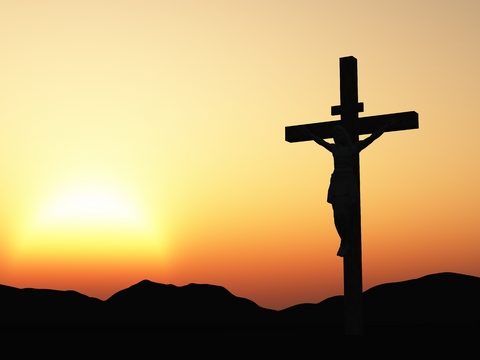
Cross and LightLECTIONARY GOSPEL PASSAGE: Luke 23: 33-43 (Click to read)

All of the Scriptures for this week lead us to this Sunday, known as “Christ the King” Sunday.  It is the final Sunday of our Lectionary year, the end of the season of Pentecost, when as the community of faith, we move through the season of building the church and its journey toward sanctification in the fullness of God’s Kingdom.  The Sunday after next begins the season of Advent, when we will begin the whole cycle again.

But if you think that this is merely an annual repeating motion of the same thing over and over, think again.  Our liturgical calendar invites us into an ongoing cycle of preparing, birthing, seeing, emptying, rebirth, and becoming, as we journey toward the fullness of the Kingdom of God, lived, as Rainer Maria Rilke said, in “ever widening circles”, reaching farther and farther beyond ourselves, encompassing all of Creation. Over the past few months, we have recounted the rich stories of the Old Testament through the eyes of many  of the Prophets as they sought to illuminate what it was those early people of God were meant to become.  And we once again read many of Jesus’ parables, this time from the Gospel According to Luke, those incredible stories of wisdom found in everyday life.  The reason that we read these stories over and over again from Creation through the cycle of life is because, as we’ve said before, they are our story, they are the recounting of our own becoming who we are, they are our journey toward being the people of God.  Perhaps it gives us more and more of a sense that we are not, as we might think, the center of the universe; rather, we are part of the story.  Henry Van Dyke said that “if the meaning could be put into a sentence, there would be no need of telling the story,” so each liturgical cycle we tell our story. 

This week is not the end.  It is the beginning, a new beginning.  The Gospel passage that the Lectionary assigns us this week probably feels a little odd.  I mean, really, look around.  The Christmas season is bombarding us from all sides (even though my Thanksgiving turkey has yet to be purchased!…yeah, I know…get on that, Shelli!) and we are reading a Good Friday passage.  This is just messed up. But we read of a thief or a criminal (depending on your translation) hanging there with Jesus that asked for mercy from this one who in this moment he truly knew was the Christ.  Jesus’ response did not include asking him what he had done with his life.  He did not demand either a confession or a profession.  There was no “if” attached to his answer—no condition of “if you clean up your life” or “if you promise to stop doing what you do or being who you are” or “if you become someone different so that you will fit in with what we think we are all supposed to look like”.  None of that mattered.  Because in this moment, the man that history has never named anything but “Thief” entered the story that we call the Gospel and was promised eternal life.  THIS was Jesus’ crowning glory.  THIS was the true coronation of Christ as King!

You see, it’s not about what we do or who we are.  It’s about becoming the story, becoming the Gospel, the Good News of Jesus Christ.  It’s not about placing a crown on the head of our King but about becoming part of the Coronation, part of that image of Christ the King.  It’s not about proclaiming Christ as King but about being the presence of Christ in this world.  O Come, O Come, Emmanuel, God with Us.  And now we know that’s exactly where God is.  It’s about entering the story.

Mortals, join the mighty chorus which the morning stars began;

Love divine is reigning o’er us, binding all within its span.

Ever singing, march we onward, victors in the midst of strife;

Joyful music leads us sunward, in the triumph song of life.

(Henry Van Dyke, “Joyful, Joyful, We Adore Thee”, alt. st. 4, 1989)

Look, the light is just over the horizon.  The world is with child.  For this we were created.  All we have to do is turn the page and follow the story.

What does it mean to you to proclaim Christ the King?

What does it mean to you to become part of the story?

Grace and Peace,

Shelli

And now for some program notes…yes, I know it’s been too long since I’ve posted on “Dancing to God”, but I’ve promised that I would come back for Advent (and it’s been publicized in the church paper, so I have to stick with it!), so here’s a way for us to “turn the page” (aaarrrggghh….aaarrrggghhh…aaarrrggghhh).  I’ll post some entries next week that will cover the Lectionary passages for the first Sunday in Advent and then beginning December 1, the first Sunday of Advent, we’ll do something every day.  Thanks for joining me!  Also, if you’re interested, my weekly Lectionary notes are posted on another blog that can be found at http://journeytopenuel.com/.  I usually post those on Sunday evening or Monday morning for the following week.  There is some overlap with this blog because I only have one brain, but I’d love for you to follow that one too!  Shelli

Bending Rules

Bending tree2This Week’s Lectionary Text: Luke 7:36-8:3

I am for the most part a rule-follower (so I’m trying to get back to posting some blogs!).  Part of it is due to what could probably be considered my meticulous, “Type A” personality, but my guess is that most of it is due to my small-town, Protestant upbringing.  Rules are good.  They create boundaries; they can provide protection; they serve as a foundation on which to stand and from which to grow as we are guided by the remnants of the past.  Our society and our lives are built on rules.  So what happens when the rules are not followed?  Does it always result in chaotic anarchy?  Or are there some rules that it’s alright to stretch just a bit? Do you think that there are possibly some rules that need to be bent?

We all know enough about religion to know that it was based on rules from the very beginning.  My own denomination’s generally-accepted beliefs and consensual polity are encapsulated in The Book of Discipline of the United Methodist Church.  This is not a new publication.  It’s been around for about as long as Methodism has been in the United States.  I have a small collection of antique Disciplines and the oldest one that I have is dated 1828.  I also have one that I found in my great-grandfather’s attic.  It’s from 1900.  When you look through it, there are some similarities to our current one.  It has the Articles of Religion and the General Rules.  But it’s also got some rules that we would probably consider just downright odd.  They seemed to be very concerned with how people dressed and intent on insuring that people did not come to church wearing too much jewelry.  There are very few of us that would fit into that mold of what we’re supposed to look like when we come to church.  The point is that sometime rules change.  Sometimes they need to be edited or added to and I think sometimes they need to be thrown out altogether.       

In the Gospel passage that we read, we are given lots of rules.  It starts at the beginning when it tells us that Jesus “took his place at the table.”  He took his place as if there was a designated place where he was supposed to sit.  It was probably, you could surmise, toward the head of the table to the right of the host.  Isn’t that what the rules of etiquette usually tell us?  And then this woman enters—a woman already defined by the community and now by Scripture as a “sinner”.  Somewhere along the way she had apparently broken some rule of conduct and violated what would be considered an acceptable way of living and being. (People have often designated her a prostitute.  Go there if you want, but it never really tells us, so…maybe that’s not a great “rule of thumb”!)  And now she is apparently interrupting what is probably a perfectly-choreographed evening in the home of one of the most respected religious leaders.  She desires to anoint Jesus’ head with oil.  (Boy, I hope she doesn’t get that all over the imported tablecloth!) But standing nearer Jesus’ feet, she is suddenly overcome with emotion and begins to weep.  She begins to wash his feet with her tears, takes down her hair to dry them and then kisses them and pours the anointing oil on them.  What a spectacle that must have been!  And right here in the home of this respected Pharisee!

And so the Pharisee not only pronounces judgment on the woman, but also on Jesus.  After all, they had both broken the rules!  Woman of questionable reputation did not act like this, with weeping and flying hair and all, and if Jesus was really who he claimed to be, he would have known better.  But Jesus’ response is not the apology that the Pharisee and his “respectable” guests probably expected.  Instead Jesus challenges Simon’s pronouncement of both of them by launching into a parable about forgiveness.  And woven through the parable are reminders of what the woman did.  She openly and generously gave of herself, more than anyone else at the table had done.

Jesus is trying to make them realize that there is something more than rules, there is something more than religion, and there is something more than doing the “right thing”.  Ralph Waldo Emerson said that “the faith that stands on authority is not faith”.  I think that is what Jesus is trying to get across.  Faith is not about rules.  The woman’s intense act of love beyond all reasonable expectations and all acceptable actions becomes a means of grace.  It leads us to God.  It shakes us out of our comfort zones of what is normal and expected and even acceptable because, when you think about it, Jesus was very seldom normal and expected and even acceptable.  Instead he showed us how to step out of our boxes and live a life of faith—real faith that is untamed and uncontrolled and virtually undefined, a faith that rips open our carefully-sewn-together lives just enough to let God’s presence spill into them.     

 In a 2006 article in the “National Catholic Reporter”, editor Tom Roberts said that “we live in an age of expanding religion and a diminishing God.”  Those words probably make several of us squirm.  After all, have we become so sure of who we think God is and what we think God wants from us that we are willing to sacrifice the new and expanding ways that God interacts with our lives?  Religion and faith are not the same thing. Religion is about what we believe and why we believe.  It is about tradition, the institution, the system, and, yes, the rules.  When you think about it, our religion has been constructed over centuries.  It has given us creeds and liturgy and definitions of God.  It gathers us and grounds us and reminds us of a world to come.  It gives us commandments and rules that guide the way we live so that we can become what we seek, so that we can journey toward a oneness with God.  It is meant to lead us to God, not pave the way (as in make it easier) or drive us there. 

Somewhere in the midst of those rules we, like Jesus, have to do a little bending.  We have to at some point move beyond and transcend the rules and rituals.  We have to look beyond where we are to that place to which God calls us.  That is where faith comes in.  That is where God, greater than any religion, meets us.

In her book, Called to Question, Joan Chittister says that “in order to find the God of life in all of life, maybe we have to be willing to open ourselves to the part of it that lies outside the circles of our tiny little worlds.”  She goes on to tell a Sufi tale of disciples who, when the death of their master was clearly imminent, became totally bereft.  “If you leave us, Master,” they pleaded, “how will we know what to do?”  And the Master replied, “I am nothing but a finger pointing at the moon.  Perhaps when I am gone you will see the moon.”  The meaning is clear:  It is God that religion must be about, not itself.  When religion [or rules] makes itself God, it ceases to be religion.  But when religion becomes the bridge that leads to God, it stretches us to live to the limits of human possibility.”[i]  Chittister maintains that “religion ends where spirituality begins.”  From that standpoint, these rules, these dogmas, all of these things that make up our religion are not our faith journey, but they lead us through it.  They are, from that standpoint, a means of grace.

And as we change, as our journey changes, as our context changes, perhaps we are sometimes called to the act of bending rules.  It doesn’t mean that we’re dismissing them or ignoring them.  It means that we are allowing the conversation about God to continue.  But more important than that, it means that we are becoming part of the conversation.  We are becoming part of the journey.  And so, perhaps we really are called to a spiritual discipline of bending the rules sometimes.  It is part of the ongoing conversation, the ongoing faith journey of which we are a part.  Sometimes that bending means we just understand it better after we’ve questioned and explored.  Sometimes it means that we need to add something to make it clearer for us and for those who walk this journey with us.  And sometimes it means that we need to get rid of things that no longer augment or serve to depict our understanding of who God is and how God enters and is revealed in our lives.   Hugh E. Brown said that “Christianity is not being destroyed by the confusions and concussions of the time; it is being discovered.”  That is the point.  We don’t discover how God is revealed to us without continuing to think about it, continuing to look and re-address how we have understood God. 

That’s what Jesus was doing that day at the Pharisee’s house.  He wasn’t shunning the rules that had been a part of the faith tradition for as long as anyone could remember.  He was just bending them a bit, making them a bit more pliable, a bit more nimble, a little bit more transcendent, a little bit closer to what God had in mind.  The rules are meant to be foundations on which we can stand and through which God is revealed.  But when they become boundaries that control who is welcome and who is accepted, or who is invited to live out their own calling or who is not, that is not what God is about.  So, Jesus didn’t really follow the rules.  In fact, Jesus often got himself in trouble with those rule-followers.  Jesus just loved God and wanted to reveal that love for us and everyone else.  And here was this woman—a sinful woman, the Scriptures say—shunned by the rule-followers and welcomed by God.  Because you see this woman did what we are called to do—love generously and extravagantly, love the way that God loves.  G.K. Chesterton said that we should “let our religion be less of a theory and more of a love affair.”  There are really very few rules—except to love the way God loves and be open to doing perhaps a little bending.

So, go do a little rule-bending of your own!
 
Grace and Peace,
 
Shelli
 
(To see notes on all of the Lectionary texts for this week, go to http://journeytopenuel.wordpress.com/)


[i] Joan Chittister, Called to Question:  A Spiritual Memoir, (Lanham, MD:  Sheed & Ward, 2004), 19-20.

Open

Open TombScripture Passage:  Luke 24: 1-12

But on the first day of the week, at early dawn, they came to the tomb, taking the spices that they had prepared.2They found the stone rolled away from the tomb,3but when they went in, they did not find the body.4While they were perplexed about this, suddenly two men in dazzling clothes stood beside them.5The women were terrified and bowed their faces to the ground, but the men said to them, “Why do you look for the living among the dead? He is not here, but has risen.6Remember how he told you, while he was still in Galilee,7that the Son of Man must be handed over to sinners, and be crucified, and on the third day rise again.”8Then they remembered his words,9and returning from the tomb, they told all this to the eleven and to all the rest.10Now it was Mary Magdalene, Joanna, Mary the mother of James, and the other women with them who told this to the apostles.11But these words seemed to them an idle tale, and they did not believe them.12But Peter got up and ran to the tomb; stooping and looking in, he saw the linen cloths by themselves; then he went home, amazed at what had happened.

We have sat in silence in these hours in between, grieving our grief, feeling our despair, and not knowing where to turn.  But in the dawn of the morning, things look different.  The stone is rolled away and the tomb is empty.  He is not here.  He is Risen!  And suddenly, the dawn breaks into full light.  What once was gone is here; what once was dead is alive; what once was hopeless has brought hope and light and life to all.

Last evening was our Easter Vigil.  I guess we’re sort of wimps, so to speak.  We start at 6:00, read through the Scriptures, remember our Baptism, and then share in the Eucharist and it’s Easter!  But for Methodists, that’s pretty good.  The point, after all, is not how long it takes.  But, admittedly, we cut the waiting a little short.  I went early and began to set up for it, moving the worship items piece by piece through the darkened sanctuary.  I prepared the Eucharist and filled the pitcher with water for the Baptismal font.  As I did, I prayed for all of those who would be baptized at St. Paul’s this year, prayed for their lives, for their faith, for their openness.

You know, I think that’s what it’s about, this openness.  Think about it.  The Christian faith begins with an open tomb, an empty cup, and a dry font.  So the stone gets rolled away, the wine is poured into the cup, and the waters of life fill the bowl of our font.  And yet, we spend so much of our lives trying to fill our minds and fill our hearts and fill our lives and fill our wallets.  What would happen if THIS time, we opened them all up, exposing us to the world the way Jesus’ tomb was exposed that day?  What would happen if we were sent into the world vulnerable, open to change, with nothing but our faith? 

In the beginning when God created the heavens and the earth,2the earth was a formless void and darkness covered the face of the deep, while a wind from God swept over the face of the waters.  3Then God said, “Let there be light”; and there was light.4And God saw that the light was good; and God separated the light from the darkness.5God called the light Day, and the darkness he called Night. And there was evening and there was morning, the first day. (Genesis 1: 1-5)

You see, that’s where we are–back at the beginning.  God has taken a darkness-covered formless void in the form of a cross and when we were grieving and silent, we did not notice that a wind from God swept over it.  And God, “Let there be light.”  Let the light fill the emptiness; let the light sweep through the void; let the light not push the darkness away but, rather, turn it to light.  And THAT was only the first day.

Each of our days is a beginning.  Each of our days begins with an openness that God fills.  Come and see this thing that has happened.  God has taken this instrument of death and recreated it into life.  If God can do that, imagine what God could do in your life, if you were only open.  So, be open and be amazed at what will happen.

Grace and Peace,

Shelli

On the Steps of Death

???????????Lectionary Passage for Today:

To read the Passion account assigned for today’s Lectionary Reading, go to John 18:1-19:42

How did we get here?  How did we so quickly move from the teachings on the hillside in Galilee to this?  I guess we kept thinking that he could make it better.  After all, he always made so much sense, always drawing us out of ourselves, out of the life that we thought we were supposed to have.  What could we have done differently?  It was right there, right in our hands.  Life was right there.  Why didn’t we pay more attention?  Why didn’t we dispense with silly arguing over who was greatest?  And what do we do now?  We can’t go back.  Everything has changed.  We have changed.  We are different.

The last three stations are the hardest.  The twelfth station depicts Jesus’ death on the cross.  “It is finished.” As Jesus breathed his last, the temple curtain tore in two, revealing a new world in which holiness was no longer separate and hidden from view.  Trembling and shaking in the darkness, the earth opened to reveal a glimpse of a future yet to be.  And through our grief and tears, God entered the heartbreak and brokenness of the world and in that moment began recreating it.  In this moment, God’s future enters our present.  And in the most unfathomable act of love, the cross becomes God’s highest act of Creation.  Because with it, we and all of Creation are made new.  That which is finished is the beginning of life.  In this moment, our own eternity is conceived.    

Station 13 of this Via Dolorosa has Jesus being taken down from the cross and his body given to his mother.  There is no documentation of this in canonical Scripture.  Perhaps it was skipped.  It is a hard thing, after all because, after all, it is indeed over.  There is a sickening finality to it all.  Why did it have to end like this?  Why did it have to end at all?  We were just beginning to understand.  We were just beginning to get what we were supposed to be doing.  And now it is over.  And then there’s this darkness.  It’s never been this dark at this time of day.  It adds to the pall of our souls.  We have to go back now.  But to what?  After all, deep down we know that he changed us.  How can we live now in the world?  How can we go back?  And yet, in this moment of our deepest despair, we remember that we have found love.  Life will be different because we have found love.

Station 14 is the burial of Jesus in the Garden Tomb.  Joseph of Arimathea, a “secret disciple”, we are told, provided a tomb that no one had ever used.  It was appropriate, this virgin tomb, a fitting ending as someone finally made room.  How can we leave?  We have walked away from graves before and left the remains of a life behind us.  But this…this is different.  And so we strip our altars and we strip our lives and we try to make room for you.  And then we wait.  We wait for you to come.  We wait for you to rise.  We keep vigil and we enter into deep prayer,
knowing the day will come.  And we wait.  We wait for our eternity to be born.  We waited for your coming once before, for your birth.  But this is
different.  Now we wait for our own.

And she gave birth to her firstborn son and wrapped him in bands of cloth, and laid him in a manger, because there was no place for them in the inn.

In what seemed no time at all, Bethlehem has become Golgotha, swaddling clothes have become burial cloths, and the manger?  The manger has become a cross.  God did not send Jesus to die but to love.  And he did that to the end.  And somewhere along the way, we have changed.  We haven’t become who we are called to be yet but the road has turned and we know that Life is up ahead.

Where Are You Christmas? (Faith Hill, How the Grinch Stole Christmas)

The pilgrims sit on the steps of death.  Undanced, the music ends.  Only the children remember that tomorrow’s stars are not yet out.  (Ann Weems, “It is Finished”, from Kneeling in Jerusalem, 77)

Grace and Peace,

Shelli

Can You Feel The Love Tonight?

last supperToday’s Lectionary Passage:  John 31: 1-17, 31b-35

Now before the festival of the Passover, Jesus knew that his hour had come to depart from this world and go to the Father. Having loved his own who were in the world, he loved them to the end.2The devil had already put it into the heart of Judas son of Simon Iscariot to betray him. And during supper3Jesus, knowing that the Father had given all things into his hands, and that he had come from God and was going to God,4got up from the table, took off his outer robe, and tied a towel around himself.5Then he poured water into a basin and began to wash the disciples’ feet and to wipe them with the towel that was tied around him.6He came to Simon Peter, who said to him, “Lord, are you going to wash my feet?”7Jesus answered, “You do not know now what I am doing, but later you will understand.”8Peter said to him, “You will never wash my feet.” Jesus answered, “Unless I wash you, you have no share with me.”9Simon Peter said to him, “Lord, not my feet only but also my hands and my head!”10Jesus said to him, “One who has bathed does not need to wash, except for the feet, but is entirely clean. And you are clean, though not all of you.”11For he knew who was to betray him; for this reason he said, “Not all of you are clean.”12After he had washed their feet, had put on his robe, and had returned to the table, he said to them, “Do you know what I have done to you?13You call me Teacher and Lord—and you are right, for that is what I am.14So if I, your Lord and Teacher, have washed your feet, you also ought to wash one another’s feet.15For I have set you an example, that you also should do as I have done to you.16Very truly, I tell you, servants are not greater than their master, nor are messengers greater than the one who sent them.17If you know these things, you are blessed if you do them.

31When he had gone out, Jesus said, “Now the Son of Man has been glorified, and God has been glorified in him.32If God has been glorified in him, God will also glorify him in himself and will glorify him at once.33Little children, I am with you only a little longer. You will look for me; and as I said to the Jews so now I say to you, ‘Where I am going, you cannot come.’34I give you a new commandment, that you love one another. Just as I have loved you, you also should love one another.35By this everyone will know that you are my disciples, if you have love for one another.”

Can you feel the love tonight?  Can you feel something beyond where you were?  It’s a hard night.  We know what is coming tomorrow.  We have read the story over and over again–the story of loss and betrayal, of the disciples sleeping, of Jesus’ surrender, of Jesus being dragged off to the house of Caiaphas on this very night.  We have over and over and over experienced regret and bewilderment and grief.  But, do we ever remember the love of this night?  They came together for a passover dinner.  I always thought that they were alone, gathered in some sort of stuffy upstairs room with Leonardo da Vinci standing on the side painting the scene for posterity.  But then I saw, even if it was a “traditional understanding” of the place, the Upper Room.  It was big, bigger than I had ever imagined.  What dawned on me was that this was Passover, the community gathering.  Jesus wasn’t just there crammed into some sort of painting with the disciples; he was there with the community, sharing life and and community and food.  But at some point, he sat down with his closest friends and it became intimate.  It become a dinner of love on that last night.  They shared food; they shared wine; and Jesus washed their feet.  Jesus showed them what intimacy and love for another human really meant–that one would become vulnerable, would do for another what perhaps was not the most comfortable thing to do.  Love became not a caring or a sharing but an entering, an entering into the life of another.

This foot washing thing is hard.  It is way too intimate for us westerners.  After all, we are pretty private, seemingly reserved; we honor each other’s imaginary space.  But once a year, St. Paul’s does this at the mid-day Maundy Thursday service.  It’s a small service, intimate really.  I remember the first year we did it.  We were retiscent, hesitant to trust that people would come through.  So, admittedly,  we had a couple of “ringers”.  Well, the ringers came and then the rest did.  I sat there on the floor moved by something that I had never experienced.  I was touching people’s feet.  They had removed their shoes at the pew and had walked barefoot to the seat where we had the plastic tub in which water would be poured over their feet.  It was incredible.

And then Caroline came.  Caroline–in her full Nigerian dress and her permanent posture of prayer.  She came and she sat and she placed her foot in the water.  I picked up her foot.  Caroline and her family were part of the Nigerian freedom movement.  She had come from the tribes and had wanted more.  She had worked hard, always putting aside her own desires for what she thought was important–others and God.   I looked at this older woman’s foot in my hands, deep with lines of life and passion, and I had tears my eyes.  I was holding life.  I was not holding someone’s foot.  I was holding their life.  I was affirming them, praying for them, washing away for them all the things that got in the way of what they so treasured.  As I was gingerly washing Caroline’s foot, she looked up into the ceiling and she began to pray.  They were words that I did not understand and composed a prayer that I understood completely.  It was incredible.  It was love at its deepest level–love for Christ, love for humanity, love for each other, love for God and all that we have together.  Caroline died a few years ago.  She left the most incredible love.  At her memorial service, I remembered that day.  I remembered that day that  was filled with love, that was filled with the Presence of Christ on that night.

You see, love is a funny thing.  It is not perfect.  Jesus knew that on that night.  He and the disciples did not sing “Kum-ba-yah” and then leave.  In Jesus’ life, love meant rejection and exile, frustration and misunderstanding, Presence and turning, welcome and redemption.  This very night, Love would be apathy and betrayal, surrender and pardon.  But, in this moment, love was a bunch of friends who had a dinner together and had their feet washed–feet filled with lines of life and passion.  Jesus washed their feet and held their life.  That’s all love is about.  Love is Life.  Love brings us together in a way that does not subdue us into one but embraces who we are.  Love takes all that we are and creates Love.  Nothing else can create itself.

Ruins of Caiaphas' House, Jerusalem, Israel, 2010
Ruins of Caiaphas’ House, Jerusalem, Israel, 2010

On this night, we take all that we are, sinners and saints, kings and vagabonds, the betrayer and the beloved, the anointed and the one who anoints, the nay-sayers and the ones who miss the signs of the sacred,  the pharisee and the rule-breaker, the faith-filled and the doubter, Caroline and me–we are all here, gathered together showered in the most incredible love imagineable.  Can you feel the love tonight?

Tomorrow we will kneel at the cross.  But, tonight, in this moment, can you feel the love?

Grace and Peace,

Shelli

If I Could Turn Back Time

Judas BetrayalToday’s Lectionary Passage:  John 13: 21-32

21After saying this Jesus was troubled in spirit, and declared, “Very truly, I tell you, one of you will betray me.” 22The disciples looked at one another, uncertain of whom he was speaking. 23One of his disciples—the one whom Jesus loved—was reclining next to him; 24Simon Peter therefore motioned to him to ask Jesus of whom he was speaking. 25So while reclining next to Jesus, he asked him, “Lord, who is it?” 26Jesus answered, “It is the one to whom I give this piece of bread when I have dipped it in the dish.” So when he had dipped the piece of bread, he gave it to Judas son of Simon Iscariot. 27After he received the piece of bread, Satan entered into him. Jesus said to him, “Do quickly what you are going to do.” 28Now no one at the table knew why he said this to him. 29Some thought that, because Judas had the common purse, Jesus was telling him, “Buy what we need for the festival”; or, that he should give something to the poor. 30So, after receiving the piece of bread, he immediately went out. And it was night.  31When he had gone out, Jesus said, “Now the Son of Man has been glorified, and God has been glorified in him. 32If God has been glorified in him, God will also glorify him in himself and will glorify him at once.

Poor Judas!  We take this story so literally most of the time, pinning all the bad in all the world on the one that Biblical translations and exegetical interpretations have branded the betrayer, the bad seed, the evil one, the poster child for the worst sin imagineable.  In fact, Dante’ puts Judas in the fourth level of the ninth circle of hell, the lowest rung of the inferno, along with Brutus and Brutus’ co-hort Cassius.   Me?  I tend to err more on the side of mercy.  Because truth be known, don’t you think that Simon Peter was nervous when he was asking that question.  “Lord, who is it?”  In other words, “is it I”?  “Am I the one that will betray my Lord?”  After all, I’m not sure than any of the disciples really came to the forefront.  None of them stood out that night or the next day as glowing examples of who God calls us to be.  They were scared; they were unsure about their own well-being; and they were certainly unsure what life would hold next.  Maybe some had begun to figure out what was about to happen.  I think most of them were like us, living in some sort of state of denial thinking that we are doing the right thing and that everything will turn out alright.

And don’t you think that all of them, Judas included, looked back on the night the next morning and thought, “If only…if only I could turn back time.”?  (yeah, I know that’s a Cher song!) So why did Judas do it?  Oh, please, why do any of us do what we do?  We all have regrets; we’ve all made mistakes; we’ve all wished that somehow we could turn back time.  The truth is, there is a little Judas in all of us.  But in this same passage, there is another character introduced:  “the one whom Jesus loved”.   This is the epitome of light against the foil of Judas in his darkest hour as his actions usher in the time that brings Jesus’ presence as the light of this world to a close.  There is all kinds of speculation.  Was it someone that we don’t know?  Was it Mary Magdelene?  Or was it, perhaps, even Judas? 

Judas could not live with what he had done. The writer of Matthew’s Gospel says that Judas would end his own life that next morning.  (Matthew 27: 3-5)

When Judas, his betrayer, saw that Jesus was condemned, he repented and brought back the thirty pieces of silver to the chief priests and the elders. 4He said, “I have sinned by betraying innocent blood.” But they said, “What is that to us? See to it yourself.” 5Throwing down the pieces of silver in the temple, he departed; and he went and hanged himself. 

And yet, Jesus, knowing what was about to happen, welcomed Judas to the table; in fact, Jesus welcomed all of them, that motley crew of misfits that never really could get it together and were always in competition with each other, that lot of sinners and saints.  The truth is we are all both–the betrayer and the beloved, the sinner and the saint.   God does not love us in spite of who we are; God loves us because of who we are.  The question that we should ask ourselves is whether or not we believe that anyone is ever beyond God’s redemption, beyond God’s love, beyond God’s power to pick up and recreate.  This night of betrayal does not end that way.  This night ends with love and with life.  Because, you see, when it’s all said and done, God really does turn back time.

Madeleine L’Engle tells an old legend that after his death Judas found himself at the bottom of a deep and slimy pit.  For thousands of years he wept his repentance, and when the tears were finally spent he looked up and saw, way, way up, a tiny glimmer of light.  After he had contemplated it for another thousand years or so, he began to try to climb up towards it.  The walls of the pit were dank and slimy, and he kept slipping back down.  Finally, after great effort, he neared the top, and then he slipped and fell all the way back down.  It took him many years to recover, all the time weeping bitter tears of grief and repentance, and then he started to climb again.  After many more falls and efforts and failures he reached the top and dragged himself into an upper room with twelve people seated around a table.  “We’ve been waiting for you, Judas.  We couldn’t begin till you came. (From “Waiting for Judas”, by Madeleine L’Engle, in Bread and Wine:  Readings for Lent and Easter (Maryknoll, NY:  Orbis Books, 2003), 312.)

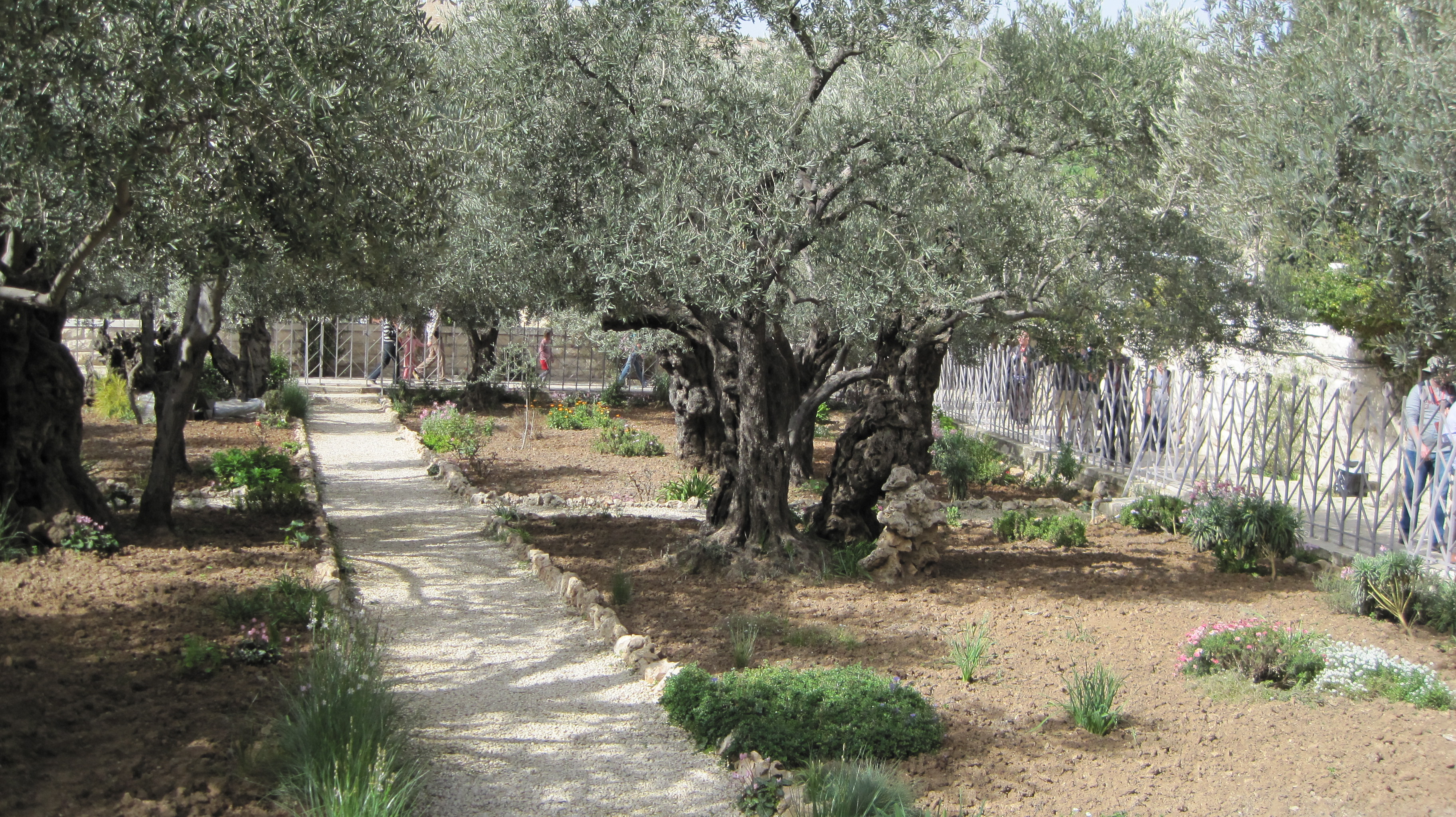
Garden of Gethsemane, Jerusalem, 2010

So, as you walk through this week, remember that we are all Judas but, more importantly, we are all beloved.  And, remember, that God really does turn back time, so to speak, gathering all of us to the table and recreating us into the fullness of God’s vision for all.  But God cannot begin until you come.

“If I Could Turn Back Time” (Cher)

Grace and Peace,

Shelli

Splitting Seeds

Public domain image, royalty free stock photo from www.public-domain-image.comToday’s Lectionary Passage: John 12: 20-36

20Now among those who went up to worship at the festival were some Greeks. 21They came to Philip, who was from Bethsaida in Galilee, and said to him, “Sir, we wish to see Jesus.” 22Philip went and told Andrew; then Andrew and Philip went and told Jesus. 23Jesus answered them, “The hour has come for the Son of Man to be glorified. 24Very truly, I tell you, unless a grain of wheat falls into the earth and dies, it remains just a single grain; but if it dies, it bears much fruit. 25Those who love their life lose it, and those who hate their life in this world will keep it for eternal life. 26Whoever serves me must follow me, and where I am, there will my servant be also. Whoever serves me, the Father will honor.  27“Now my soul is troubled. And what should I say—‘Father, save me from this hour’? No, it is for this reason that I have come to this hour. 28Father, glorify your name.” Then a voice came from heaven, “I have glorified it, and I will glorify it again.” 29The crowd standing there heard it and said that it was thunder. Others said, “An angel has spoken to him.” 30Jesus answered, “This voice has come for your sake, not for mine. 31Now is the judgment of this world; now the ruler of this world will be driven out. 32And I, when I am lifted up from the earth, will draw all people to myself.” 33He said this to indicate the kind of death he was to die. 34The crowd answered him, “We have heard from the law that the Messiah remains forever. How can you say that the Son of Man must be lifted up? Who is this Son of Man?” 35Jesus said to them, “The light is with you for a little longer. Walk while you have the light, so that the darkness may not overtake you. If you walk in the darkness, you do not know where you are going. 36While you have the light, believe in the light, so that you may become children of light.” After Jesus had said this, he departed and hid from them.

The twelfth chapter of John contains most of what Jesus had to say about his own death in that Gospel. And this is where we sort of start shutting down, isn’t it?  We liked sitting there listening to accounts of his birth, the stories of his calling the disciples, and those wonderful little parables that fill the Gospel-readings with drama and wisdom and sometimes leaving us with a knot in our stomach as we begin to see ourselves through Jesus’ eyes.  We even liked the beautiful story yesterday of the extravagant anointing of our Savior.  But this…this is coming a little too close to the edge.

Do you remember running through the sprinkler when you were kids?  You want to do it.  You want to feel that cool, refreshing feeling right after you do it.  But it’s that first blast of cold, paralyzing water that takes your breath away that you dread and so you put it off.  And then, finally, you hold your breath and run through it as fast as you can.  That’s almost what we have a tendency to do with the cross.  We dread it as we slowly walk toward it, dragging our feet a bit, not really wanting to experience it again—the memories and reliving of the horror, the violence, the suffering, the pain, the loss, the grief, the ending of all we know.  And as we approach, we then let our minds run quickly through it toward Easter morning when everything will be OK again.

But now is the time for the Son of Man to be glorified.  For, as Jesus says, unless a grain of wheat falls to the earth and dies, it remains just single lone grain, worth nothing; but if it dies, it bears fruit and lives on.  You see, wheat is as a caryopsis, meaning that the outer “seed” and the inner fruit are connected.  The seed essentially has to die so that the fruit can emerge.  If you were to dig around in the ground and uproot a stalk of wheat, you would not find the original seed.  It is dead and gone.  In essence, the grain must allow itself to be changed. So what Jesus is trying to tell us here is that if we do everything in our power to protect our lives the way they are—if we successfully thwart change, avoid conflict, prevent pain; in other words, if we expect everything to go back to the way it was before—then at the end we will find that we have no life at all.

Jerusalem 17This week of remembering is not an historical accounting of the events so long ago;  this is not only Jesus’ journey to the cross; it is ours.  You see, the tide has turned.  Jerusalem is there before us, the cross probably almost fully constructed at this point.  The problem is that we’re supposed to believe without faltering in the cross. We look at that big gleaming cross in the front of the sanctuary.  We see them on the doors to the church and on the sign outside.  Good grief, we even hang them around our necks. But, contrary to what most of Christianity holds out there as “belief”, I don’t think we were meant to worship the cross.  We were meant to worship God, to hunger and thirst in the deepest parts of our being to encounter God.  Well, we can’t see God.  If we could there’d be no need for faith.  But we can see Jesus, the One who points the Way to God.  But this Jesus is more than a leader.  He is more than a teacher.  Jesus is the One on the Cross.  And at that moment, God will do something incredible.  God will take the worst of this world, the worst of humanity, the worst of proof or sensibility, at a cost that no one can fathom…and recreate it.  In that moment on the Cross, God takes the worst of us and the best of God and reconciles them, redeeming us into oneness with God, pouring the Divine into humanity for all time.  But you have to be willing to let go, willing to change; you have to allow that seed that you are right now holding so tightly die away.

So as we walk through this holiest of weeks, remember that this is not Jesus’ journey that you walk; it is yours.  Let go that you might finally see what God has in store.

Grace and Peace,

Shelli