(part of the “Waiting on the World to Change” Advent Series)
Romans 15:4-13 (Advent 2A)
4For whatever was written in former days was written for our instruction, so that by steadfastness and by the encouragement of the scriptures we might have hope.
5May the God of steadfastness and encouragement grant you to live in harmony with one another, in accordance with Christ Jesus, 6so that together you may with one voice glorify the God and Father of our Lord Jesus Christ.
7Welcome one another, therefore, just as Christ has welcomed you, for the glory of God. 8For I tell you that Christ has become a servant of the circumcised on behalf of the truth of God in order that he might confirm the promises given to the patriarchs, 9and in order that the Gentiles might glorify God for his mercy. As it is written, “Therefore I will confess you among the Gentiles, and sing praises to your name”; 10and again he says, “Rejoice, O Gentiles, with his people”; 11and again, “Praise the Lord, all you Gentiles, and let all the peoples praise him”; 12and again Isaiah says, “The root of Jesse shall come, the one who rises to rule the Gentiles; in him the Gentiles shall hope.”
13May the God of hope fill you with all joy and peace in believing, so that you may abound in hope by the power of the Holy Spirit.
So, we’re still here even as we journey through this Advent season. We’re still here waiting on the world to change. But bad news keeps coming. People keep hurting each other and taking from each other and not listening to each other. We keep destroying each other. And, yes, we keep trying to find the things that need to be changed. We keep waiting for that change. And then Paul tells us to abound in hope. Sure, we’ll get right on that!
Hope is one of those words that we throw around a lot. “Hope is built on nothing less than Jesus’ love and righteousness.” Just have hope. Always have hope. But what is it? We seldom talk about WHAT it is; we just say that we’re supposed to have it. So, we hope against hope that things will change. (And, I guess, we hope against hope that we’ll have hope, whatever that may be.)
Paul frames this passage around what he sees sparks hope. Our hope, according to him, begins in the past. It begins with what is written in the Scriptures, the stories, the history, the acts of faith. OK, I guess that’s a good enough beginning but it still doesn’t really tell us what it is. I mean, it would be really easy if hope came in some sort of ancient bottle that Barbara Eden would come out of in a cloud of pink smoke in a genie costume and grant our every wish. No, wait, that’s wishing. That’s not hope. Maybe it’s what we imagine for the future, the “perfect future” that is in our dreams. No, that’s dreaming. That’s not hope. Emily Dickinson said that “hope is the thing with feathers— That perches in the soul— And sings the tune without the words— And never stops—at all—” (Pretty, but is it helpful? I mean, it sounds like it’s going to fly away at any moment.) Dante wrote of hell as the abandonment of hope. (Well, that’s dark!) William Sloane Coffin said that “if faith puts us on the road, hope keeps us there.” (Closer…)
The truth is, hope is not just wishing that things would change. Hope has to do with rising to the challenge before us. Hope is participation in God’s work. Hope means saying “yes” to going forward, abounding, as Paul said, in hope by the power of the holy spirit. Soren Kirkegaard defines hope as the “passion for the possible”. That passion is what prompts us to hope not for things to be “fixed”, not for things to be easier, certainly not for some sort of lost Garden of Eden in our lives when we remember that things were better. Hope opens the door to what’s ahead and pulls us toward it, pulls us into it.
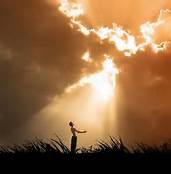
In a 2008 interview with Matthew Felling of WMAU radio in Washington, D.C., Dr. Gordon Livingston said that the greatest enemy of hope is nostalgia. He said that “it tricks people into believing that their best days are past.” (Which is why, I guess, there are so many people right now that dream of returning to what was and, dare I say, what will never be again.) He went on to say that “A more realistic view of history envisions the past as a theater of experience, some good and some bad, and opens up the possibility of growth and change. Our best days are ahead, not behind. Hope for the future.” I think that’s what Paul was trying to say. Hope is here, here for the taking. It is grounded in the past, in what we know. But hope is what goes forward. Hope is what makes us keep walking. Hope is what allows our faith to become realistic, gives us something to grab hold of. Hope is what enables us to look up and see what is just ahead. Abound in hope.
Hope holds with it the promise that God always answers our questions by showing up, not necessarily with what we ask for but with remarkable gifts that change our lives and the world. (Mary Lou Redding)
(part of the “Waiting on the World to Change” Advent Series)
Isaiah 11:1-10 (Advent 2A)
A shoot shall come out from the stump of Jesse, and a branch shall grow out of his roots. 2The spirit of the Lord shall rest on him, the spirit of wisdom and understanding, the spirit of counsel and might, the spirit of knowledge and the fear of the Lord. 3His delight shall be in the fear of the Lord. He shall not judge by what his eyes see, or decide by what his ears hear; 4but with righteousness he shall judge the poor, and decide with equity for the meek of the earth; he shall strike the earth with the rod of his mouth, and with the breath of his lips he shall kill the wicked. 5Righteousness shall be the belt around his waist, and faithfulness the belt around his loins. 6The wolf shall live with the lamb, the leopard shall lie down with the kid, the calf and the lion and the fatling together, and a little child shall lead them. 7The cow and the bear shall graze, their young shall lie down together; and the lion shall eat straw like the ox. 8The nursing child shall play over the hole of the asp, and the weaned child shall put its hand on the adder’s den. 9They will not hurt or destroy on all my holy mountain; for the earth will be full of the knowledge of the Lord as the waters cover the sea.
10On that day the root of Jesse shall stand as a signal to the peoples; the nations shall inquire of him, and his dwelling shall be glorious.
As we’ve many times noted, this season of Advent is a practice in visioning. It is a time of looking toward what “shall” be (as the use of the word “shall” appears at least sixteen times in today’s Scripture). It gives us something to look toward, something for which we can purposefully and intentionally wait. It gives us something to hang onto when the storms toss us about.
And, yet, this passage is set in a time not unlike our own. The people fear they are losing their way, fear that their world is changing into something that they will no longer recognize, fear that it is all slipping away. And there, there in the midst of the pain and the uncertainty, in the midst of hopes cut off and loss and despair prevailing, in the midst of empires threatening and power wrecking, God comes to sit with us in the season. And we are given a vision, a vision of a different way, a vision of righteousness and equity and faithfulness and peace, a vision of what shall be. There is no promise given that the nation would rise again. Things are not going to return to the way they were. Time and space will never sync enough for that to happen. That never happens. But the prophet’s vision includes a shoot, a tiny shoot that will appear. The shoot will not become a mighty cedar. It will not overtake the earth. Rather, the shoot will begin what shall be.
A shoot shall come out from the stump of Jesse. It will be fragile yet tenacious. It will grow where no one ever thought it would. It will push back the stone and become life. It will rise up and be anew. That shoot, that tiny shoot that many are sometimes tempted to cut down and clear away, contains everything. In it is the very DNA, the written story, of what God envisions for Creation. That shoot contains our story. That shoot contains your story.
What will you do to tend to this seed, this fledgling shoot? What will you do as it grows and strengthens? We often talk about ourselves as the harvesters, those that help bring God’s vision to be. But in this Advent time, we are called to be those who care and tend, those who see this shoot even as the world around us is often filled with weeds and despair. Do you see it? It’s there…there on the dead stump, just beginning to grow. Life is pushing through. It is yours, your story, your life.
You must give birth to your images. They are the future waiting to be born. Fear not the strangeness you feel. The future must enter you long before it happens. Just wait for the birth, for the hour of new clarity. (Rainer Maria Rilke)
Lyrics
Song Like A Seed (Sara Thomsen)
Ay, what to sing about in these days What rhyme or melody, turn of phrase? What is your story now, where is your gaze? Ay, what to sing about in these days
Towers are tumbling, tumbling down Fortresses fumbling, crumbling crowns Governments grumbling, as they drown Towers are tumbling, tumbling down
Plant your song like a seed Hold your heart like a prayer bead Give your breath like a tree Set your soul’s deep love free
I know a woman who walks and prays Follows the river’s old rambling ways Eagle flies over and butterflies play Watching the warrior walk and pray
What is your story now, where is your heart? This is a one-act play, what’s your part? In every ending there’s some new start What is your story now, where is your heart?
Plant your song like a seed Hold your heart like a prayer bead Give your breath like a tree Set your soul’s deep love free
There is a garden that grows at night Then in the winter it tucks in tight Drifts off in dreams about birds in flight That carry the seeds of this garden’s life
Ay, what to sing about in these days What rhyme or melody, turn of phrase? What is your story now, where is your gaze? Ay, what to sing about in these days
(part of the “Waiting on the World to Change” Advent Series)
Psalm 122 (Advent 1A)
1I was glad when they said to me, “Let us go to the house of the Lord!”2Our feet are standing within your gates, O Jerusalem.3Jerusalem—built as a city that is bound firmly together.4To it the tribes go up, the tribes of the Lord, as was decreed for Israel, to give thanks to the name of the Lord.5For there the thrones for judgment were set up, the thrones of the house of David.6Pray for the peace of Jerusalem: “May they prosper who love you.7Peace be within your walls, and security within your towers.”8For the sake of my relatives and friends I will say, “Peace be within you.”9For the sake of the house of the Lord our God, I will seek your good.
So, we’re four days into Advent, four days into waiting on the world to change, and, as far as I can tell, there have not been any huge changes made. I mean, wouldn’t it be wonderful if this was the year, if this was the season, when peace came to be? Wouldn’t it be grand if this was when people began to recognize that each of us is a child of God? Wouldn’t it be terrific if this was when poverty and hunger and racism and xenophobia and gun violence and global warming and all those things that clutter our world were resolved? Wouldn’t it be the most incredible thing if all of us could lay down our weapons and our power and our need to preserve the status quo? Wouldn’t it be something if we didn’t have to wait anymore for the world to change? What if we discovered that we really were standing within your gates?
But we all know better. There is so much that needs to change, so much that needs to happen before the Kingdom of God, the vision that God intended all along for us comes to be in its fullness. And so, we wait. And, today, we’re given this psalm. It is a “Song of Ascents”. It describes the pilgrim throng entering the “house of the Lord”. It’s the invitation. Let us go to the house of the Lord. It is the eternal peace, that vision that we’ve been talking about. It is the Kingdom of God in its fullness.
Advent is indeed a season of waiting. But it is also a season of imagining. It is a season of beginning the ascent. It is the season when we journey to the House of the Lord. And in this way, our waiting, our waiting for the world to change, begins with us. For within us, is that peace. Within us, is that vision that God holds for us all. The waiting on the world to change begins within us. It begins with us imagining it and journeying toward it. Our feet are indeed standing within your gates, O Jerusalem. Peace be within you. It’s right there….
A dreamer is one who can find [his or her] way in the moonlight, and [whose] punishment is that [he or she] sees the dawn before the rest of the world. (Oscar Wilde)
(part of the “Waiting on the World to Change” Advent Series)
Romans 13:11-14 (Advent 1A)
11Besides this, you know what time it is, how it is now the moment for you to wake from sleep. For salvation is nearer to us now than when we became believers; 12the night is far gone, the day is near. Let us then lay aside the works of darkness and put on the armor of light; 13let us live honorably as in the day, not in reveling and drunkenness, not in debauchery and licentiousness, not in quarreling and jealousy. 14Instead, put on the Lord Jesus Christ, and make no provision for the flesh, to gratify its desires.
Waiting is all about timing. It is about knowing when to wait, when to awake, and when to start moving forward. So, Paul tells us to lay the works of darkness aside and put on the armor of light and, well, start moving. I actually find that a rather odd notion—an armor of light. What exactly is that? After all, an armor is solid, deflecting, a protective shield against that which comes against it. Honestly, sometimes I find the military language a bit off putting, as if we are somehow taking those wonders of faith and pulling them down into our secular language, the language of empire.
But, remember, this was written right in the middle of an empire to people who lived in and were subjects of that empire. It was what they understood. Think about it. You know all those military soldiers that you see so often, the ones that are marching for the emperor through the streets of Rome and its subject cities? Think about the armor they wear. And don an armor that is different. Because God’s entry into the world in the form of Jesus Christ did not affirm and ratify the empire. In fact, it was inherently ANTI-earthly empire. The coming of Christ was the beginning of the end of the earthly empires.
In its place, we were given a vision of a New Kingdom, a Kingdom where peace reigns, where poverty is filled, where the excluded are welcomed, and where we all stand together. It’s not a pipe dream. It’s that armor of light that Paul told us to don. But it’s not an armor that protects us or hides us; it’s an armor that we become. And that is what we are called to do now, even in the midst of this earthly empire—to become light, to reflect light.
Imagine looking into a dark sky away from the city lights, a sky filled with stars. But they’re not covering the sky. Darkness is still there, still prevalent. But the stars peek through as if someone punched pinholes into the sky mass—just enough for the light to get through. And that is where we come in, we, the armor-wearing reflectors of the light of God shining into the world as we imagine God continuing to punch those pinholes into the darkness.
But if you remember your astronomy lessons, some of that light has taken hundreds of thousands of years to get to us. The Light has already shined into our midst. But sometimes it takes us awhile to see it. But it’s as near as what we see. Yes, waiting is about timing. We are waiting for us to catch up to the Light. So, this is the moment when we must awake from sleep and start looking toward the light. The Kingdom of God is coming to be. It is happening as fast we can see. So, open your eyes. It’s there.
Hope is being able to see that there is light despite all of the darkness. (Desmond Tutu)
Lyrics: “We Shall Be Free” (Garth Brooks)
This ain’t comin’ from no prophet Just an ordinary man When I close my eyes The way this world shall be When we all walk hand in hand
When the last child cries for a crust of bread When the last man dies for just words that he said When there’s shelter over the poorest head Then we shall be free, yeah
When the last thing we notice is the color of skin And the first thing we look for is the beauty within When the skies and the oceans are clean again Then we shall be free
We shall be free, we shall be free Stand straight and walk proud ‘Cause we shall be free
When we’re free to love anyone we choose When this world’s big enough for all different views When we all can worship from our own kind of pew Then we shall be free, yeah (oh, oh, oh)
We shall be free, we shall be free Have a little faith, hold out ‘Cause we shall be free
And when money talks for the very last time And nobody walks a step behind When there’s only one race And that’s mankind, then we shall be free
We shall be free, we shall be free Stand straight (walk proud) Have a little faith (hold out) We shall be free (oh, oh, oh) We shall be free, we shall be free (Stand straight) stand straight (Have a little faith) walk proud ‘Cause we shall be free (oh, oh, oh)
We shall be free, we shall be free Stand straight, walk proud ‘Cause we shall be free (oh, oh, oh) (We shall be free)
(part of the “Waiting on the World to Change” Advent Series)
Isaiah 2:1-5 (Advent 1A)
The word that Isaiah son of Amoz saw concerning Judah and Jerusalem. 2In days to come the mountain of the Lord’s house shall be established as the highest of the mountains, and shall be raised above the hills; all the nations shall stream to it. 3Many peoples shall come and say, “Come, let us go up to the mountain of the Lord, to the house of the God of Jacob; that he may teach us his ways and that we may walk in his paths.” For out of Zion shall go forth instruction, and the word of the Lord from Jerusalem. 4He shall judge between the nations, and shall arbitrate for many peoples; they shall beat their swords into plowshares, and their spears into pruning hooks; nation shall not lift up sword against nation, neither shall they learn war any more. 5O house of Jacob, come, let us walk in the light of the Lord!
Notice the tenses in today’s reading. The word “shall” is used (if I counted correctly) ten times. The prophet is giving us a vision of what is to come, something that is not here yet but something that we can expect. Expectations are important in this Waiting Season. If our waiting is not accompanied by expectations, then we’re really just sort of hanging around until whatever comes next. But that’s not what we’re called to do. We’re called to Holy Expectation, to envisioning what the world around could be. Because, you see, that’s the only way that it happens. God gave us a vision so that we could expect it and work toward it. God gave us a vision so that we could journey toward it all the while living as if it is already here.
I know it’s hard. Our world is sometimes spinning so fast, throwing off things that we don’t even think we can survive. How can we live as if God’s vision is here? How can we expect that vision to survive what we’re going through now? I must honestly confess that I feel like we’ve gone backwards a bit, that we’ve lost some ground in realizing the Peaceable Kingdom. And it makes it really, really hard to live as if God’s vision is here. I see a rise in racism and xenophobia. I see an increased level of violence. And I see a society and a world that is in many ways closing its eyes to what is going on. We can’t do that. We have to envision that Peaceable Kingdom. We have to expect that change in the world around us. We have to believe it will happen—because that’s what our faith tells us.
Think about when this was written. The world was constantly at war. They were stupid wars over stupid things, arguments over who had what land and who had what resources. People did not trust each other. Societies and ethnicities pulled into themselves and began to shut out those who were different. They no longer trusted the “other”, the immigrant, those who were living in their midst because they had no place else to go. They fought against those who thought differently, who worshipped differently, who lived differently. Their first priority was themselves. Their first thought was those who were like them. Their vision of the world had shrunk to only what they could see, to only what made them comfortable.
And the prophet comes along and tells them to expect something different, to expect a world where wars subside and people come together. It was a Kingdom that was there for the taking, for the imagining. It was a Kingdom that we should dare to expect will happen. And then the prophet changes the tense of his writing. Expect it. And let us go—all of us, together—into the house of the Lord.
I salute you. I am your friend and my love for you goes deep. There is nothing I can give you which you have not got. But there is much, very much, that while I cannot give it, you can take. No heaven can come to us unless our hearts find rest in today. Take heaven! No peace lies in the future which is not hidden in this present little instance. Take peace! The gloom of the world is but a shadow. Behind it, yet within our reach, is joy. Take joy! Life is so full of meaning and purpose, so full of beauty . . . that you will find earth but cloaks your heaven. Courage then to claim it, that is all! . . . And so I greet you, with profound esteem and with the prayer that for you, now and forever, the day breaks and the shadows flee away. (From a letter by Fra Giovanni, 1513, as quoted in the introduction of “Take Joy”, by Tasha Tudor)
Lyrics: “Do No Harm” (Carrie Newcomer)
John Roth had a heart like flame He believed all souls were loved the same He packed up his hopes and his family and moved to Ohio
There in the deep dark wilderness With a newborn son he soon was blessed Raised him up in the ways of the old prophets Named him Isaiah Roth
Do no harm shed no blood the only law here is love We can call the kingdom down here on earth Beat your swords into plows don’t be afraid I’ll show you how Lift your eyes to the skies all is holy here
The forest people soon came near his message to the red children clear We can build the peaceable kingdom here in shadows of these trees
They planted oats and beans and maize They planted their hearts in the dirt of that place And they learned to speak of hope and grace In the language of John Roth
Do no harm shed no blood the only law here is love We can call the kingdom down here on earth Beat your swords into plows don’t be afraid I’ll show you how Lift your eyes to the skies all is holy here
When Isaiah Roth had just turned ten He was working up in the loft again He looked out and he saw eight white men Come riding up that day The men called out from the deepening glade Saying y’all come on out an we can trade?
The forest people walked out unafraid with smiles and open hands The white traders lifted up their guns And shot them down each and every one And the Eden that John Roth begun Lay bleeding on the ground
Do no harm shed no blood the only law here is love We can call the kingdom down here on earth Beat your swords into plows don’t be afraid I’ll show you how Lift your eyes to the skies all is holy here
Now the world has aged by fifty years The Quakers came and settled near Old Isaiah Roth still preaches here that the greatest law is love Now some people say it’s all a scam just the ravings of some old man But Isaiah Roth says he still can see Eden on the hill
Do no harm Shed no blood The only law here is love
36“But about that day and hour no one knows, neither the angels of heaven, nor the Son, but only the Father. 37For as the days of Noah were, so will be the coming of the Son of Man. 38For as in those days before the flood they were eating and drinking, marrying and giving in marriage, until the day Noah entered the ark, 39and they knew nothing until the flood came and swept them all away, so too will be the coming of the Son of Man. 40Then two will be in the field; one will be taken and one will be left. 41Two women will be grinding meal together; one will be taken and one will be left. 42Keep awake therefore, for you do not know on what day your Lord is coming. 43But understand this: if the owner of the house had known in what part of the night the thief was coming, he would have stayed awake and would not have let his house be broken into. 44Therefore you also must be ready, for the Son of Man is coming at an unexpected hour.
And, so, we begin again. Today is the first day of Advent and the first day of our Christian year. We’ve arrived back at the beginning. And, yes, I know sometimes it feels like we don’t really get anywhere but as we traverse through our faith journey season after season, there really ARE differences. Perhaps the light seems a bit brighter. Maybe we are catching on just a little bit more quickly. But, as the Scripture says, we STILL don’t know what will happen when. And that, my friends, is what faith is all about.
But this Scripture is always a weird start to the season for me. This can’t be right! What happened to Mary? Where are those angels announcing the coming birth? And why are we reading about Noah’s ark? That’s just odd. Come on, we need something joyful and festive to think about. After all, life is hard right now. Our world seems to have so many problems. It would be really, really great if some things would change. But why in the world are we beginning at what feels like the end of the story? We start there because, as we know, the end is always the beginning.
The reference to Noah reminds us that life goes on. Life is always going on. The seasons come and go and come again (and, yes, some are filled with wind and torrents and crowds). And, hopefully, somewhere in there, we become a little wiser and a little closer to God. Hopefully, we’ll be able to recognize the rainbow when it comes. But it calls for us to wake up a little and realize that we are even as we sit here being gathered into the arms of God.
Yes, there are those that would take this passage and understand it as predicting our being temporarily or permanently removed from this world. Some even will try to hold it over peoples’ heads as a way to scare people into believing. I don’t think that’s what it’s about, though. Faith is not about doing the right thing or living the right way or being scared into a place that does not feel welcoming and grace-filled. God doesn’t want us to come to faith kicking and screaming. God desires a relationship with us and wants us to desire a relationship with God. And God has enough faith in us to do that.
So, the writer of Matthew’s Gospel writes about this relationship. Those who are “taken” refers to being gathered into the Kingdom community at the end of what we know, just as some were gathered into the ark, redeemed in a way that they never thought possible. So, being a believer means to stay awake so that we will be a part of it even now, awake to the surprises that are to come. Because, imagine, what if the surprise turns out to be that Jesus was here all along, that ahead of time itself, he has been calling and gathering and enlightening and sanctifying all along? What if we really ARE called to be the hands of Christ? What if rather than waiting on the world to change, we are called to make those changes, to BE those changes? What if rather than dozing off or lulling ourselves into a sort of sleepwalking life as we tend to do, we have been called to be awake to everything that God continues to do? So, are you awake?
So, Advent arrives, abruptly disrupting our comfortable lives. And we are called to wake up to God breaking through the darkness into our lives—2,000 years ago, in the promised future, and even today if we will only awaken to the dawn. Ralph Waldo Emerson once said that “people only see what they are prepared to see.” So, now is the time to prepare.
The curtain on the Advent is now rising. Jesus is not waiting in the wings somewhere until the play is done; rather, Jesus is standing on the stage itself, inviting us in. “Come, awaken, wait with me. You do not know when the Glory will come but this waiting is a holy place. Stay awake so that you won’t miss the inbreaking of the Divine itself, the dawn of the fullness of the Kingdom of God.” The reason that we begin at the end is because it is the same as the beginning. God is the Alpha and the Omega. Birth and death are all wrapped up together, needing each other to give life. Awaken now so that you do not miss one thing. Open your eyes. The baby is coming! The extraordinary miracle of what is about to happen is matched only by the moment before it does—this moment, this time. The world awaits! Awaken that you do not miss the story! Yes, I know you’re waiting on the world to change. So, what are you going to do?
You have been telling people that this is the Eleventh Hour, now you must go back and tell the people that this is the Hour. And there are things to be considered…Where are you living? What are you doing? What are your relationships? Are you in right relation? Where is your water? Know your garden. It is time to speak your truth. Create your community. Be good to each other. And do not look outside yourself for your leader…We are the ones we’ve been waiting for. (Hopi Elders)
Lyrics: “Somewhere to Begin”
People say to me, “Oh, you gotta be crazy! How can you sing in times like these? Don’t you read the news? Don’t you know the score? How can you sing when so many others grieve?” People say to me, “What kind of fool believes That a song will make a difference in the end?”
By way of a reply, I say a fool such as I Who sees a song as somewhere to begin A song is somewhere to begin The search for something worth believing in If changes are to come there are things that must be done And a song is somewhere to begin
35Jesus said to them, “I am the bread of life. Whoever comes to me will never be hungry, and whoever believes in me will never be thirsty.
41Then the Jews began to complain about him because he said, “I am the bread that came down from heaven.” 42They were saying, “Is not this Jesus, the son of Joseph, whose father and mother we know? How can he now say, ‘I have come down from heaven’?” 43Jesus answered them, “Do not complain among yourselves. 44No one can come to me unless drawn by the Father who sent me; and I will raise that person up on the last day. 45It is written in the prophets, ‘And they shall all be taught by God.’ Everyone who has heard and learned from the Father comes to me. 46Not that anyone has seen the Father except the one who is from God; he has seen the Father. 47Very truly, I tell you, whoever believes has eternal life. 48I am the bread of life. 49Your ancestors ate the manna in the wilderness, and they died. 50This is the bread that comes down from heaven, so that one may eat of it and not die. 51I am the living bread that came down from heaven. Whoever eats of this bread will live forever; and the bread that I will give for the life of the world is my flesh.”
Once a year my rather large extended family holds our annual Family Reunion and for more years than I can even remember, there has always been a story contest. But in recent years, the stories began to get a little bit raunchier and a whole lot stupider. So, a few years ago, when the year came for my branch of the family to be in charge of the reunion, we came up with something new. Rather than trying to top each other with the raunchiest and most outlandish stories, we decided to tell stories about the past. You see, in those years, we had lost most of those that were two generations ahead of me, those that could remember another time, those that knew the stories and even the members of our family that were part of settling the town of Katy and part of creating the foundations of what would become this rather large, diverse, chaotic and storied family.
We heard stories of learning to swim in rice wells, of my father’s generation growing up within a couple of miles and sometimes a couple of feet of nineteen first cousins, and of my great uncle handing out treasured silk stockings behind his grocery store during the rationing of World War II. You see, most of us had never heard many of these stories. I remember my great-grandmother’s large Victorian house in downtown Katy when it was next to the Methodist church but I don’t remember it when it had a chicken coop with fresh eggs or a cow grazing next to the sanctuary. By the time I came along, the upstairs had long been closed off and my brother and I used to beg my grandmother to take us into the un-air conditioned upstairs when we visited there. The house now sits in an historic park in old town Katy.
You see, all of this is part of us. It is part of who we are as a family and who we are as individuals. And even though they are not our experiences, they are indeed our memories. We recollect them and make them part of our lives and part of who we are. It’s called anamnesis, [Greek for] remembering. But we don’t have a good translation of that. It’s more than that, more than merely remembering something that happened to you, but rather recollecting something that made you who you are, acknowledging our connective past and our mutually-embraced future. We do it every time we participate in the Eucharist. We do this in remembrance. The past becomes our present. The two are so intertwined that they cannot be disconnected.
But the future is no different. It is not out there, removed, sitting and waiting for us to pursue it. It is already part of us. The past and the present and the future cannot really be separated. Revelation is ongoing. One thing builds on another. Life is not a straight road, but rather a multi-dimensional pathway taking all that it encounters unto itself.
I think that’s what Jesus was trying to get across. But, not unlike us, those first century hearers just didn’t get it. After all, they had God all figured out—what God expected, what God promised, what God wanted (and, in particular, what one had to do or be to be accepted by this God). This was a God that would supply their needs and someday reward them with the promise of life. And, on some level, this was a God that was removed from them, “out there”, waiting for them to do the right thing or worship the right way. This God was holy and sacred, but almost untouchable.
And yet, here was Jesus, speaking things that did not make sense, things that did not fit with the idea of God that they held. Here he was, this son of Joseph, the lowly carpenter, the one who they had known as a child, the one that they had seen playing with the other kids in Nazareth, perhaps getting in trouble when he didn’t come in for dinner when Mary called him, and the one sitting at the feet of the Rabbi’s listening to stories, now spouting utter nonsense. In fact, refresh my memory—wasn’t he the one that got lost in Jerusalem when he was about twelve or thirteen and worried his parents so much? And now here he is, claiming to be the bread of life, claiming to be capable of showing us the pathway to eternal life. Who did he think he was? This was blasphemous. This was wrong. And they became angry. After all, he was one of us and how could one of us dare to know God, dare to approach this somewhat unapproachable God of theirs, the one whose name could not be uttered?
The truth was that they had limited their idea of God. They had made God manageable, pulling this image of God into something that only they had experienced, affirming how they lived their lives, how they worshipped, what they believed. Righteousness and living rightly was what was expected. Righteousness, in their minds, is what would bring them to God. And heaven? Heaven was out there somewhere, waiting. Heaven would come later.
But these words of Jesus did not reflect that at all. “I am…” It’s present tense. It’s not talking about a God of their experience or a God of their ancestors. And it doesn’t depict a God out there in the future, still waiting to be claimed. Jesus’ words shook them to their core. “I am the bread of life.” No longer are we talking about rules or rewards or even righteousness. God is here; God is now, drawing us in, into a story that has been in place long before us and that will continue beyond what we know. But we are still called to remember it.
The word that is translated here as “drawn” can also be translated as “dragged”. That’s a little more intense, this idea of God dragging us toward the Divine, somehow compelling us to become that very image of God that we were created to be. It is an image of a God that rather than watching us from afar and judging what we’re doing, is here with us, working with us, drawing us or dragging us into the story. It is the very image of heaven spilling into the earth, into our lives.
Now for a little high school English refresher: Life is not limited to past and present and future. Do you remember those pesky perfect tenses? In English, the word “perfect” literally means “made complete” or “completely done.” (Interestingly enough, that’s close to what it meant for John Wesley when he talked about going on to perfection, going on to completion, not necessarily unblemished but the way it was meant to be.) So, future perfect tense is completed with respect to the future, like the phrases “I will have seen it,” or “I will have known it.” But it refers to something that has already happened. Our faith is the same way. Eternity is not something that will happen to us someday; rather, we are living it now. Its COMPLETION will come in the future.
Edna St. Vincent Millay once said that “[Humanity] has not invented God but rather developed a faith to meet a God already there.” Look around. God is here. The Divine is always pouring into our lives. “I am the bread of life.”; “I am the bread.”; “I am.”
You see, we cannot limit ourselves to only the part of the story that we know. There is so much out there that God is offering. We are in this very Presence of God swept into the past, the present, and the future. But it’s all right here, already a part of us. I think that’s the reason that Jesus used the notion of bread. So, why bread? Why not potatoes? Or blueberries? Or filet mignon? I mean, bread is a ridiculously common food. Breadmaking has happened throughout the world for probably as long as humans have been around. In fact, there is evidence from 30,000 years ago in Europe and Australia that revealed a starchy residue on flat rocks used for pounding plants. It is possible that certain starchy plants, such as cattails and ferns and maybe even mosses, was spread on the rock, placed on a fire and cooked into a sort of flatbread. Bread is a part of our life. It always had been. There’s nothing out of this world about it—a little flour, a little salt, a little water, sometimes a little yeast—the land, the sea, the air, and even some fungal microorganisms. So why use something so ordinary, so organic? Because it’s here. Because it’s part of our lives. Because it’s accessible. It’s all here, right under our noses; And eternity is the same. Here, now…right now…not something beyond this world or up ahead, but here…no waiting, no wondering, just something that requires that we step out of where we are.
In the 19th century, Soren Kierkegaard once told a parable of a community of ducks waddling off to duck church to hear the duck preacher. The duck preacher spoke eloquently of how God had given the ducks wings with which to fly. With these wings, there was nowhere the ducks could not go. With those wings, they could soar. Shouts of “Amen!” were quacked throughout the whole duck congregation. At the conclusion of the service, the ducks left, commenting on the message, and waddled back home. But they never flew.
We need to learn to fly. Patrick Overton once said, “when you have come to the edge of all you know and you are about to drop off into the unknown, faith is knowing one of two things will happen: There will be something solid to stand on or you will be taught how to fly.” Eat this bread. Eat it now. Immerse yourself in the life that God is offering you. You will be amazed at what will happen if you only let God draw you or drag you or in whatever way it takes to compel you into life. Eat this bread. Jesus said “I am the bread of life. Whoever comes to me will never be hungry, and whoever believes in me will never be thirsty.” Eat this bread. It is here; it is now.
Begin where you are…Live this present moment, this present hour…keep up a silent prayer, “Open Thou my life. Guide my thoughts…Thy will be done.” Walk on the streets and chat with your friends. But every moment behind the scenes be in prayer…internal continuous prayer. (Thomas R. Kelly)