A Path For His Steps

Advent 2B Lectionary:  Psalm 85: 1-2, 8-13

8Let me hear what God the Lord will speak, for he will speak peace to his people, to his faithful, to those who turn to him in their hearts.9Surely his salvation is at hand for those who fear him, that his glory may dwell in our land. 10Steadfast love and faithfulness will meet; righteousness and peace will kiss each other. 11Faithfulness will spring up from the ground, and righteousness will look down from the sky. 12The Lord will give what is good, and our land will yield its increase.13Righteousness will go before him, and will make a path for his steps.

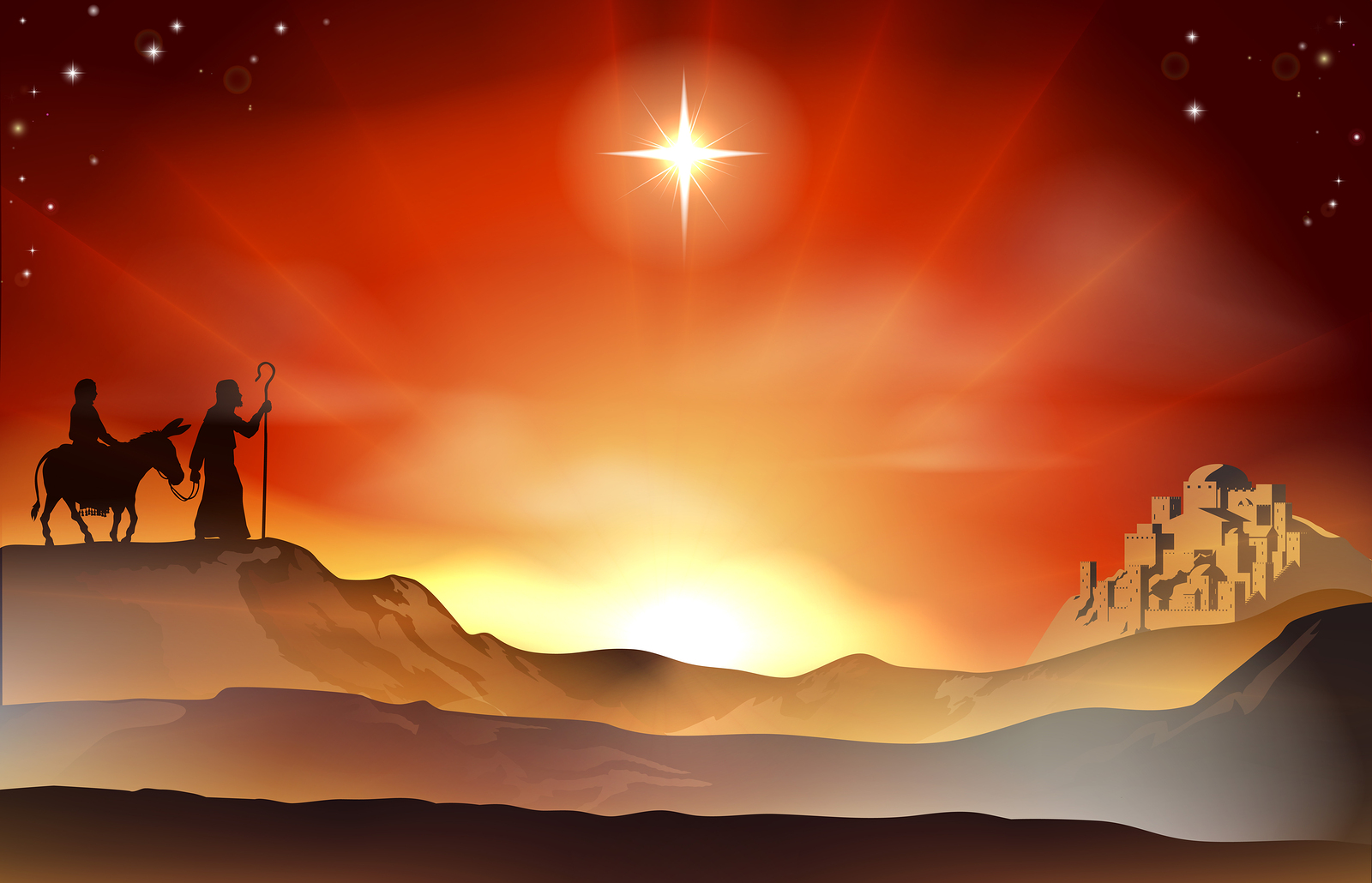
We like the image of God making a path for us to walk, giving us some sense of the direction in which we are called to go.  It just makes it easier, as if we’ve sort of been handed a holy GPS that we can turn on when we get lost. But this psalm presents it a little bit differently.  Righteousness will go before him, and will make a path for his steps.  What does that mean?  Are WE being asked to prepare that path?

This Psalm was probably originally sung in response to the return from the Babylonian exile.  Think about it.  Their land was being returned to them, their lives were beginning to get a little better, sort of fall into place, and there was a sense of a sort of national forgiveness.  There was hope that had not been present for a long time.  But hope also calls one to take a good hard look at oneself.  And the people knew what had happened and what wrongs they had done to each other.  They recognized the pall of systemic sin that was present, a certain acceptance of poverty and injustices and divisive fractions in their midst.  This Psalm is a lament that is spoken to the past and a reminder to listen to God and then look through the lens of righteousness to the beautiful path before them.

Yes, Psalms are uncomfortably timeless.  They tend to point to the perils and beauty of humanity that happens over and over again.  We, too, have wandered in a sort of exile this year.  The Covid pandemic has forced us away from each other and, for some of us, have taken away so much.  And for our society, this time has uncomfortably shined an all-too-bright light on things that we didn’t really confront in ourselves, in our community, in our nation, and in our world.  Nationally, this pandemic has had more of a dramatic effect on those in our society that were already victims of injustices.  But this time has made it worse and it forces us, like those post-exilic returnees of centuries ago, to look at ourselves and how we participate in allowing poverty and injustice and the isms that exist in our society.  It’s a hard lesson for us.  We cannot separate ourselves from each other.  We are on this pathway together.  And when one person is treated unjustly, when one person has little to eat, when one person doesn’t have fresh water or a safe place to live, when one person is hurt because of racism or sexism or any other type of exclusion, we have to open our eyes to the part we play in that.

Think about this.  God HAS laid a pathway for us.  But we’re not programmed robots.  The pathway winds and turns.  There are often multiple ways to go on it.  Parts of it are drowned in weeds and undergrowth that make it difficult to see and treacherous to travel.  Parts of it are too rocky for comfort or too wet and slippery for safe travel.  The point is that the pathway IS there; but maybe we’re called to pave the way, clearing away the debris and making the way not just for US to travel but for everyone who walks with us.

That’s the way that, as the Psalmist sings, God’s steadfast love and our faithfulness will meet and righteousness and peace will be inseparable.  It is that perfect love, hesed in Hebrew.  And it is in clearing this pathway, readying it for others to walk easily, without the hindrances that we allow to exist, that we will also find our way.  In this Season of Preparation, we are told to “Prepare the Way of the Lord.”  Have you ever really thought about what that means?  The path is there.  It’s been traveled before.  But it needs some of our work to make the Way visible, to make the Way that all of us can travel together.     

God travels wonderful paths with human beings; God does not arrange matters to suit our opinions and views, does not follow the path that humans would like to prescribe for God.  God’s path is free and original beyond all our ability to understand or to prove.  (Dietrich Bonhoeffer)

Grace and Peace,

Shelli

A Shift in the Light

Advent 2B Lectionary:  Mark 1: 1-8

The beginning of the good news of Jesus Christ, the Son of God.  2As it is written in the prophet Isaiah, “See, I am sending my messenger ahead of you, who will prepare your way;3the voice of one crying out in the wilderness: ‘Prepare the way of the Lord, make his paths straight,’”…7He proclaimed, “The one who is more powerful than I is coming after me; I am not worthy to stoop down and untie the thong of his sandals. 8I have baptized you with water; but he will baptize you with the Holy Spirit.”

My television in my living room is in the best place to be able to see it from all parts of the room.  But for about thirty minutes of each day, you have to keep changing seats if you want to see the screen.  The reason is that the sunlight coming through the window as it begins to break into dusk is just too bright reflecting off of the television screen.  You have to move to see it. 

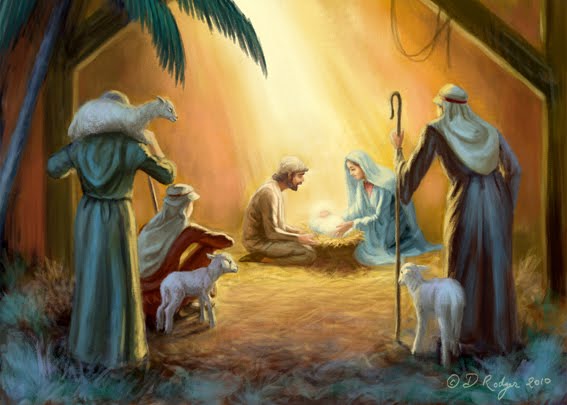
The Lectionary year in which we find ourselves takes a lot of readings from the Gospel According to Mark.  Now our experience with the other Gospels during this season, leads us to expect either a birth story, as in Matthew and Luke, or a poetic meditation on Jesus’ pre-existence with God, as in John.  But not here.  The writer of this Gospel gets right to the point, not allowing us to risk drowning and staying in the beauty of the nativity.  Here is a messenger, coming to prepare you for what will happen next.  Here is a messenger, paving the path, preparing the way for the coming of the Lord.  No Mary and Joseph, no baby, no stable, no shepherds, no magi, no angels…just…boom…the One is coming that will baptize you with the Spirit of God…the One is coming who will change your life and change your ways and change the world from what we know it to be…the One is coming who will bring us all into the Reign of God.  It is a shift in the light.  And you have to move to see it.

We are left suspended in time between what has been and what is about to be, between the “already” and the “not yet”.  The old spiritual writers would call it a state of liminality, betwixt and between.  We are living in the Gospel, living in the Good News, and, yet, it looks odd in our current light.  So the writer of the Gospel wants to make sure that we actually get it by shifting our light a bit. 

See, Jesus did not just bolt out of the blue.  Contrary to what some people may think the Good News of Jesus Christ does not replace what came before.  It continues it and expounds on it.  I don’t know who came up with the notion of an “Old Testament” and a “New Testament” but I don’t think it’s a very good distinction. It implies that we’ve somehow quit using the first one and, at least for most of us, that’s the furthest thing from the truth.  The Good News is not the beginning of a new book; it’s the beginning of the fulfillment of what the world was supposed to be all along.  I think for us Christians the coming of Jesus is not a “new” way but rather a way of seeing God’s Truth illuminated by a shift in the Light.  God and God’s truth remain just as “In the beginning…”.  God created the Light.  The Light was always there. Maybe we just needed to adjust our sight or move to a different place to actually see it. So, enter John the Baptist…

As it is written….Essentially, the beginning of the good news of Jesus Christ, the Son of God, is everything that came before–all the prophets, all the judges, all the Wisdom, all the kings, Elijah, Moses, Ruth, Jacob, Abraham, Sarai, all the exiles returning home, all the burning bushes and parting waters, all the covenants, all those generations upon generations upon generations of people who wandered in the wilderness.  And now…now appearing in the wilderness is this wild, somewhat unkempt, bear of a man who clothes himself in camel’s hair and eats what appears to be whatever crosses his path in the brush.  There were certainly those with “proper” upbringing and “acceptable” expression of their religious beliefs that probably would have been a bit embarrassed by the whole display.  I mean, maybe it would have gone down a little easier if God had chosen someone a tad bit more “traditional”.  (But then, really, was Jesus all that in line with the traditions of the day?)  And yet, I’m fascinated with this character of John the Baptist.  He knew who he was.  He knew his place.  He was called to prepare the way.  He was called to BE the voice crying out in the wilderness.  He was called to prepare the way of the Lord.  He was called to point us toward the changing Light.

Our first inclination may be to shy away or shield our eyes because, well, it’s pretty bright.  And, truthfully, we kind of like the way our lives are going.  We like how it feels in our comfy chair.  It’s just that we can’t really see from there.  And this is serious business.  It is for this that we’ve waited for centuries.  It is for this that we as a human race have endured exile and heartache and the pains of loneliness as we wandered in the wilderness.  It is for this moment that is just about to happen.  The image is becoming clearer.  But we have to begin to adjust the way we see.  God is on the threshold of our lives and we have begun to hear the faint voices of angels as our eternity begins.  But there is work still to do.  There are still hungry to feed; there are still lost to find; and there is still peace to bring.  But it is beginning. It is coming to be.  And the Light is changing.  And now WE’RE supposed to be the voice crying out in the wilderness. It’s time for us to move.

We have become so accustomed to the idea of divine love and of God’s coming at Christmas that we no longer feel the shiver of fear that God’s coming should arouse in us.  We are indifferent to the message, taking only the pleasant and agreeable out of it [stories of babies and mangers and shepherds and angels] and forgetting the serious aspect, that the God of the world draws near to the people of our little earth and lays claim to us.  The coming of God is truly not only glad tidings, but first of all frightening news for everyone who has a conscience…We are no longer alone; God is with us.”  (Dietrich Bonhoeffer)

Grace and Peace,

Shelli

Shhh…You’re Supposed to Be Listening

There were some problems with this post, so I apologize if you’re getting this a second time!

Psalm 29: 3-9

3The voice of the Lord is over the waters; the God of glory thunders, the Lord, over mighty waters. 4The voice of the Lord is powerful; the voice of the Lord is full of majesty. 5The voice of the Lord breaks the cedars; the Lord breaks the cedars of Lebanon. 6He makes Lebanon skip like a calf, and Sirion like a young wild ox. 7The voice of the Lord flashes forth flames of fire. 8The voice of the Lord shakes the wilderness; the Lord shakes the wilderness of Kadesh. 9The voice of the Lord causes the oaks to whirl, and strips the forest bare; and in his temple all say, “Glory!”

The voice of the Lord…God’s voice…listen…

Most humans don’t listen that well.  We like talking, filling our lives with our own thoughts and our own opinions and, at times, our own bloviations.  And think what we miss!  Is it possible that in our call to wait during this season, we are also being reminded to listen, to listen for God’s voice?  You know, when you read the Old Testament, there are lots of places where people are convinced that they hear God’s voice, that they hear God calling to them.  And God tells them to go from where they are or follow a star or climb a mountain or cross a sea or listen to a burning bush. So, did God quit talking?  Or did we quit listening?

God’s voice comes to us in a myriad of ways—nature, animals, others, our own conscience, our own thoughts (if we listen to them rather than feeling like we need to spit them out into the world before they’re fully formed), and music of all kinds.  I often hear God in music.  I think it’s because music breaks in and seeps into us.  It quiets us.  It teaches us to LISTEN, to listen to something other than our own voice.  Joan Chittister said that “music is the only sound of heaven we’ve ever been given…music is where the soul goes to put into notes what cannot be said in words.”  That’s why music crosses languages.  I listen to lots of music for which I can’t understand the words and, yet, I do understand them. 

That’s the way we need to learn to listen—not to know what words are being used but to learn to let what we hear penetrate deep into our souls.  We will hear God’s voice but it may not be in the words or the language to which we are accustomed.  It may be a song we’ve never heard.   This is the season when we stop and learn to listen for God’s voice.  It’s there.  But we have to listen. 

So, I found this video.  It’s a little different but I think it says a lot.  It teaches us to listen…and to sing.  It teaches us to respond to the music we hear.  (I WOULD turn the sound down a bit if you’re next to your dog.)

Down in the forest 
We'll sing a chorus  
One that everybody knows 
Hands held higher  
We'll be on fire  
Singing songs that nobody wrote (Wolf Conservation Center)

But ask the animals, and they will teach you… (Job 12:7)

In this our Season of Waiting, we are learning to listen, to listen to God’s voice.  It’s there.  It’s everywhere. It surrounds us, goes before us, follows us, and seeps into us. It’s leading us to that for which we are waiting.  But we have to stop.  And we have to listen.  It happens in the silence, the holy silence, the spaces between our words.  It happens in OUR silence.  See, Creation is full of songs of all types.  It never stops.  It never sleeps.  It is always there.  We don’t have to know the words.  We just have to listen.  When we are silent, we will hear the music around us.  And it will become a part of us.  And we will recognize it when it does.  Because we’ve heard it before.  It is God’s gift.  It is God’s voice.  Shhhhh….You’re supposed to be listening.

I just couldn’t help myself. The gates were open and the hills were beckoning…I can’t seem to stop singing wherever I am. (Maria, from…”The Sound of Music”)

Grace and Peace,

Shelli

Shhh…You’re Supposed to Be Listening

Psalm 29: 3-9

3The voice of the Lord is over the waters; the God of glory thunders, the Lord, over mighty waters. 4The voice of the Lord is powerful; the voice of the Lord is full of majesty. 5The voice of the Lord breaks the cedars; the Lord breaks the cedars of Lebanon. 6He makes Lebanon skip like a calf, and Sirion like a young wild ox. 7The voice of the Lord flashes forth flames of fire. 8The voice of the Lord shakes the wilderness; the Lord shakes the wilderness of Kadesh. 9The voice of the Lord causes the oaks to whirl, and strips the forest bare; and in his temple all say, “Glory!”

The voice of the Lord…God’s voice…listen…

Most humans don’t listen that well.  We like talking, filling our lives with our own thoughts and our own opinions and, at times, our own bloviations.  And think what we miss!  Is it possible that in our call to wait during this season, we are also being reminded to listen, to listen for God’s voice?  You know, when you read the Old Testament, there are lots of places where people are convinced that they hear God’s voice, that they hear God calling to them.  And God tells them to go from where they are or follow a star or climb a mountain or cross a sea or listen to a burning bush. So, did God quit talking?  Or did we quit listening?

God’s voice comes to us in a myriad of ways—nature, animals, others, our own conscience, our own thoughts (if we listen to them rather than feeling like we need to spit them out into the world before they’re fully formed), and music of all kinds.  I often hear God in music.  I think it’s because music breaks in and seeps into us.  It quiets us.  It teaches us to LISTEN, to listen to something other than our own voice.  Joan Chittister said that “music is the only sound of heaven we’ve ever been given…music is where the soul goes to put into notes what cannot be said in words.”  That’s why music crosses languages.  I listen to lots of music for which I can’t understand the words and, yet, I do understand them. 

That’s the way we need to learn to listen—not to know what words are being used but to learn to let what we hear penetrate deep into our souls.  We will hear God’s voice but it may not be in the words or the language to which we are accustomed.  It may be a song we’ve never heard.   This is the season when we stop and learn to listen for God’s voice.  It’s there.  But we have to listen. 

So, I found this video.  It’s a little different but I think it says a lot.  It teaches us to listen…and to sing.  It teaches us to respond to the music we hear.  (I WOULD turn the sound down a bit if you’re next to your dog.)

Down in the forest 
We'll sing a chorus  
One that everybody knows 
Hands held higher  
We'll be on fire  
Singing songs that nobody wrote (Wolf Conservation Center)

But ask the animals, and they will teach you… (Job 12:7)

In this our Season of Waiting, we are learning to listen, to listen to God’s voice.  It’s there.  It’s everywhere. It surrounds us, goes before us, follows us, and seeps into us. It’s leading us to that for which we are waiting.  But we have to stop.  And we have to listen.  It happens in the silence, the holy silence, the spaces between our words.  It happens in OUR silence.  See, Creation is full of songs of all types.  It never stops.  It never sleeps.  It is always there.  We don’t have to know the words.  We just have to listen.  When we are silent, we will hear the music around us.  And it will become a part of us.  And we will recognize it when it does.  Because we’ve heard it before.  It is God’s gift.  It is God’s voice.  Shhhhh….You’re supposed to be listening.

I just couldn’t help myself. The gates were open and the hills were beckoning…I can’t seem to stop singing wherever I am. (Maria, from…”The Sound of Music”)

Grace and Peace,

Shelli

As If It Is

Advent 2B Lectionary Passage:  2 Peter 3: 8-9 (10-15)

8But do not ignore this one fact, beloved, that with the Lord one day is like a thousand years, and a thousand years are like one day.  9The Lord is not slow about his promise, as some think of slowness, but is patient with you, not wanting any to perish, but all to come to repentance.

Now as patient as the writer of this passage sounds, it is likely that he or she (yes, I think there could have been some she’s writing!) probably assumed that Jesus’ return was imminent (as in weeks or months). In fact, my guess is that most of those that walked the earth in the time of Jesus and the years after would be absolutely stunned and perhaps downright flabbergasted that you and I sit here today having the same discussion.  They assumed that Jesus was returning in their lifetime and that this return entailed Jesus just showing up and making everything right.  But if that had happened, think about what humanity would have missed!

I used to really wonder what Jesus’ return would look like.  I mean is he going to return to Bethlehem?  Maybe this time he’ll show up in Paris or New York City or Moscow, Russia.  Maybe Australia.  Or Tahiti.  Or perhaps he’ll go for a bit of drama and plop down in the middle of the Super Bowl or something. OR…(and hear me out here) what if the “return” that Jesus spoke about has already happened?  I mean, have you read the account of Pentecost?  Remember the rush of violent wind and the Holy Spirit that filled all who were there.  Remember the quote from the prophet Joel: “In the last days it will be, God declares, that I will pour out my Spirit upon all flesh…”

The truth is that we don’t know what will happen or when it will happen or, for that matter, if the Coming that Jesus talked about has already happened.  The full transformation of all of Creation will happen when it will happen.  And it will look EXACTLY like God envisioned it will look.  God’s time is God’s time.  And in God’s time, one day is like a thousand years, and a thousand years are like one day. And for us?  We wait. 

But lest you think your waiting is just sitting around dreaming of redemption and re-creation and twiddling your thumbs, you need to remember that you are Spirit-filled.  And as those who are Spirit-filled, we need to realize that WE are the ones that God is calling now.  WE are the ones that God is filling and gathering and sending.  WE are the ones that are supposed to be peacemaking and justice-building.  WE are the ones that are called to feed the hungry and shelter the homeless.  WE are the ones that are called to wipe out racism and welcome those who are excluded. WE are the ones who are called to be Christ on earth.  So while you wait for God’s time for the full redemption of Creation to come to be, as one who is Spirit-filled, you are called to live AS IF it’s already here. 

In this Season of Advent as we practice holy waiting, when we both remember those who looked for the coming of the Messiah so long ago and look ahead for Christ’s coming into our own lives, we are also reminded to live as if it’s already come to be.  Because if everyone lived AS IF it was here, as if the world was transformed into what it was meant to be, then it would already be.  The truth is, this IS God’s time.  It’s ALL God’s time.  And we are smack dab in the middle of it.  We wait for the darkness to be pushed away by the light but in the meantime, we need to do a little of our own darkness-pushing.  God is waiting for us to respond, for us to proclaim God’s love and mercy, for us to live “as if”—as if the coming of the Lord is now, as if God’s Spirit has already spilled into the earth, as if justice and righteousness was the only way, and as if we knew no other way to live.

Earth’s crammed with heaven, and every common bush afire with God;  But only [they] who see, take off [their] shoes—the rest sit around it and pluck blueberries.   (Elizabeth Barret Browning, from “Aurora Leigh”)

Grace and Peace,

Shelli

An Active Imagination

“Peaceable Kingdom”, John August Swanson, 1994

Amos 9: 13-15

13The time is surely coming, says the Lord, when the one who plows shall overtake the one who reaps, and the treader of grapes the one who sows the seed; the mountains shall drip sweet wine, and all the hills shall flow with it. 14I will restore the fortunes of my people Israel, and they shall rebuild the ruined cities and inhabit them; they shall plant vineyards and drink their wine, and they shall make gardens and eat their fruit. 15I will plant them upon their land, and they shall never again be plucked up out of the land that I have given them, says the Lord your God.

So, out here in the wilderness, what are we supposed to do while we wait for things to get better?  I mean, faith is about waiting, yes.  But faith is also about doing. Faith is supposed to be active, right?  So what are we supposed to be DOING during this wilderness time?  And how can we find out more about when this will actually resolve?

We 21st century journeyers struggle with the unknown, with just leaving things to chance, with admitting that perhaps there are those aspects of our journey that are not for us to know now. That is what Advent does for us…it points us toward mystery. Some would equate that to nothingness or, perhaps, even to darkness–unknown, foreboding, maybe even a little dangerous. But God came and comes over and over again. I think that God’s coming does not, much to some of our chagrin, bring with it the surety that we might like. In fact, knowing everything that’s ahead, being so absolutely sure of how everything is going to turn out, is surely the death of our faith.  Because if you are so sure of everything, why would you need faith at all?  God doesn’t give us surety; God instead instills faith in us to lead us through the darkness.

It is our faith that opens the door to our imagination.  And it is our imagination that strengthens our faith.   God says…walk with me awhile my child and look…look far beyond where you can see…listen far beyond where you can hear…journey far beyond where you think you belong…and there, there I will be, and there will be the Creation that I have created for you. You can’t see it right now.  But you can imagine it. 

Imagination is not some remnant of our childhood that we were supposed to lose as we matured.  It is part of us and it matures with us.  A mature imagination has no limits to what it can envision; it has no boundaries to what it can do.  A mature imagination steps beyond reason and intellect, not leaving them behind, but sweeping them into a new image, a vision of a New Creation.  A mature imagination is fueled by faith.  Our imagination takes us to the place to which God leads us.  Our imagination gives us a glimpse of the mystery that God has promised, the promise of new life.

Advent is about imagining.  Think of those that came more than 2,000 years before us.  They were imagining what the coming of the Messiah would mean.  Now they more than likely got it wrong.  But that’s not the point.  They were imagining a new Creation, a new way of being.  They were imagining that their lives would be better, that peace and justice would rule, that hunger and poverty would be no more.  They were imagining that they would find there way home.  And their faith walked them in that direction.  So, in this Advent so many years later, just imagine…

Your imagination is your preview of life’s coming attractions. (Albert Einstein)

Grace and Peace,

Shelli

Wilderness Re-Creation

ADVENT 2B: Isaiah 40: 1-11

A voice cries out: “In the wilderness prepare the way of the Lord, make straight in the desert a highway for our God. Every valley shall be lifted up, and every mountain and hill be made low; the uneven ground shall become level, and the rough places a plain. Then the glory of the Lord shall be revealed, and all people shall see it together, for the mouth of the Lord has spoken.” (Isaiah 40: 3-5)

First of all, with all due respect to Mr. Handel’s presentation, this passage was probably not originally written with us or our tradition in mind! This really is talking about the people of Israel. It really is talking about bringing comfort to a people who have wandered in the Judean wilderness. Probably written toward the end of the Babylonian exile, this writing offers a vision where a highway (a REAL man-made highway) through the wilderness will be made level and straight. If, as most assume, this part of the book that we know as Isaiah was written after the exile, it would have been soon after 539 BCE when Cyrus of Persia conquered the Babylonians and, not really caring whether or not the Israelites stayed, allowed them to return to Jerusalem. So imagine a highway that, typical of the ancient world, would have originally been built to accommodate royal processions. And so God is depicting a highway made for a grand procession led by the Almighty.

The just-released exiles are returning. But to what? Their city and their way of life lay in ruins. They can’t just go back and pick up where they left off. They have to feel that God has deserted them. They are looking for comfort. They are looking for solace. They are looking for God to put things back the way they were before. But God has something different in mind. Rather than repair, God promises recreation; rather than vindication, God promises redemption; and rather than solace, God promises transformation. God is making something new–lifting valleys, lowering mountains, and ultimately, when all is said and done, revealing a glory that we’ve never seen before.

So 2020 has handed most of us a new understanding of this passage.  (Wow! Thanks 2020!)  As a community, as a country, as a people, we sort of have our own little wilderness thing going right now. Now we haven’t been conquered by Babylonians yet (and for that we ARE thankful!), but our life has changed—probably, if we’re honest, forever. And in this season that so quickly elicits traditions and memories of past years, it is easy to start to feel like we are truly walking through an unknown wilderness, full of masked strangers, distanced friends, and communication via these little boxes of faces on Zoom.  The wilderness sometimes seems to be closing in on us.  And the pathway out seems to be murky at best.

But think about this passage.  We are given a vision.  We are not promised solace. We are not promised that Emmanuel, God With Us, is coming to put our lives back together. In fact, can you feel it? The world has begun to shake. The valleys are rising; the mountains are leveling. Something incredible is about to happen. The light is just beginning to dawn. Life as we know it will never be the same again. Soon the fog will lift and we will see that the road does not lead back to where we were. It instead leads us home. But we’re going to have to be willing to leave what we know–forever.

When we prepare ourselves in this Season, we’re not looking for the Messiah to come and put all the pegs back where they were.  We’re not preparing ourselves to go back to the lives to which we’ve become accustomed.  God is not going to “fix” it.  I mean, think about it.  God’s not usually in the “fixing” business.  God is more into making all things new.  So we have to open ourselves to the new creation that God promises and here in the wilderness, God will re-create us too.  So, open your eyes, learn to wait, prepare your hearts for something new, for the glory of the Lord to be revealed.  And, in the meantime, wear your mask!


The Wilderness holds answers to more questions than we have yet learned to ask. (Nancy Wynne Newhall)

Grace and Peace,

Shelli