Changing Expectations

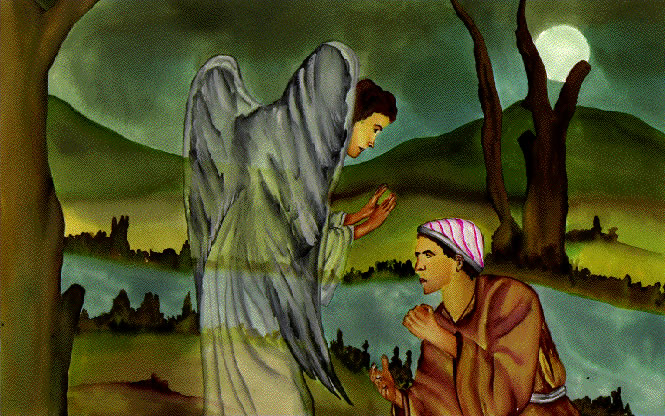
We usually think that we have it all figured out.  We walk through our lives with grand plans and grand illusions of what the world should look like and what we should look like to the world.  John was no different.  He loved Jesus, loved the things that Jesus represented–freedom, peace, righteousness.  And so, he had set to work telling everyone how he saw it.  But then all of a sudden, he realized that Jesus was doing things differently. Essentially, what Jesus was doing was not in the mold of what John had envisioned.  John was going around preaching repentance in the face of what was surely the Kingdom of God coming soon.  And here was Jesus healing and freeing and raising the dead.  John probably didn’t see it as wrong—just sort of a waste of time.  After all, in his view, there were people that needed redeeming, and redeemed NOW!  We need to get busy. “Jesus, really, this was not quite what we were expecting!”  So, he asks Jesus, “OK, are you the one who is to come, or are we to wait for another?”  (As if to imply that we may need to wait for someone that will get this show on the road and make everyone get on board the way we think it should be.)

Well, the truth as we know it is that Jesus WAS Emmanuel, Jesus WAS God Incarnate, Jesus WAS the Savior for which the world had waited for so long.  The problem was that the world (and even John) could not see Jesus standing right in front of them because they were too busy looking for what they had expected.  They had expected a mighty warrior.  (Well, where was he?)  They had expected a king to whom everyone would bow.  (Well, that wasn’t happening!)  They had expected someone who would clean things up and make life easier.  (And you want me to do WHAT?  Hob-knob with the unacceptables and give up my place to those who haven’t worked for it and share my fortune with the less fortunate and essentially begin to go back down the ladder of progress to find what I’ve been missing?)  Truth be told, the world was expecting a warrior politician and got a demure baby in a manger, of all things.  Surely, THIS can’t be right!  I mean, really, how can we put our trust and our faith in one who is essentially one of us?  So, should we wait for another?

Years ago, the Today Show had a feature story about some young Panda bears who had been brought up in captivity.  But the plan was to eventually return them to their natural habitat.  So, in order to prepare them for what was to come, their caretakers thought that it would be better if they had no human contact.  So, to care for them, the people dressed up like panda bears.  In order to show them how to live the way they were supposed to live, they became them.  Well, isn’t THAT interesting!  I think that’s been done before!  In its simplest form, the Incarnation is God’s mingling of God with humanity.  It is God becoming human, dressing up like a human, and giving humanity a part of the Divine.  It is the mystery of life that always was coming into all life yet to be.  God became human and lived here.  God became us that we might see what it means to change the world.   God became like us to show us what it meant for us to be like God in the world.  The miracle of the birth of the Christ child is that God now comes through us.  God’s vision comes alive through us.

Jesus really didn’t “fit in”.  Jesus was not anything that any of us were expecting.  That’s the whole point.  Perhaps Jesus calls us to be what the world does not expect.  God did not come into this world to calm and affirm how well we were conducting things.  God came to show us a different way of living, a different way of being.  God came as one of us, Emmanuel, God With Us, to show us how to be one of us, to show us how to be human, fully human.  Who would have ever come up with that?  That was NOT what we were expecting.  Because you see, the miracle of God is here, dwelling in our midst, dwelling in us.  This is the mystery of the redemption of the world.

And, here we are, still waiting, waiting for the world to change.  What is your vision of that change?  What is it that you want to see happen?  Here’s the thing…what if our vision of what the world should be is not God’s?  What if part of waiting on the world to change is learning to change our own expectations?  What if part of wanting something new is realizing something new?  It’s hard.  I mean, we’re here.  We see what’s failing.  Well, remember God is here too.  And I’m thinking God has a much larger picture than we do. 

So, what are you willing to give up for others?  (Or is the world going to have everything it needs even when we have too much?)  What are you willing to relinquish so that others will have?  (Or is the world going to heal when we are spending time enriching our own lives?)  What are you willing to put forth so that others will hear?  (Or is the world on its own because we are afraid to speak, afraid to speak forward, afraid to risk.)   God didn’t call us to “fix” the world; God called us to be a part of re-creating it, part of a new creation, a new vision of what would be.  How willing are we to give up what we have, what we know, to let that vision come to be?  How willing are we to change our expectations?  Are you the one that is to come or are we to wait for another?  No, the world is waiting for us, the ones that God called to do this hard work.  Don’t get me wrong.  It’s hard—REALLY hard.  But God is here, walking with us, doing the work with us.  But we have to be open to the possibility that the change that we want so desperately may look a little different than what we thought.

Grace and Peace,

Shelli

Remember Who You Are

This is another familiar passage for this season.  It’s part of the Year B Lectionary but, again, I’m “filling in”.  It speaks of hope.  (You’ll remember that it also appears in Luke 4:18-21, which is sort of Jesus’ first sermon, if you will.)  In both passages, God has sown God’s own Spirit into the one who speaks, breathed God’s breath into the one who will carry out God’s will.  And, here, standing amid the ruins of what was once a thriving Jerusalem, the prophet depicts the perfect Reign of God, the time when all of Creation will be renewed and fulfilled.  It is the hope for the future even in the midst of the smoldering ashes of what is now.  And within that hope is also a call to remember—remember who and whose you are, remember what you had, that we might work to build it again.  And the prophet acknowledges and affirms an individual call from God, a call to bring good news, to bind up, to proclaim liberty, to witness, and to comfort. Well, that’s good…because we need someone to fix this mess, right?

But notice that in verse 3, the pronoun changes.  No longer is the prophet affirming an individual’s call.  The calling is now to the plural “they”.  It’s not just the “me” that is the prophet; it is the “they” that is everyone. The prophet is not called to “fix” things; the prophet is called to proclaim that all are called to this work of transformation and to call on us to remember who and whose we are. In other words, all that work that you think needs to be done?  Remember who you are.  Remember that vision God calls you toward.

(OK…TRIGGER WARNING…)  I try very hard on this platform to NOT get political (I have another platform where I intentionally get blatantly political and that will suffice).  But I may be going up to the line here.  Honestly, I’m scared.  I’m scared that our society and our world are being slowly and intentionally taken over by different degrees of authoritarianism.  We Americans seem to somehow be content with handing over the reins to a newfound authoritarian oligarchy.  I have read too much history and traveled too many places to naively think that this will end well if we don’t turn a corner.  I’m scared that while we’re waiting for things to change, we’ve forgotten who we are.  We’ve forgotten what we’re called to do and called to be.  So, how do we build up and raise up and repair?  How do we listen to the prophet’s words?  How do we become instruments of change, instruments of God’s vision for what the world could be?

In 1998, I visited Russia. (During the worst heatwave they ever remembered!  I learned to drink straight frozen vodka at lunch because it felt like ice going through my body and it was lovely.)  Anyway, that was during the height of something different happening in Russia.  Gorbachev had introduced Glasnost (openness) and Perestroika (restructuring) in the mid-1980’s, the Communist regime Soviet Union had officially fallen in 1991 and there was a new life.  People were excited.  They knew they had it rough.  In fact, they had had it rough for centuries.  (“Doctor Zhivago” is not completely fiction.)  But there was hope.  Things were changing.

I visited Russia again in 2008.  I stayed for three weeks.  (Ironically, during the record-breaking snowfall and below-zero temperatures.  What is it with me?)  It was very different than it had been ten years before.  I stayed in a “luxury” apartment that rattled with the train down below, had peeling paint and cracking walls, no electricity that would withstand a curling iron, strange-colored water coming out of the hydrants, and was, oh my, so incredibly cold.  But truly, it WAS luxury.  I visited apartments of members of our sister church.  There were 15 people living in about 400 square feet.  The walls were covered in faded newspaper in an attempt to insulate it.  And food was scarce.  And much of it was rotting.  Perestroika was beginning to fade.  When I attended our sister church, I sat there (in a language that I only knew about ten words and how to read three words in Cyrillic) in an “illegal” church service because of the building in which it was held.  I remember thinking, “you know, this could end badly for me!”  But the point was that the society, the economy, and the newfound freedom and openness were failing.  They knew it was failing.  Rather than the feeling of hope and promise that I had observed ten years before, I had a sense that they were just trying to exist, just trying to go around all the issues without tripping on them.  They were just trying to avoid poking the bear, so to speak, and live their lives as best they could.  They were existing.

I don’t want that for us.  I want to listen to the prophet.  While we wait on the world to change, we cannot ignore if it is going backwards.  We HAVE to remember who and whose we are.  We are the ones that are called to become the new shoots sprouting to life.  We are the ones that are called to bring good news, to bind up, to proclaim liberty, to bring justice, to witness, and to comfort. 

See, God calls people to transform the world.  And we are “they”.  We are the ones that are called to stand in the ruins, to step through the smoldering ashes, to take the remnants of destruction and hate and despair and to bring good news to the oppressed, to bind the brokenhearted, to proclaim liberty to the captives, and release to the prisoners; to proclaim the year of the Lord’s favor, and to comfort all who mourn.  And as the earth brings forth shoots, as a garden causes what is sown in it to spring up, so God will cause righteousness and praise to spring up before all the nations.  Newness will arise from destruction or smoldering ashes or misspent interpretations.  God calls us to something new.  Remember that.  Do not be content to just exist.  God calls us to something more.  You can’t wait on the world to change without remembering who and whose you are.

Grace and Peace,

Shelli

God Is Here

So, in case you haven’t figured it out, I’ve tried to at least try to line up with our lectionary texts from Year A.  But, since there’s only three Scriptures plus a psalter each week, writing daily calls for some “fill in”.  This passage is normally read in the third week of Advent during Year C.  We actually only read from the book of Zephaniah three times throughout the three-year cycle of the Revised Common Lectionary, so we’re probably not experts on it.  The book is probably set during the time of King Josiah.  It was a time of indifference by the people.  Maybe they were tired; perhaps they were just a bit too comfortable; or possibly they just forgot who and whose they were.  They have been hearing an ongoing foretelling of a time of destruction, a time of divine judgment. (I guess that would make me tune out too!)  But then we come to this passage.  It is a voice of hope, foretelling salvation rather than destruction.  And it proclaims, “the Lord, your God, is in your midst.”

Think about what that means.  We’ve talked a lot in this series about waiting for the world to change, about what we do while we’re waiting, about ways to wait and ways to change.  And a lot of our Advent waiting is couched as waiting for God, waiting for the coming of God into our midst.  But this passage says that God is here.  What do we do with that?  So, if you’ve been waiting for a God that is “out there” or “up there” or somewhere “up ahead” waiting for us to catch up, this throws all of that off.  God is here.  God is with us.  God is here, waiting with us now.

I often wonder what the Old Testament prophets would say to us today.  I often think it’s possible that they would be shocked and disappointed that we haven’t come farther than we have, that we still operate out of weakness and fear, that we still allow our leaders to pursue power over justice, that we still do not offer care for the lame and outcasts, that we are still desperately waiting for the world to change.  Go back and read this.  How much of Zephaniah’s words apply?  Probably most of them, as much as I hate to admit it.  But then we read that God is in our midst.  God is here.  God is here now.  So, don’t you wonder what God thinks of our world?  Don’t you think God is sometimes frustrated with us, maybe even angry at times?  I mean, we haven’t come that far from those to whom Zephaniah spoke.

God is here.  Imagine God there with you, sitting with you, experiencing what you are experiencing, rejoicing in your joy and suffering in your sorrow.  When we do not welcome the immigrant, God is here.  When armed troops march into our cities to purge the other, God is here.  When we kill survivors clinging to boats, God is here.  When we do not provide food to the hungry or healthcare to the sick, God is here.  And when our world rocks with war and power struggles and desperation, God is here.  When our public rhetoric becomes wrought with exclusion and racism and xenophobia, God is here.  God is here.  God is not waiting until the world changes.  God is here now.

It reminds of W.B. Yeats famous poem, “The Second Coming”.  He wrote it at the end of World War I and the beginning of the Irish War of Independence, when the world was in chaos, when there was a fear that a new and brutal era would emerge.

Turning and turning in the widening gyre   

The falcon cannot hear the falconer;

Things fall apart; the centre cannot hold;

Mere anarchy is loosed upon the world,

The blood-dimmed tide is loosed, and everywhere   

The ceremony of innocence is drowned;

The best lack all conviction, while the worst   

Are full of passionate intensity.

Surely some revelation is at hand;

Surely the Second Coming is at hand.   

The Second Coming! Hardly are those words out   

When a vast image out of Spiritus Mundi

Troubles my sight: somewhere in sands of the desert   

A shape with lion body and the head of a man,   

A gaze blank and pitiless as the sun,   

Is moving its slow thighs, while all about it   

Reel shadows of the indignant desert birds.   

The darkness drops again; but now I know   

That twenty centuries of stony sleep

Were vexed to nightmare by a rocking cradle,   

And what rough beast, its hour come round at last,   

Slouches towards Bethlehem to be born?

And God was there.  The Scripture we read ends with a promise, a promise of a gathering in, of a homecoming.  It ends with the promise that the world will change.  And God is here, in our midst.  We’re not waiting for God.  God is here, waiting, waiting for us, waiting with us for the world to change.  God did not come when things were perfect.  God waits with us, waiting with us for the world to change.  God comforts us and soothes us and, if we listen, WHEN we listen, will also give us ways to get closer to the vision that God holds for us all.  The Lord God is in your midst.

Grace and Peace,

Shelli

Patiently Imperfect

Don’t you hate it when someone tells you to be patient?  I am, admittedly, not the most patient person in the world.  I mean, there’s so much stuff we have to do!  Am I right?  We’re told that we are supposed to be a part of this Kingdom of God.  We are told that we are to be instruments of bringing it into being.  And then we’re told we have to learn to wait.  And now we’re told that we’re supposed to do that patiently.  It’s enough to try one’s patience.

There is a story that I love (and have many times used it, so you’ve heard it before) about an American traveler on safari in Kenya.  He was loaded down with maps, and timetables, and travel agendas.  Porters from a local tribe were carrying his cumbersome supplies, luggage, and “essential stuff.”  On the first morning, everyone awoke early and traveled fast and went far into the bush.  On the second morning, they all woke very early and traveled very fast and went very far into the bush.  On the third morning, they all woke very early and traveled very fast and went even farther into the bush.  The American seemed pleased.  But on the fourth morning, the porters refused to move.  They simply sat by a tree.  Their behavior incensed the American.  “This is a waste of valuable time.  Can someone tell me what is going on here?”  The translator answered, “They are waiting for their souls to catch up with their bodies.” 

It’s about rest.  But it’s also about patience.  It’s about refraining from that continual push to “make” things change, to “make” things happen.  Change will come when it will come.  Yes, we’re called to work toward it.  But we’re not called to make something happen when the time is not right.  (Note to self!)

This passage is pretty familiar.  But we usually take it out of context.  Go back and read James 4:1 through this passage.  The whole thing changes.  This exhortation to be patient is not directed at our patience toward what is happening around us.  Rather, it is an exhortation to be patient with EACH OTHER.  (Ugh oh…that changes everything!)  The patience here is not merely a personal virtue.  It’s not talking about the way we wait for God’s coming; it’s talking about the way we act in relationship with each other.  It is a patience that is deeply grounded in faith, deeply grounded in who we are as the people of God. 

This patience, this strengthening of our hearts comes as the community lives and witnesses together.  It is a patience that enacts as we live as members who watch over and care for one another.  It means taking on a deep compassion and love toward the other.  The writer of James is telling us to be attentive to one another, to be compassionate, to not let things come about that are not conducive to our relationships, no matter how much we think they further God’s Kingdom.  God will grant all in God’s time.  What we’re called to do is love each other and I think that means that we work toward those ways that help each other.

And we thought waiting on the world to change was hard!  Now we’re told that we have to be patient with one another. (So, yes, you have to be patient with all those people that you think are wrong!) You know what?  We also have to be patient with ourselves.  See, we don’t live in a world that’s perfect.  God knows that.  We live in a world that is what God created it to be—for now.  And God calls us to love one another and together (yes, TOGETHER) to work toward that vision that God holds for all of us—together.

Be kind to one another, tenderhearted, forgiving one another, as God in Christ has forgiven you. (Ephesians 4:32)

Lyrics

Has this world forgotten how to love?
Are we blinded by the hate we let inside?
No one’s givin’ in or givin’ up
The lines are drawn and there’s no compromise

This isn’t who we are
It’s time for us to start

Looking for a window in the wall
Maybe we can see the other side
And find we’re not so different after all
Looking for a window in the wall

Sometimes hearts can grow as cold as stone
Then become the borders we can’t cross
The fertile fields of trust where love had grown
Slowly start to die when hope is lost

That’s where we are right now
But we can turn it all around by

Looking for a window in the wall
Maybe we can see the other side
And find we’re not so different after all
Looking for a window in the wall

We’re waging war, we’ve died enough
Fighting for everything but love
It’s time to heal (it’s time to heal)
To turn the page (to turn the page)
Too much to lose, so much to save
We have to change

Looking for a window in the wall
Maybe we can see the other side
And find we’re not so different after all
Looking for a window in the wall

Source: Musixmatch

Songwriters: Eddie Kilgallon / Tatiana Cameron / Thomas Paden

Window in the Wall lyrics © Pleezin’ The Breeze Music, Paden Place Music., Tajko Music Publishing

Grace and Peace,

Shelli

Community Pool

Isaiah 12

You will say in that day: I will give thanks to you, O Lord, for though you were angry with me, your anger turned away, and you comforted me. 2Surely God is my salvation; I will trust, and will not be afraid, for the Lord God is my strength and my might; he has become my salvation. 3With joy you will draw water from the wells of salvation.  4And you will say in that day: Give thanks to the Lord, call on his name; make known his deeds among the nations; proclaim that his name is exalted. 5Sing praises to the Lord, for he has done gloriously; let this be known in all the earth. 6Shout aloud and sing for joy, O royal Zion, for great in your midst is the Holy One of Israel.

This passage speaks of redemption, of God’s always-present faith in us.  Yes, that’s right.  Faith is not just a one-way thing.  We have faith in the faith that God has in us.  We love this passage.  We love to say it.  We love to sing it.  It brings us joy.  It is our affirmation that we trust that God will save us and that we rely on that.  And we wait and watch for those lovely flowing waters of salvation.  The writer’s vision is one of liberation—to the exiles, to the world, to all of Creation, to us.  The destiny is clear.  God is walking us all toward salvation and offering us healing waters and that is indeed something about which everyone should be joyful.

But notice, it’s not just about you and me; it’s about us—all of us.  It’s always odd for me when the language of prophets begins to sound like it’s intended for just one individual (i.e. the reader), as if it is called to direct the relationship that one person has with God.  That’s not usually the way prophets talked.  Their exhortations tended to be more collective.  They tended to talk more to the community rather than to just one individual.  So, I often find myself wondering if there’s some translation problems with some of the pronouns or maybe some confusion with the antecedents to which they refer.  I mean, what if God was OUR salvation.  Oh, wait, God is!

Faith is really meant to be more of a communal thing, don’t you think?  It’s not as if we’re in some sort of game to see who can come the closest to God.  After all, there’s that whole image of God thing.  If we are made in the image of God, then we are called to be trustworthy—for each other.  We are called to be the ones to draw waters that quench both physical and spiritual thirst–for each other.  We are called to be there for each other.  We don’t have individual wells. (Even if you HAVE an individual well, you’re still susceptible to the ground water from which you’re drawing).  The water is all of ours.  The well of salvation is a communal well.

And, yet, we still tend to wall ourselves off from each other and pull ourself into our own lives.  I think that is part of the reason that our society seems to be drowning.  You can’t wall off the water.  You can’t permanently hold it.  You certainly can’t choose who gets it.  It’s offered to us all.  You can’t quit trusting each other.  You can’t quit offering to each other.  God is in our midst, not to see if we’re doing everything right (because we’re probably not) but to show us the Kingdom of God—you know, the one for all of us.

When I visited the River Jordan (which is not the ACTUAL place of Jesus’ baptism but rather a part of the river where humans have again seen fit to wall it off and charge admission for the experience.  I’m not really sure if that’s what God had in mind.), I collected my perfunctory water to bring home.  All I had was a small pill bottle.  Yes, it made it home.  But it didn’t last.  Because water cannot be held.  (And apparently the seal on pill bottles is not all that reliable). It is shared whether we want to admit it or not.  I once was preparing to do a baptism and the mother of the child passed me on the stairs as I climbed to the next floor with the baptismal bowl (to go get water out of the sink in the lady’s bathroom).  She asked where I was going and my immediate response was “the River Jordan”.  She laughed and replied, “well as long as it’s clean.”  It was funny.  But think about it—water molecules don’t disappear.  They drain out, they evaporate, the return in as some form of water over the earth.  It continues forever.  Maybe some of those molecules in the lady’s bathroom HAD once been in the River Jordan.  Maybe some of those molecules were there with Jesus that day.  The point is, we’re really just swimming in a community pool all the time.

God IS our salvation.  God offers us the waters of salvation—over and over and over again.  There is no water destined for me.  There is none destined for you.  We really are just swimming in a community pool.  And while we wait for the world to change, the water remains.  Get out of yourself.  Even if it’s hard right now, realize that we are in this together—all of us.  We have the water, offered to each of us, to quench our thirst and clean our very being.  But it really is a communal well.  So don’t hold on so tightly.  Just let it refresh you and bring you peace.

Grace and Peace,

Shelli

Just Beneath the Surface

Once again, we get a vision of what’s to come.  But this is not some image of a future, far-off world.  It’s not some reward we’ll get for living semi-righteous lives.  It’s not some other place or other realm of being.   This is God’s vision for the world we have now.  And it is there already, planted and growing, in some places maybe even beginning to bloom.  But here we are, supplanted in our current ways, sometimes feeling strangled and parched, often feeling held down by things we create or things others do to us.  But Albert Einstein once said that “your imagination is your preview of life’s coming attractions.”  So, what is it you imagine?  What preview do you see?

The writer of this passage was probably writing to an exiled people, a people who had been so beat up and put down that they were having a hard time imagining anything else.  But this writer looked at a world that was in chaos and saw order, looked at a road so overgrown that it was thought to be impassable and saw a highway, and looked at the thirsty, lifeless desert and saw blooms.  And then we read of a scene that was beyond what anyone ever thought would happen.  He envisions these exiles, these people whose hopes and dreams had long been quashed and whose lives had become nothing more than an exercise in survival dancing and singing with joy as they returned home.

Yes, it’s hard to imagine beyond where we are.  We are waiting, waiting on the world to change.  And we believe it will.  Our faith tells us that.  But belief, even faith, has to include some imagination, don’t you think?  I mean, faith is not an intellectual pursuit.  We don’t read some passage in the Bible and immediately respond with faith.  We’re not called to some blind acceptance of what we’re told.  We don’t have faith in something just because we read some account of it.  Faith comes because God gives us the wherewithal to imagine it, to imagine it into being.  Imagination dares to see what the eyes cannot see.  (That kind of sounds like faith, doesn’t it?)  So, let your imaginations go wild.

It’s always there, beneath the surface.  It’s always there, planted, ready to sprout.  That’s what faith is about—imagining what will be.  I mean, imagine that everyone has enough.  Imagine that the world is at peace.  Imagine that everyone steps up to care for the earth, to slow down the decay and the destruction we humans have caused.  Imagine that everyone has equal rights and acceptance, and a voice, and a vote.  Imagine that our first concern is not ourselves but our neighbor.  Imagine that government is about our voice rather than a fight over control.  Imagine that everyone is safe from harm, safe from gun violence, safe from human trafficking, safe from hunger and hurt and desperation.  Imagine that we all see ourselves as instruments of imagination, people of faith.

In this season of Advent, we are not just called to look toward that day about which the writer of this passage writes.  We are reminded to look FOR that day, to imagine and believe it into being and to see what of it is already there.  We live within a holy tension of the way the world is and the way God calls the world to be.  But we are reminded that the blooms in the desert are already planted.  Barbara Brown Taylor says that “Human beings may separate things into as many piles as we wish—separating spirit from flesh, sacred from secular, church from world.  But we should not be surprised when God does not recognize the distinctions we make between the two.  Earth is so thick with divine possibility that it is a wonder we can walk anywhere without cracking our shins on altars. (An Altar in the World:  A Geography of Faith, p. 15.)  So, what if everything that you saw, everything that you touched, was indeed holy–maybe not holy in the “holier-than-thou, overly-righteous, inaccessible-to-the-ordinary-human” sense, but rather “thick with divine possibility,” filled with the promise of redemption, the promise that buried deep within its being were deserts waiting to bloom?  Just imagine.

Grace and Peace,

Shelli

A Reordering

This psalter is part of a Psalm that was probably read at the occasion of a royal liturgy.  The words are the petition for a leader, a good leader, a worthy leader, a leader that will bring the nation into righteousness and peace, a leader that will answer injustice with hope and promise.  It is a prayer not just for a redeemed people but a redeemed nation.  It is a prayer that the vision of the nation might be reordered into that vision that God holds for all of us.

During Advent, we talk a lot about God’s vision.  We talk a lot about the Kingdom of God becoming what it should be.  And we hope and we dream and we look for it to happen.  But do you think sometimes we’re not looking through the right lenses? I mean, I pray for this to happen.  You pray for this to happen.  And when we live in a time such as this, we wait, we wait for the world to change.  But are we hoping that will happen for us or are we hoping it will happen for the world?  I know that’s a weird question.  What if we’re so shaped right now by the difficulties we are experiencing that our view of God’s vision has become an end to those difficulties, a way of moving ourselves into a better scenario.

Years ago, in one of the large meeting rooms at Lakeview Methodist Assembly in Palestine, TX, hung a huge poster.  When you went up to it, it was this wonderful mosaic of maybe 100-125 pictures of people doing ministry, of the church being the church, of Christians being Christians.  It was inspirational.  But if you went to the other side of the room and looked back at it from a distance, you couldn’t see the individual pictures.  What you saw instead was an image of Christ.  All of those tiny pictures came together into an image of the Holy.  It was powerful.  I’ve spent years trying to find that picture.  But I’ll never forget it.  When you quit looking at the individual pictures, together they become a picture of the Holy.

Another metaphor…have you ever sang in a choir?  I’ve recently gone back to singing in a choir after “doing other things” for about 25 years.  Learning to sing in a choir is not just about learning to sing.  It’s more than that.  It’s almost kind of practice for God’s Kingdom.  Because a choir is not just a conglomeration of individual voices.  At its best (when the choir is truly at its best), you can’t hear the individual voices.  You actually hear what sounds like one multi-layered voice.  There are no individual “solos” sticking out over the music.

That’s it.  The Kingdom of God is not about me or you; it’s about us—all of us.  So, we have to back away from ourself.  We have to back away from those things that make us uncomfortable, those things that make life difficult, those things that we want desperately to control.  The Kingdom of God is not a fulfillment of all the things for which we wish.  God is not Santa Claus.  Rather, God’s vision is a reordering of Creation, a re-creation of everything. 

So, I had an interaction on Facebook yesterday.  (Yeah, I know…)  Anyway, the person wanted to give people money for food but do away with systemic programs, such as SNAP.  In other words, SHE wanted to pick and choose who deserved her money rather than at least attempting to create a system that helps that along.  Here’s where we need to back away.  Here’s where we need to see that outline of Christ.  Here’s where we need to tone our “solo” voices down and become a choral ensemble.  I don’t think God’s vision is one that gives us everything we want; I think it’s a vision that fulfills everyone’s need.  Remember that whole manna thing?  The manna came.  They ate.  And then the manna left.  The Daily Bread is given over and over.  It’s not for us to decide who gets is.  It’s not something that some will be given more.  It’s God vision—a vision where everyone is filled and no one has too little or too much–a picture that we have to sometimes back away to see.

Grace and Peace,

Shelli