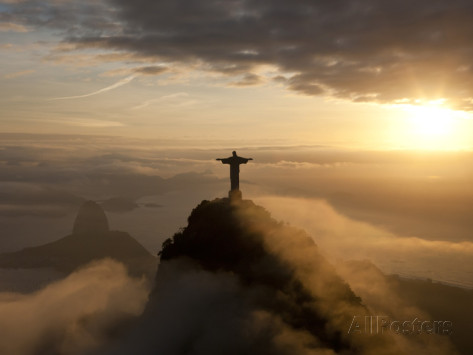
Letting Go

Scripture Passage:  Mark 8: 31-38 (Lent 2B)

31Then he began to teach them that the Son of Man must undergo great suffering, and be rejected by the elders, the chief priests, and the scribes, and be killed, and after three days rise again. 32He said all this quite openly. And Peter took him aside and began to rebuke him. 33But turning and looking at his disciples, he rebuked Peter and said, “Get behind me, Satan! For you are setting your mind not on divine things but on human things.” 34He called the crowd with his disciples, and said to them, “If any want to become my followers, let them deny themselves and take up their cross and follow me. 35For those who want to save their life will lose it, and those who lose their life for my sake, and for the sake of the gospel, will save it. 36For what will it profit them to gain the whole world and forfeit their life? 37Indeed, what can they give in return for their life? 38Those who are ashamed of me and of my words in this adulterous and sinful generation, of them the Son of Man will also be ashamed when he comes in the glory of his Father with the holy angels.”

Our job in this lifetime is not to shape ourselves into some ideal we imagine we ought to be, but to find out who we already are and become it.What things in your life could you never be without?  What things in your life really sort of describe who you are?  I think that’s what Jesus was trying to get across to Peter—the point that all of this was more than that, that Peter’s very identity was affected by who he thought Jesus was. Sure, I think Peter got that Jesus was the Messiah.  He knew the words.  He had been taught the meaning probably from his childhood, the idea that this Messiah would come and bring victory and glory. Put yourself in his place.  Here is this great man who you have grown to dearly love.  This ministry that he has begun has been great.  He truly IS the Messiah for which you have waited so long.  What great plans for the future Peter must have imagined! 

But then Jesus starts talking about his own coming suffering.  This wasn’t the plan that Peter envisioned.  Most of us identify with Peter here.  This cannot be!  There is no way that it is time for Jesus to leave us.  This was our Messiah sent here to save us, the Messiah for which we have waited for generations upon generations!  Jesus’ harsh statement to Peter jolts us into reality, though.  For we do often limit our thinking to things of this world.  We want to protect and possess this Messiah.  We want a Messiah who will save us on our terms, someone to be in control, someone to fix things, someone to make it all turn out like we want it to turn out, someone to make our lives safer and easier. 

Now, contrary to the way our version of the Scriptures interprets it, I don’t think Jesus was accusing Peter of being evil or Satan or anything like that.  Who could blame Peter?  He’s just like us!  Listen further…If any want to become my followers, let them deny themselves and take up their cross and follow me.  We’ve all read that verse before.  We’d like to make it read a little easier.  We would rather skip through the end of Holy Week and go straight to Easter morning.  That’s why this season of Lent is so difficult.  It won’t let us do that.  The cross is not something that we look to only in the past.  The cross is not something that we look to at the end of our lives.  This is not some goal for farther down the road. This is not some plan laid out for our lives.  This is here; this is now. It’s talking about the journey.  It’s talking about our listening to God’s calling us in our lives now.  It’s talking about letting your life go NOW! If this were easy, then we wouldn’t need Christ.  We’re not asked to just believe in Christ; we’re asked to follow….all the way to the cross.

I know what you’re all thinking.  I’m not so sure I signed up for this.  What happened to that Messiah that was going to take away all our troubles—you know calm all the storms and such?  What happened to that Savior that would solve all of our problems so that life wouldn’t be so hard?  Ooops! Wrong Savior!  

Now, don’t get me wrong.  We are not called to be martyrs.  We’re not called to suffer unbearable pain as proof of our devotion to Christ.  I’m pretty sure that none of us will ever be victims of first century Roman persecution.  Our crosses are as unique as our DNA.  Taking up our cross means simply letting go, letting go of those things that shield us from God, that get in the way of us really living, that stand in the way of who we are called to be.  For some of us, it means letting go of a plan for our lives and instead journeying a little farther into the wilderness as we follow God’s lead.  For others, it may mean letting go of our life security so that others may share in it.  For still others, it might mean letting go of hurt and pain and instead picking up the mantle of forgiveness that leads to life.  It may just mean finally getting up enough courage to quit standing on the shore to our lives and finally, finally jump into the deep end with no fear of how far you will sink before you rise.  Each of us is different.  Taking up our cross means, as Joseph Campbell said, being willing to let go of the life we planned so as to have the life that is waiting for us.

There is an old story that originated somewhere along the banks of the Mediterranean that tells of a really old man, who had lived a long and very happy life on a beautiful island.  He loved his island, where all his family, for generations, had lived and made their home.  And so, when he realized that he was approaching his last days of his life, he asked his sons to take him outside one last time.  There, he knelt, and gathered a handful of native soil, and clutched it tightly.

Soon afterwards, the man died and came to the gates of Heaven.  He was greeted joyfully and was told by one of the angels, “You have lived a good life.  Welcome to the Kingdom of Heaven.  Please come in.”  But when the man tried to cross the threshold, he was kindly told, “You must let go of the soil that you are clutching.”  “Oh no, I could never do that,” he cried, “This is my native soil, the earth of my beloved island home.”  The angels at the gate were sad as they went back to heaven, leaving the old man wandering, lonely, outside.

Many years passed, and the angels came again.  They brought the old man a taste of the heavenly banquet and feasted with him there, outside the gates, trying to persuade him to come into the fullness of the Kingdom.  He wanted so much to join them for all eternity, but again, when they asked him to let go of the soil he was clutching, he couldn’t bring himself to do so.  And again, they had to leave him standing there, alone.

Finally, after many more years had passed, the angels came again and this time, they brought with them the old man’s granddaughter, who had grown old in the meantime and had died herself.  She was delighted to see her beloved grandfather standing there. “Oh, Granddad,” she cried, “I’m so happy to see you.  Please come and join us in the heavenly Kingdom.  We love you so much, and we want you with us for all eternity.”  The old man was overwhelmed to see his little granddaughter there, and in his joy, he flung out his arms to embrace her.  And as he did so, the soil slipped right through his fingers. With great joy, the angels now led him into his heavenly home, and the first thing he saw there was the whole of his beloved island, waiting there to greet him.

Our job in this lifetime is not to shape ourselves into some ideal we imagine we ought to be, but to find out who we already are and become it.(Steven Pressfield)

Grace and Peace,

Shelli

Face to Face With G_d

Scripture Passage:  Genesis 32: 24-30

Jacob was left alone; and a man wrestled with him until daybreak. 25When the man saw that he did not prevail against Jacob, he struck him on the hip socket; and Jacob’s hip was put out of joint as he wrestled with him. 26Then he said, “Let me go, for the day is breaking.” But Jacob said, “I will not let you go, unless you bless me.” 27So he said to him, “What is your name?” And he said, “Jacob.” 28Then the man said, “You shall no longer be called Jacob, but Israel, for you have striven with God and with humans, and have prevailed.” 29Then Jacob asked him, “Please tell me your name.” But he said, “Why is it that you ask my name?” And there he blessed him. 30So Jacob called the place Peniel, saying, “For I have seen God face to face, and yet my life is preserved.” 

So, for a little background, note that Jacob and his entourage are about to reenter the Promised Land.  He has sent his entire caravan across the Jabbok, an eastern tributary of the Jordan about twenty miles north of the Dead Sea.  And it is here that, for some reason, Jacob stays behind.  And sometime during the night, he is wrestled to the ground.  Jacob may well have thought it was Esau at first, who had threatened to kill Jacob for taking his birthright.  He might have thought that he was finally getting his due for all those years as the trickster, that he had finally once and for all been “found out”. 

The struggle goes on through the night and as daybreak approaches, Jacob is struck on the hollow of this thigh by his opponent.  The blow has a crippling effect but Jacob retains such a hold that there is no escape.  He demands a blessing for the release.  You think about it—he had the birthright, he had everything in his life.  But his greatest desire was to be blessed. So, somehow Jacob either knew or had realized that this was God with whom he was wrestling, because only God has the power to grant such a blessing. 

Now remember that it was believed that God’s face would not be seen and if it was, the one who saw God would die.  This says something about Jacob.  He is willing to risk even death for the sake of the divine blessing.  And God is willing to allow Jacob to wrestle, even to demand, even to seemingly take more of God’s time and God’s power than he really deserved.  God gives the blessing and changes Jacob’s name to Israel, “God-wrestler”.

The story ends with a lot of ambiguity.  I mean, there’s no clear winner.  They just sort of walk away as the dawn breaks.  But Jacob will never be the same again.  He has looked not only God but himself square in the face and everything has changed. In a way, the old sages were right.  Once someone looks into the face of God, they do indeed die.  They have been made new, reborn.  Nothing will ever be the same again.  For Jacob, this act of wrestling has been one of transformation. And this trickster, this heel, this one who had spent his whole life trying to better his own existence, is renamed.  He becomes Israel and he names the place Peniel, which means “I have seen the face of God.”

You know, it’s interesting to note that the New Revised Standard Version uses “Peniel” in one place and “Penuel” in the other to name this place where Jacob wrestled.  They both essentially mean the same thing.  The difference is that “Peniel” (with an “I”) is singular or first person.  It means “I have seen the face of God.”  “Penuel” (with a “u”) is plural.  It means “We have seen the face of God.”  So Jacob names the place for his own encounter, acknowledging that he knew that he had seen the face of God.  By the time he leaves, though, the name is plural, opening up new possibilities to all of us having a similar encounter with the Holy and the Sacred.

The truth is, this wrestling match that Jacob had is not a story of persistence or winning; it is a story of redemption. Jacob was allowed to wrestle and wander and even doubt and, still, became the one he was called to be.  The message of our Christian faith is not that God is some impersonal force, or a terrifying presence to whom we cannot relate.  God does not expect empty praise and sacrifices and groveling from us.  God is willing to wrestle, to get down into our lives, to know who we are, and to allow us to search for who God is to us.  We are the people who wrestle with God. It is not presumptuous of us to make this claim. God was the one who gave that name to God’s people. That’s who God wants us to be.  Of course God could squish us like a bug in a nanosecond. But for our benefit, God is always available to wrestle with us, at whatever level we are capable of wrestling.  God sent Jesus into the world to wrestle with us, and Jesus allowed himself to get pinned to a cross. That’s what it took for us to experience the love that flows from God.

This season of Lent is our wrestling season.  It begins in a wilderness and ends on a Cross.  And God is there for each round of the game.  Because only those who wrestle with God, those who let go of the armors that they have built around their lives, those who forsake their plans and ask for help, those who are vulnerable, those who wrestle with their guilt and their despair, can encounter God.  The wilderness is a place of blessing.  God wants us to wrestle; indeed, invites us to wrestle.  That is the only way that we will come to know God and come to know ourselves.  Faith grows in the midst of the struggle.  Faith grows in the wilderness.  That is the way that we will forever walk, perhaps even with a slight limp, with the mark of the Divine.

You must give birth to your images.  They are the future waiting to be born.  Fear not the strangeness you feel.  The future must enter you long before it happens.  Just wait for the birth, for the hour of new clarity.”(Rainer Maria Rilke)

Grace and Peace,

Shelli

A Finger Pointing At the Moon

Scripture Passage:  Romans 4: 13-17 (18-25) (Lent 2B)

13For the promise that he would inherit the world did not come to Abraham or to his descendants through the law but through the righteousness of faith. 14If it is the adherents of the law who are to be the heirs, faith is null and the promise is void. 15For the law brings wrath; but where there is no law, neither is there violation. 16For this reason it depends on faith, in order that the promise may rest on grace and be guaranteed to all his descendants, not only to the adherents of the law but also to those who share the faith of Abraham (for he is the father of all of us, 17as it is written, “I have made you the father of many nations”) —in the presence of the God in whom he believed, who gives life to the dead and calls into existence the things that do not exist. 18Hoping against hope, he believed that he would become “the father of many nations,” according to what was said, “So numerous shall your descendants be.” 

In our pragmatic 21st century minds, sometimes it is much easier to grasp at the obvious and to make that the basis of our belief.  But, as Paul reminds us in his roundabout, run-on sentence kind of way, if our whole faith system depends on nothing more than adhering to the set of laws or interpretations that have been laid down by those that came before us, what good is faith?  Remember that faith is about relationship.  The law is not bad.  In fact, it’s usually a necessary construct to help us understand, to help us point to that which we believe.  But it is not the end all.  It is not the God who offers us relationship.

Now, that said, I personally struggle with those who profess to be “spiritual and not religious”.  Really?   For me, it’s a little like traveling without baggage, which can mean that you are not weighted down and are essentially free to do what you want, but, chances are, at some point you’re going to find yourself virtually unprepared for what you encounter (or at the very least unable to brush your teeth!).  To put it another way, how many of you really want to go to dinner with someone who always leaves their wallet at home?  They may be fun to talk to and all, but is that really the way we live?

There is a story told among Zen Buddhists about a nun who one day approached a great patriarch to ask if he had any insight into the Nirvana sutra she had been reading. “I am illiterate,” the man replied, “but perhaps if you could read the words to me, I could understand the truth that lies behind them.” Incredulous, the nun responded, “If you do not know even the characters as they are written in the text, then how can you expect to know the truth to which they point?”  Patiently the patriarch offered his answer, which has become a spiritual maxim for the ages: “Truth has nothing to do with words. Truth can be likened to the bright moon in the sky. Words, in this case, can be likened to a finger. The finger can point to the moon’s location. However, the finger is not the moon. To look at the moon, it is necessary to gaze beyond the finger, right?” (from a commentary by Daniel G. Deffenbaugh, available at http://www.workingpreacher.org/preaching.aspx?lect_date=3/4/2012&tab=3, accessed 27 February, 2012.)

Now I don’t think Paul would in any way dismiss religion or even the rules.  He’s just reminding us that they have their limitations.  They are not God.  In fact, it is easy for them to become idols of worship in and of themselves (and last I read that was frowned upon!).  But rules have their place.  They provide a systematic way of at least attempting to understand something that, in all honesty, really makes no sense to us.  (And, to turn it around, professing to be “spiritual and not religious” actually has a good chance of becoming a religion in and of itself.)  An authentic faith, it seems, is one that weaves what doesn’t make sense into understanding, laughter into prayer, and a grace-filled encounter of the Divine into our everyday life.  It is about both transcendence and meaning and, on a good day, the weaving together of the two into a Holy Encounter with the Divine Presence that it always in our life. 

You cannot practice religion for religion’s sake.  That would certainly be the death of your being.  You need to somehow breathe life into it.  That’s where spirituality comes in.  But spirituality cannot stand alone because it has nothing on which to stand.  They need each other.  They breathe life into each other.  They give each other meaning.  G.K. Chesterton once said to “let your religion be less of a theory and more of a love affair”.  I love that.  It’s one of my favorite quotes.  So, in this Lenten wilderness season, focus on the love affair part.  Rules are important.  Religion understandings are important.  But they are only the thin boundary.  They do nothing by themselves.  Faith is not about rules; faith is about Life and understanding both mean that we open our whole being to the newness that God continues to show us.  So, let go of what is not life-giving or, perhaps, allow God to breathe life into it.  That is what wandering in the wilderness will allow you to do.

Religion is about transcendence, and spirituality is about finding meaning in the mundane. (Joan Chittister)

Grace and Peace,

Shelli

The Tonic of Wilderness

Scripture Passage:  Deuteronomy 2:7

7Surely the Lord your God has blessed you in all your undertakings; he knows your going through this great wilderness. These forty years the Lord your God has been with you; you have lacked nothing.”

So I’m also spending this Lenten season writing another set of devotionals for a church.  The theme for that series is “The Wilderness Season”, so I thought that on the days when I don’t deal with the coming lectionary passages for the upcoming Sunday, maybe we could wander around in the wilderness a little too.

Think back to the Gospel passage for this past Sunday.  (I think I actually wrote about it on Saturday.)  Remember that Jesus was driven immediately into the wilderness.  And, we too, somehow found our way there.  Now that we’ve been driven into the wilderness, where are we?  Where do we go?  The truth is that the wilderness can be either physical or spiritual.  I think it sometimes can be both.  It is the place we find ourselves when we do not know where to go, that place that is unfamiliar, uncomfortable, even seemingly unforgiving. It is the place, not unlike what we’ve gone through over the last year (and for many of us in Texas, the last week), where you wish you could go back, perhaps retrace your steps, and yet are propelled farther and farther into the unknown. 

Perhaps your image of the wilderness looks like the piney woods of East Texas, thick with brush and pine needles carpeting the floor.  Perhaps it is more like a rain forest, with slick pathways and unpredictable weather and odd sounds that you’ve never heard.  But think about the Judean wilderness into which Jesus was driven.  There were few trees.  The mountains rise up ahead of you, each one appearing to be bigger than the one in front of it.  The winds blow, shifting the sands beneath your feet making your pathway ahead on which you had set your course disappear.  And when you look back, your footprints are also gone.  The way is unclear.  

The wilderness is a challenge.  It is a place of continuous change, a place that forces us out of what is comfortable and familiar.  In the wilderness, our fears abound and loss becomes much more obvious.  The wilderness is a place where we have to let go of what we’re holding.  We have to set it down, relieving ourselves of its weight, so that we can walk unhindered by it.

Today I find myself in a wilderness of sorts.  My living quarters are askew, actually unlivable at the moment thanks to a burst pipe from the once-in-a-century freeze (which will probably return well before that!), and I’m relegated to a nomadic type of existence.  I’m moving into a place that will not hold what I’ve amassed.  So, I’m also looking at storage options.  The wilderness is not only an appropriate metaphor for my life.  It is also a lesson.  We tend to look at the wilderness as a place from which to escape, a way of being that is not to our liking.  But the wilderness is not that at all.  It is a growing place, a clearing place, a place that calls for us to let go of what we’re holding, what we’ve amassed.  The point is not to find our way through the wilderness but to become what the wilderness let us be—open, vulnerable, unable to fend for ourselves, learning to trust, letting go not only what we’ve amassed but also what we’ve become. 

This Lenten journey is about letting go.  Have you ever grabbed a rope to swing you out over the water?  You have to let go.  If you continue to hold on, you won’t end up back where you were.  You’ll end up slammed against the edge of the rock.  There is no going back.  You have to let go.  You have to drop and let what is there catch your fall.  Let go.  Follow.  You are not alone.   God knows your going through this great wilderness.  Let it teach you.  And become what it shows you.

We need the tonic of wildness, to wade sometimes in marshes where the bittern and the meadow-hen lurk and hear the booming of the snipe; to smell the whispering sedge where only the wilder and more solitary fowl builds her nest, and the mink crawls with its belly close to the ground.  We can never have enough of nature.  We must be refreshed by the sight of inexhaustible vigor, vast and titanic features, the sea-coast with its wrecks, the wilderness with its living and its decaying trees, the thunder cloud, and the rain which lasts weeks and produces freshets. We need to witness our own limits transgressed, and some life pasturing freely where we never wander.(Henry David Thoreau)

Grace and Peace,

Shelli

Holy Laughter

Scripture Passage:  Genesis 17: 1-7, 15-16 (Lent 2B)

When Abram was ninety-nine years old, the Lord appeared to Abram, and said to him, “I am God Almighty; walk before me, and be blameless. 2And I will make my covenant between me and you, and will make you exceedingly numerous.” 3Then Abram fell on his face; and God said to him, 4“As for me, this is my covenant with you: You shall be the ancestor of a multitude of nations. 5No longer shall your name be Abram, but your name shall be Abraham; for I have made you the ancestor of a multitude of nations. 6I will make you exceedingly fruitful; and I will make nations of you, and kings shall come from you. 7I will establish my covenant between me and you, and your offspring after you throughout their generations, for an everlasting covenant, to be God to you and to your offspring after you…15God said to Abraham, “As for Sarai your wife, you shall not call her Sarai, but Sarah shall be her name. 16I will bless her, and moreover I will give you a son by her. I will bless her, and she shall give rise to nations; kings of peoples shall come from her.”

What does the notion of “covenant” mean to you?  I guess the broadest definition is promise (or if you want to get more legalistic, a “contract”).  When I was little, I remember talking about what a covenant was in Sunday School.  It was actually pretty scary to me. It was presented as a bilateral contract.  So, I wondered, if I mess up, if I don’t keep up with my end of the deal, does God just cut me off?  (Why do we do that to kids?  For that matter, why do we do that to anyone?)

So, I think we probably read this passage wrong sometimes, perhaps too legalistically.  It is the story that establishes Abram’s identity and, with it, his relationship with God.  He would become Abraham, the “father of many people”.  And Sarai, his (sort of) doting and laughing wife, would become Sarah, the “princess of many.”  Abraham and Sarah now have a new identity, an identity that comes from this established relationship with God.  This is what it means to be a covenant people.  In the Jewish tradition, this is the establishment of the identity of a people, the establishment of a covenant people.  God has done a new thing.  Nothing would ever be the same again.  It’s not just a flat bilateral contract; it’s a mutual relationship.  It’s a becoming.  Don’t think of it as two parties signing a deal; think of it as two (or in this case, three) parties holding hands and jumping together into the unknown pool of grace.  With this jump, Abram and Sarai changed.  But you know what?  God did too!

Now before you go all never-changing God thing on me, think about it.  God came to Abram.  (God waited until Abram was 99 years old.  I don’t really get that one but maybe I can add it to my “questions” list for later!) God moved, offering a piece of the Godself to Abram, a piece of newness, a new identity.  God didn’t just sit on some throne in the sky waiting for Abram to show up and bow in reverence.  Rather, God appeared to Abram, came to him, and offered grace and re-creation.  God is all about re-creation.  God is all about change.

So, yes, the idea of a covenant connotes an agreement.  But, more than that, it implies a relationship.  This was not some sort of holy “to do” list that was given to Abraham.  God never told him what he had to do to be accepted, to be part of the covenant, to be part of the people, to be “godly” (oh, I hate that word!…”like God”…are any of us really “like God”?)   God never gave him a list of beliefs to which he had to adhere to be part of the covenant community.  (Hmmm!)  Once again, the covenant was not about right living; it was about relationship.  God claimed Abram and Sarai as children of God and their life was never the same.  And then God renames them.  Their names mean something–father and princess.  The new names are symbolic of the new relationship into which they enter.

I looked up the meaning of my name.  “Shelli” (not spelled that way–it is NEVER spelled that way!) is actually a derivative of the Hebrew, Rachel–“ewe, female sheep, little rock, rest, sloped meadow.”  (So, Sarai becomes a princess and I am a sheep that rolls down a small hill and goes to sleep!)  Like I said, identity is a funny thing.  We hold tightly to the way we envision ourselves, to the image that we’ve created.  And then God comes up with the most ludicrous thing, like being the father or the princess of many (or maybe a sheep that follows down a gently sloping meadow!)  It IS laughable.

We actually didn’t read the part where Abraham laughed.  He laughed because it was far-fetched and downright ludicrous.  But then, when you think about it, most of God’s promises are.  And then when he told Sarai the whole preposterous scenario, she also laughed.  So, do you think it was disbelief or nervousness or something else that brought laughter?  We in our 21st century boxes probably think it a little irreverent. After all, would you dare laugh at God? Well, good grief, don’t you think God is laughing at us sometimes? Perhaps laughter is what brings perspective. It brings humility; it brings a different way of looking at oneself. Laughter is about relationship, which, when you think about it, make it holy.  Funny…  

Abraham laughed. Sarah laughed. And I’m betting God laughed. (You can just imagine the inside joke between the three: “This is going to be good. No one will ever believe this could happen.” You?  Sarai?  LOL!!!–for those who don’t text or tweet or still use proper English, it means “laugh out loud”!) Maybe laughter is our grace-filled way of getting out of our self and realizing that, as ludicrous and unbelievable as it may be, God’s promise holds something and, more than that, holds something for us–a new identity. Maybe it’s our way of admitting once and for all that we don’t have it all figured out, that, in all honesty, we don’t even have ourselves figured out, that there’s a whole new identity just waiting for us to claim. In this Season of Lent, we are called to get out of our self, to open ourselves to possibilities and ways of being that we cannot even fathom. Go ahead and laugh. It’s probably incredibly ludicrous…and it’s only the beginning.  Because somewhere beneath that façade you have so carefully built is the real “you”, the “you” that God envisions you can be.  And someday you and God are going to have a really good laugh about this whole remarkable journey into this covenant creation that is you.

Humor is the beginning of faith and laughter is the beginning of prayer. (Reinhold Niebuhr)

Grace and Peace,

Shelli

Even When the Sun Is Not Shining

Scripture Passage:  1 Peter 3: 18-22 (Lent 1B)

18For Christ also suffered for sins once for all, the righteous for the unrighteous, in order to bring you to God. He was put to death in the flesh, but made alive in the spirit, 19in which also he went and made a proclamation to the spirits in prison, 20who in former times did not obey, when God waited patiently in the days of Noah, during the building of the ark, in which a few, that is, eight persons, were saved through water. 21And baptism, which this prefigured, now saves you—not as a removal of dirt from the body, but as an appeal to God for a good conscience, through the resurrection of Jesus Christ, 22who has gone into heaven and is at the right hand of God, with angels, authorities, and powers made subject to him.

The faith communities to which this was written did not have it easy.  They were the outsiders–shunned, unaccepted, separated from the only society that they knew.  To put it bluntly, they were living in hell.  So this comes as a reminder that what they are experiencing now is not permanent.  It is not the final word.  New life is just over the horizon.  For the writer of this epistle, this is a sure promise, made real through our baptism.  Baptism here is depicted a re-creation, as resurrection.  The whole point is that believers do not need to fear the difficulties and sufferings that are present now.  God has indeed promised something new. 

In all honesty, I don’t think this writer necessarily saw baptism as merely a cleansing.  Rather, baptism is a claiming.  We are claimed by God.  We are empowered by the Spirit of Christ.  We are made new.  So no matter what hell we might find ourselves in, there is more up ahead.  God has claimed us.  Each of us is a beloved child of God.  Our baptism acknowledges that and, like the waters that flooded the earth, sweeps us into new life.

In fact, even the powers of hell cannot impede the recreation that is happening all around us.  Now most of our churches choose to recite the more sanitized version of the Apostles’ Creed but there is an older version that dates back to the 5th century that goes like this:  “I believe in God the Father almighty, maker of heaven and earth; and in Jesus Christ, his only Son our Lord, who was conceived by the Holy Ghost, born of the Virgin Mary, suffered under Pontius Pilate, was crucified, dead, and buried. He descended into hell.”  That last sentence is believed to have been loosely taken from this passage.  We read that Jesus proclaimed even to the “spirits in prison”.  In other words, Jesus descended into hell, into the bowels and depths of life, into the deepest of despair.  And, there, he blew the gates open and the eternally forsaken escaped, crossing the threshold to new life.  In the Middles Ages, it was referred to as the “Harrowing of Hell”.  Now, admittedly, there is little basis for this theology but if death hath no sting, why would hell win?  (And to be honest, there’s really little basis for the notion of “hell” as we 21st century folks think of it anyway.  I think Dante did us no favors.) If God’s promise extends to all of Creation, then perhaps hell really hath no fury.    

Now this is in no way a lessening of the impact or importance of sin.  We all know that.  We sin.  We try not to.  But we sin.  In fact, most of us are pretty good at creating our own hell.  We plunge ourselves into darkness, into separation from God, through fear, or guilt, or shame, and we struggle to claw our way out.  But even the powers of sin are no match for the promise before us.  That is the whole point of our faith.  So, if we believe that, why is it such a stretch to believe that the God of all, the God who loves us, and who has claimed us, could vanquish all the powers that afflict us, that God has vanquished all the powers of hell?

Perhaps this Lenten season of penitence is not so much a call to grovel at the feet of a forgiving God but rather to faithfully follow this God who beckons us home to begin again.  Maybe it truly is the harrowing of whatever hell we find ourselves in.  But in order to do that, we have to name our sin and release its power.  It’s part of our story.  It’s part of what we must tell.  And with that, the waters subside and the green earth rises again. 

Now, I don’t profess to know the whole truth about this hell thing.  It’s not an issue for me.  But I struggle to reconcile the notion of a place called hell with this God who offers eternal mercy and grace and forgiveness, with this God that wants the Creation to return so badly to where they belong, to enter into a relationship with the Godself–so badly, in fact, that this God would come and walk this earth just to show us the way home.  Oh, don’t get me wrong.  Hell definitely exists.  But perhaps it is our creation, rather than God’s.  Perhaps our faith will show us that the gates of hell have already been removed and that all we have to do is walk the way toward life.  What if we were to let our Lenten journey be our journey toward life?

See, I think that if we somehow brand Lent as the “penitential season”, a dark and foreboding journey through darkness to get to the Easter lilies, we’ve missed the point.  Yes, it sort of plunges us into darkness, makes us think about our dark nights and our dark parts of our lives.  But the reason is not just for us to feel guilt and shame but to see, finally, that in the darkness, you can see the Light up ahead. 

You’re probably familiar with this, but writing this made me remember the words found on the wall of a cellar in the Cologne concentration camp after World War II:

I believe in the sun
even when it is not shining
And I believe in love,
even when there’s no one there.
And I believe in God,
even when he is silent.

I believe through any trial,
there is always a way
But sometimes in this suffering
and hopeless despair
My heart cries for shelter,
to know someone’s there
But a voice rises within me, saying hold on
my child, I’ll give you strength,
I’ll give you hope. Just stay a little while.

I believe in the sun
even when it is not shining
And I believe in love
even when there’s no one there
But I believe in God
even when he is silent
I believe through any trial
there is always a way.

May there someday be sunshine
May there someday be happiness
May there someday be love
May there someday be peace….

– Unknown

On prisoners of darkness, the sun begins to rise, the dawning of forgiveness upon the sinner’s eyes. He guides the feet of pilgrims along the paths of peace. O bless our God and Savior, with songs that never cease. (Michael Perry, from the hymn “Blessed Be the God of Israel”)

Grace and Peace,

Shelli

With No Time to Prepare

Scripture Passage:  Mark 1: 9-15 (Lent 1B)

9In those days Jesus came from Nazareth of Galilee and was baptized by John in the Jordan. 10And just as he was coming up out of the water, he saw the heavens torn apart and the Spirit descending like a dove on him. 11And a voice came from heaven, “You are my Son, the Beloved; with you I am well pleased.” 12And the Spirit immediately drove him out into the wilderness. 13He was in the wilderness forty days, tempted by Satan; and he was with the wild beasts; and the angels waited on him. 14Now after John was arrested, Jesus came to Galilee, proclaiming the good news of God, 15and saying, “The time is fulfilled, and the kingdom of God has come near; repent, and believe in the good news.”

Jesus was driven out into the wilderness.  The Markan passage says that it happened immediately.  (Actually, the Gospel writer we call Mark liked things to happen “immediately”.  Read the whole thing in one sitting and you’ll see what I mean.)  So, Jesus had no time to pack, no time to prepare.  There was no family lunch after the baptism.  First he gets baptized and the Spirit descends upon him.  He is claimed by the Spirit.  And then the same Spirit that claims him somehow compels him to go out into the wilderness alone–no supplies, no map, no compass, no cell phone with that neat little GPS app–immediately.  Driven out into the wilderness…You know, I used to think that I understood this wilderness thing.  I used to picture Jesus going out into the wilderness, into the trees, into nature, to pray and commune with God.  Perhaps my idea of a wilderness was somewhat skewed by visions of thick East Texas pine trees or perhaps the clammy sensation of the Costa Rican rainforest.  After all, nature is always a great place to become closer to God.

And then I saw the Judean wilderness, the same wilderness into which Jesus was driven by the Spirit.  I stood there on that mountain with a view of winds and sands and nothingness, the true depiction of forsakenness and despair.  And, standing there, I thought about this image of Jesus going out into the wilderness.  On purpose?  He went on purpose?  This is not a wilderness for the faint of heart and certainly not for one with such a faulty sense of direction as I seem to have.  This wilderness has no trees, no real markings of any kind.  The faint pathways change as the winds blow the sands wherever they want.  Even if one began this wilderness journey with some faint sense of where he or she was headed, the pathway would move in an instant and the traveler would be stranded, vulnerable, with no real sense of direction at all.

So into this vulnerable state, Jesus was driven.  If you read the passage, the Spirit claimed him at his baptism and then drove him into a journey that had no obvious pathway at all.  The mere thought of it terrifies us.  After all, don’t we do everything we can do to avoid the wilderness, to avoid a loss of control, a loss of our sense of direction, a loss of the knowledge of where we are and where we are going. But last I checked, the same Spirit supposedly descended on me as descended on Jesus.  So am I to assume that that Spirit is now driving me into the wilderness?  As one who was also baptized, who also had this same Spirit, am I being compelled to go beyond what I know?  But, I will tell you, I did not plan for the wilderness.  I do not have everything I need.  I need to pack.  I need to prepare.  (I probably need new shoes!)  And so I wait.  But that baptism thing keeps tugging at us.  You know, it’s not really meant to be a membership ritual.  It is meant, rather, to be the driving force in our lives.  It is the thing that drives us into the wilderness–if only we will go.

Contrary to the way most of us live our lives, faith is not certainty or knowledge.  It is not, I’m afraid, a sure and unquestioning sense of where one is going, even, for us seemingly progressive theologians (because we are ALL theologians!), in a “big picture” way.  It is not about being saved from something.  Faith is not about learning or being shown the way.  We are not given a map.  It’s just not that clear.  In fact, it’s downright murky, almost like sand in the air.  No, I think that faith is about entering The Way, being driven into the wilderness, where one is vulnerable, unprepared, and usually scared to death.  And in that death, in that yielding, in that realization that we’re not really sure where it is we’re supposed to go, we encounter God.  And then in the next instant, the winds will blow the path away and, once again, we are in darkness until we realize that God is still there, not pointing to show us, but walking with us.

Every Lenten season we read of the wilderness into which Jesus was driven.  It is the affirmation that Jesus was not a superhero or a star of Survivor.  Rather, Jesus was driven into the deepest depths of human frailty and vulnerability and, unsure of where to go, found God.  Wandering the wilderness is not about finding your way but rather being open and vulnerable enough that The Way will find you.  So in what way do you need to let yourself be vulnerable?  In what way do you need to wander in the wilderness?

The promised land lies on the other side of a wilderness.  (Havelock Ellis)

Grace and Peace,

Shelli