Calm

This passage is actually from the first Sunday of Advent for Year A.  (See, to write every day, I usually have to add Scriptures.)  It is familiar, perhaps one of your favorites.  Filled with beautiful imagery, it provides a promise of a reconciliation of God’s people as they stream together to one place, a great gathering with echoes of peace and unity. It’s a hard read in this time of turmoil and war.  That image seems to have slipped farther away than ever.  What can we do?  How are we supposed to be a part of this peaceable kingdom when we’re so afraid and so divided and, yes, so incredibly angry at one another?

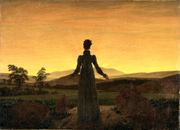
The meaning of this season of Advent, like most of our church seasons, is not easily condensed into a pithy phrase.  It’s complicated and nuanced.  See, part of it is remembrance of the past, of the people that wandered for centuries as they waited for a Savior.  That’s why we read Isaiah so much that we might in some way finally know the story of exile and redemption.  Advent is also about our own preparation.  Are our hearts ready for what is next?  Are we prepared to perhaps not just welcome the Christ child in some sort of annual re-creation but to actually change the way we walk from that place?  And, finally, this season is one that beckons us to look ahead to that peaceable kingdom, to the time of peace and unity and that imagined great gathering of God’s people.  But here’s the crux.  This season of preparation is not just about getting your house ready or getting all the gift-buying done or even preparing your heart for Christmas Eve.  That’s only part of it.  We are being asked to do something else.  We are being asked to be a part of calming this world that it might awake to what it is called to be.  We are called to be catalysts of change and instruments of peace.  Rather than merely decorating our trees, we are actually called to do some manger-lining, to prepare for the birth of Christ and the birth of the Kingdom.  Our waiting is not passive.  We are called to be part of it.

What in the world does that mean?  I’m so bothered by our world right now.  I pray for peace.  But I don’t think that’s enough.  See, I’d like to be a pacifist.  I think it is the way of Christ.  I think it is the way to be human.  But my pacifism flew out the window when I walked into Auschwitz.  When you step across the train tracks that brought humans in cattle cars to their demise, when you walk across the noisy sharp rocks that still remain on the floor of the camp, and when you enter the barracks with scratches in the walls where someone tried to maintain their sanity and dignity, you begin to realize that peace is not merely an absence of war. 

Auschwitz has piles of things that were unearthed when the camp was freed and all of these belongings are there to help us remember.  I was drawn to a suitcase, a suitcase with the name Anna Kraus on it.  My grandmother’s maiden name was Krause, so the name caught my eye.  I’ve thought a lot about her over the years and, particularly, over the last few months.  In recent years, there have been great strides in completing the database of the victims of Auschwitz and other concentration camps.  Now I know.  She was born May 19, 1898.  Her last residence was the district of Seegasse in Vienna.  She was transported from Vienna to Terezin and then from Terezin to Auschwitz on October 23, 1944 with 1,713 other deportees.  Of those 1,517 were murdered.  Anna was one of those.  Now I know.

Now we know.  What now?  What part do we have in lining the manger for the birth of that Kingdom?  This season of Advent is the one that calls us to do that.  As I said, I’d like to be a pacifist but maybe I don’t have the stomach for it.  I believe that the people of Israel have a right to defend themselves.  I believe that for Anna.  I also believe that the people of Palestine have a right to safety and dignity and, yes, a place to live, a place to thrive. I believe that we have to speak out against anti-Semitism and anti-Muslim rhetoric.  I believe that we should always speak out against any notion of certain races or certain ethnicities or certain ways of life or certain ways of worship being better or more deserving than the next.  I believe in that great gathering with all of us streaming into the Peaceable Kingdom.  I believe that each of us has our own part in lining that manger for the birth, a part in beating all the swords into plows.  Peace is not merely an absence of war.  In Hebrew, Shalom is more about wholeness or completeness.  If people do not have dignity and freedom, if they are not whole or complete, peace is not present.  I think peace is perhaps more of a calming of rhetoric, a calming of anger, a calming of violence, a calming of the world we know that it might become what God envisions it to be.  God will bring the Peaceable Kingdom to be.  But perhaps we are called to line the manger with a world that is calm enough to know that.  Because now we know.

There is a Muslim prayer for peace that prays, “In the name of Allah, the beneficent, the merciful.  Praise be to the Lord of the Universe, who has created us and made us into tribes and nations, that we may know each other, not that we may despise each other.”

Shalom to you as you do your part in the manger-lining.  May this Advent be a season of Peace.

Grace and Peace,

Shelli

Lament

I’m backtracking a little and going back and picking up some of the Scriptures from yesterday’s lectionary.  And, yes, this passage assigned to us as the Old Testament reading for the first week of Advent seems a little dark and dreary.  I know.  You’re ready for some twinkling lights and perhaps a star and some signs of hope.  But we get a lament.  How does a lament fit in with this season?

The truth is that our culture, particularly in this country, doesn’t handle laments well.  I don’t know if we’re too shaped by our English Puritan roots or what.  But somewhere along the way, we became convinced that all of those things that go wrong, all those things that are uncomfortable, all of those things that involve grief and such, should be pushed down, or bottled up, or hidden away in the junk drawer of our lives.  So, when we lose those we love, when health issues don’t seem to cooperate with the life that we envisioned for ourselves, when things just do not go according to our plans, we tend to hide them away.  We are taught to be strong, even stoic at times.  And we are convinced that there is a proper way to grieve and an expected and timely way to move on.

So, consequently, reading laments is an odd, if not uncomfortable, practice for us.  Take this one, for instance.  The Israelites have returned home after years in exile.  But home was not the same.  It would never be the same.  The Temple (the place where they knew God was) had been destroyed.  And in their search for God, for a God that seemed elusive or even hidden, they began to look at their own lives and name their grief and pray a prayer of lament.  But how does that fit into Advent?

Well, see, we’re often told to move on.  Do we really move on?  Do we really put those things away or do they just continue to gnaw at the comfortable parts of our lives?  Is that really the best way to handle our grief and our losses and our failed expectations?  Maybe we should take a lesson from our brothers and sisters who are immigrants or refugees or part of the African, Middle Eastern, or African American traditions.  They openly wail their grief and pound their chests in atonement.  Their lament is tangible.  It can be felt.  It can be heard.  It can be shared. It can be named.  And in that naming, it is claimed.  And in its midst, God enters.

I have lived most of my life with little loss.  That changed over the last seven years or so.  In those years, I have lost people I love, a beloved dog, as well as my own well-being and security.  I have lost what I expected to be.  I remember when my wonderful friend Suzy died of ovarian cancer, I tried to be strong, to “move on” the way that everyone expects you to do (particularly as a pastor—for some reason people don’t want their pastor to grieve uncontrollably).  I did fine for several months and then at Annual Conference that year, where Suzy and I usually sat together and ate together and caught up with our lives, I heard her name read in worship and I collapsed into sobs.  I was pretty much given the impression from one of the other clergy that that probably wasn’t acceptable.  I didn’t care.  It was cleansing.  It was prayerful.  It was lament.

Re-read the lament.  Or write your own.  No, we don’t “move on”.  That’s a farce.  What we do is we walk the journey of lament.  We name our grief or our loss and we claim it.  And into our grief and our despair and our loss, God comes.  God comes not as a magic Band Aid that fixes our problems but as a Master Creator that re-orders them.  We do not move on.  We are never rid of them; instead, they are redeemed and recreated.

In this season of Advent, we are sometimes tempted to put our best face on, to work to make the season one of joy and memories.  But the season calls us to be fully ourselves, to be the ones into whose lives God enters.  Maybe a few laments wouldn’t be all that bad. Maybe some good old-fashioned wailing will make us realize what God offers us.  Maybe sharing with others will lead to transformation for all of us.  God doesn’t wait to enter until everything is perfect.  That was never the deal. God enters when transformation is at hand.  God enters when God is needed the most.  So, maybe go ahead and clean out that junk drawer!

Grace and Peace,

Shelli

Awakening

‘Tis the season!  Advent is here, the time of preparation, the time of waiting, the time of that somewhat always-chaotic march to Christmas Day.  And, at the risk of stressing you out even more than you already are, this year’s season is even shorter than usual since the fourth Sunday of Advent is actually Christmas Eve!  So, yes, this year we have only three weeks of Advent.  What is THAT about?  So, we begin…

I know Advent is here because the stores have their holiday décor out, I’ve heard one or two Christmas carols, and I keep seeing that commercial where the red and green Hershey kisses play “Carol of the Bells”.  And, yet, there are things in the world that do not seem to echo the joyousness of the season.  There is still a war in Ukraine, a seemingly endless war only because boundaries were not honored and greed ensued, and now the Middle East has become a veritable powder keg of violence and distrust between neighbors.  And we find ourselves getting pulled into it in a way, find ourselves dealing with anti-Semitism and Islamophobia, find ourselves being forced to choose sides in a war that has way more than two sides, a war that is nuanced so that many things can be true at once, find ourselves fighting to keep our own democracy and defend it against corruption and authoritarian creep and those that think they should control others and inflict their beliefs on those around them.  And this Scripture doesn’t really help.  Why do we have to read about suffering and the end times on this first Sunday of Advent? What happened to that angel coming to Mary and Mary doing her pondering thing and everyone being joyfully reminded that the world was with child?

Read it again.  This Scripture is not about the end times.  This Scripture is about now.  This Scripture is about us.  See, if we look at this Advent season as only a season of preparation, a season of waiting for what follows this, for what comes next, we miss out.  If we spend this Advent season trying to somehow forget the world that spins around us, trying to ignore those things that make us uncomfortable, that we might have our ideal fill of nostalgia, we’re not giving this season it’s due.  This season, like the Scripture in today’s lectionary, is not a call to merely get ready for the next season; it is a call to an awakening.  This season is our awakening.  This season calls us to wipe the sleep from our eyes and, rather than just waiting, to be a part of what comes next.

The world is still at war, both actually and figuratively.  We are still fighting each other over our beliefs and our quest for power, over our control of each other’s lives, over our differences and our diversity in which God created each of us.  We try our best but sometimes the world seems to be splitting apart at the seams.  And into this world, into this messed up little world, God comes.  But we have to pay attention.  We have to stay alert.  We have to become those who stay awake.  Something new is about to happen.  Maybe the world will or will not get better.  Maybe the wars will or will not end.  Maybe nothing around you will change.  But you will.  And that makes it worth waking up. Here’s to this joyful season, the time of your great awakening!

The Dawn of Light

Scripture Text: John 1: 1-14 (Christmas)

In the beginning was the Word, and the Word was with God, and the Word was God. 2He was in the beginning with God. 3All things came into being through him, and without him not one thing came into being. What has come into being 4in him was life, and the life was the light of all people.

5The light shines in the darkness, and the darkness did not overcome it. 6There was a man sent from God, whose name was John. 7He came as a witness to testify to the light, so that all might believe through him. 8He himself was not the light, but he came to testify to the light. 9The true light, which enlightens everyone, was coming into the world. 10He was in the world, and the world came into being through him; yet the world did not know him. 11He came to what was his own, and his own people did not accept him. 12But to all who received him, who believed in his name, he gave power to become children of God, 13who were born, not of blood or of the will of the flesh or of the will of man, but of God. 14And the Word became flesh and lived among us, and we have seen his glory, the glory as of a father’s only son, full of grace and truth.

The Light has come!  The Dawn is here! 

God created Light. 

And Light pushed the darkness into the shadows.

Light came and the world looked different, illuminated for the first time.

Light invited us to journey in a different way, to walk with Light.

But we wandered in the darkness, often mistaking shadows for Light.

The darkness sometimes made us afraid so we befriended darkness.

And then darkness taught us that we could see more clearly with Light.

So there, there in the darkness, we began to find Light.

Light began to flicker and shimmer over the waters and the earth and filled our space.

Light was like nothing we had ever known.

Light surrounded us and invited us into itself.

But we held back in the darkness, holding the Light at bay.

So, Light continued to shine into everything, even the dark and jagged corners of our world.

When we were lost, Light looked for us and we were found.

When we were grieving, Light held our hand.

When we were more comfortable in the darkness, Light waited patiently and beckoned us toward itself.

And when we could not find the Light, Light showed us our strength and our faith.

And then, undeterred, Light came, tiptoeing into our world, into even the darkness, without welcome or accolade.

And Light was laid aside.

So, quietly, oh so quietly, Light began to dance, filling the room, filling the world, filling us with Light.

Those who knew darkness suddenly knew Light.

Those who relied on shadows saw the way Light moves through them.

Light played.  Light danced. Light shimmered into the shadows of the world.

And Light invited us to join, to play, to dance, to shimmer.

And then we became part of the Light.

And even the darkness was filled with Light.

Light has dawned.  And Light asks us to dance—even in our darkness.  And we find that we are full of Light. 

The Light has come!  The Dawn is here! Go and be Light!  Merry Christmas!

The Christmas spirit is that hope which tenaciously clings to the hearts of the faithful and announces in the face of any Herod the world can produce and all the inn doors slammed in our faces and all the dark nights of our souls, that with God all things still are possible, that even now unto us a Child is born! (Ann Weems)

Thank you for joining me again this year as we journeyed toward the Light!  I needed it and I hope it provided a wonderful Advent for you.  Now I’m taking a little break because, frankly, every day is A LOT!  Look for some “not every day” writings now!  And I’d love to hear from you!  Go into the Light!

Merry Christmas!

 Shelli

The Story of Light

Scripture Text: Luke 2: 1-14 (Christmas Eve)

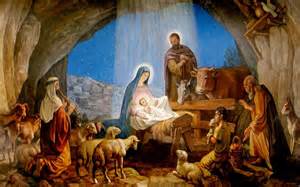
In those days a decree went out from Emperor Augustus that all the world should be registered. 2This was the first registration and was taken while Quirinius was governor of Syria. 3All went to their own towns to be registered. 4Joseph also went from the town of Nazareth in Galilee to Judea, to the city of David called Bethlehem, because he was descended from the house and family of David. 5He went to be registered with Mary, to whom he was engaged and who was expecting a child. 6While they were there, the time came for her to deliver her child. 7And she gave birth to her firstborn son and wrapped him in bands of cloth, and laid him in a manger, because there was no place for them in the inn. 

8In that region there were shepherds living in the fields, keeping watch over their flock by night. 9Then an angel of the Lord stood before them, and the glory of the Lord shone around them, and they were terrified. 10But the angel said to them, “Do not be afraid; for see—I am bringing you good news of great joy for all the people: 11to you is born this day in the city of David a Savior, who is the Messiah, the Lord. 12This will be a sign for you: you will find a child wrapped in bands of cloth and lying in a manger.” 13And suddenly there was with the angel a multitude of the heavenly host, praising God and saying, 14“Glory to God in the highest heaven, and on earth peace among those whom he favors!”

It’s finally here, this night of nights.  The Light for which we’ve waited and journeyed toward peers into the darkness and the world is changed forever.  We love this story.  Most of us could probably recite it from memory.  And, yet, the story may not be EXACTLY the way we think.  It’s not like there was someone with a video camera following them around that night.  Only two of the canonical Gospel writers even tell the story and they tell it very differently.  The non-canonical Gospel According to James tells it in more detail but the birth takes place in some sort of cave.  (But, in all honesty, where did you actually read about a stable?)  The same account also brings in a midwife, which, when you think about it, makes a whole lot of sense.  So, no, I’m not trying to tear down your much-beloved story.  The truth is, it’s not about the story; it’s about the birth.  It’s also about the Light.  It’s about the Light of God coming into the world, however that may have happened.

This is the story of Light.  It’s the Light that has always been there, the light that was created so long ago.  It’s the light that led people home over and over again.  But it was always a light that was hidden in a cloud or shrouded on a mountain or even set in the promise of a bow in the clouds.  But this night, this story, tells of Light not shining onto the earth but coming into the earth, mingling with us and giving us life.  This is the night that our story becomes the story of Light.

The Bible is not about people trying to get to God or get to the Light; it’s about the story, the story of God.  And this part of it, this chapter that we read and relive tonight, this holy night is not the climax of the story; it is a new chapter, a new beginning.  19th century American author and pastor Henry Van Dyke once asked “And now that this story is told, what does it mean?  How can I tell?  What does life mean?”  And then he answered himself by saying, “If the meaning could be put into a single sentence, there would be no need of telling the story.”

This is the night of the story of God coming out of the darkness and out of the shadows and showing us what we could not see before.  The Light is beginning to dawn.  It’s not a new light.  But this time, the heavens themselves spilled into the earth so that the story would become ours.  This is the story of Light.  It’s also the story of us.  So, what comes next?  Go into the Light…and follow God to write your story.

To be continued…

I cannot create the light. The best I can do is put myself in the path of its beam.  (Annie Dillard) 

Grace and Peace,

 Shelli

The Light Shining in the Darkness

Scripture Text: Isaiah 9:2-7 (Christmas Eve text)

2The people who walked in darkness have seen a great light; those who lived in a land of deep darkness— on them light has shined. 3You have multiplied the nation, you have increased its joy; they rejoice before you as with joy at the harvest, as people exult when dividing plunder. 4For the yoke of their burden, and the bar across their shoulders, the rod of their oppressor, you have broken as on the day of Midian. 5For all the boots of the tramping warriors and all the garments rolled in blood shall be burned as fuel for the fire. 6For a child has been born for us, a son given to us; authority rests upon his shoulders; and he is named Wonderful Counselor, Mighty God, Everlasting Father, Prince of Peace. 7His authority shall grow continually, and there shall be endless peace for the throne of David and his kingdom. He will establish and uphold it with justice and with righteousness from this time onward and forevermore. The zeal of the Lord of hosts will do this.

I used to live in a neighborhood where I always passed this wonderful old French colonial house with wonderful verandas lining both floors of the house.  For years, the house would outline the verandas with twinkling strings of lights during the Advent and Christmas seasons.  It was beautiful.  Then, for some reason I’ve never completely understood, they began to add more and more lights each year.  They started by stringing lights across the verandas three, five, seven, fifteen times.  Then, the next year, they did the same to the house. What was once a delightful twinkling of lights became what can only be described as a veritable blob of lights.  The house had been overtaken by light. And it was no longer beautiful.  In fact, it was a little off-putting.

So, the people who walked in darkness have seen a great light.  This journey toward the Light is coming to an end, so to speak.  We know now that is does not actually end at all.  It’s more of a turn, a tilt, a leaning in.  But as we do that, we need to think about our time in the darkness.  See, light is not pretty or comforting or even helpful alone.  It’s blinding.  You can’t even see anything anymore.  Light is at its best when it illuminates the darkness and creates shadows and contrasts so that we can truly look at the Light.

Much of our lives, much of our existence is about traveling in darkness.  It is a holy darkness.  God created it.  And then God created Light to push back the darkness.  Now notice that it doesn’t say anywhere that the light is meant to dispel the darkness or cover up the darkness or in some way destroy the darkness into utter extinction.  Darkness is.  The Light is.  They live together, woven into a holy mix of light and shadows and clouds and stars and deep darkness.  That is life.  That is Life.  And that is where the people that walk there see the Light.  So, our act of coming out of the darkness into the marvelous Light is not one of leaving but of looking in another direction and finally learning to travel in the dark.  That’s called faith. 

The people who walked in darkness have seen a great light; those who lived in a land of deep darkness—on them light has shined.

It gets darker and darker…and then Jesus is born.  (Ann Lamott) 

Grace and Peace,

 Shelli

The Coming of Light

Scripture Text: John 12: 44-46

44Then Jesus cried aloud: “Whoever believes in me believes not in me but in him who sent me. 45And whoever sees me sees him who sent me. 46I have come as light into the world, so that everyone who believes in me should not remain in the darkness.

I think we often have this sense that the Light is the end-all.  After all, it’s the thing to which we’ve journeyed, the thing for which we’ve searched.  But have you ever looked at light?  (I know.  You’re really not supposed to do that.)  But while I was thinking about this post, I looked up at my kitchen light.  It’s one of those flood lights that you can turn and redirect.  I was in my living room and it didn’t have many lights on so, basically, I was in the darkness looking at a light.  And behind the light, surrounding the light, was a circular rainbow.  See, there’s always more in the Light. And it could only be seen in the dark.

This Scripture comes in the midst of the readings that we use for Holy Week.  Jesus is preparing for the cross.  But part of that preparation was pointing yet again toward God.  Jesus more than once confirmed that he was the “Light to the world” but he never let it stop there.  There is always more to the Light.  Jesus was always quick to remind his followers of that.  He espoused that they were not believing in him as a person, as a man who showed them the Light.  They were rather believing in God.  They were looking toward the Light that Jesus had been sent to show them.

OK, hang with me here…at the risk of going all 4th century on you, I’m going to go all 4th century on you!  In “The Life of Moses”, St. Gregory of Nyssa (c. 335-c. 395) contends that a person’s encounter with the mystery of God comes in three parts—light, cloud, and darkness.  (I know, that sort of sounds backwards.)  He sees the first stage in our quest to encounter God in light, such as Moses’ vision of God in the burning bush, illuminating the darkness of our sin and ignorance about who God really is.  The second stage is a journey into partial darkness where Moses encounters God as the cloud, an intermingling of darkness and light.  The final stage is entering where God really is (not a place, mind you, but a way of being).  And in that, we come to the realization that God IS Light, that God IS Mystery, that God is utterly incomprehensible.  In this place, Moses declared on Mt. Sinai that he had seen God or, in other words, had seen the eternal mystery that is God and had finally begun to understand his part of that Mystery.

The crux of this rather long-winded explanation is that the Light to which we journey is not the end; it is the beginning.  The Light is the beginning of our knowing not God in God’s fullness.  We are not meant to know that.  God IS mystery.  But the Light to which we journey is the beginning of us knowing not who God is but who we are meant to be as we encounter our Creator, our Sustainer, our Redeemer, the One in whom we believe. It’s also the beginning of us finally knowing that the darkness is also filled with Light.  As we come into the Light as it dawns on the world, we begin to see beyond—and it is glorious!

I have come as light into the world, so that everyone who believes in me should not remain in the darkness.

In every beginning, there is darkness.  The darkness of chaos seems eternal, Yet form emerges: light dawns, and life is born. (Sixth Service of The New Union Prayerbook) 

Grace and Peace,

 Shelli