Unquenchable

Life in the wilderness is, obviously, precarious.  They have put their trust in God and in Moses and here they are in the middle of the desert, the hot sun beating down upon them.  The parched surroundings reflect their parched bodies and their lagging souls.  There is no water anywhere.  It seems to many that God has all but deserted them.  They had done exactly what they were told and now they thought they would surely die in the desert.  And poor Moses.  All he can do is listen to the complaining that is directed right at him.  But what could he do?  He can’t make water.  He can’t command the skies to rain.  He probably wishes that he could just run away.  After all, whose idea was it to make him the leader anyway?  He is surely questioning how he got into this mess.

This is not some sort of metaphorical thirst.  They were thirsty–really, really, parched and dry thirsty; there was no water.  Thirst is perhaps the deepest of human physical needs.  What does it mean to thirst for the things you need the most?  It’s hard for us in the Western part of the globe to even imagine.  (As I write this, I actually got thirsty and went and filled a glass with filtered spring water from Kroger.)  And yet, 780 million people lack access to clean and healthy water.  That’s about 1 in 9 people in the world or about 2 1/2 times the population of the United States.  Lack of access to clean water and sanitation kills children at a rate equivalent to a jumbo jet crashing every four hours.  And, amazingly, an American taking a five-minute shower uses more water than the average person in a developing country slum uses for an entire day.  Thirst is real.

But as we fill our recycle bins with plastic water bottles, what does this mean for us?  For what do we thirst?  Again, don’t think of it as metaphorical.  It is real.  Maybe it’s not physical, but it’s real. For what do you thirst?  For security?  For a life of ease and plenty?  For things to just make a little more sense?  Do you thirst for life as you’ve planned it?  Do you thirst for righteousness?  For justice? For peace?  For meaning?  How many of us simply thirst to be alive, truly alive, in the deepest depth of our being?  Being alive is thirsting for God, thirsting for the one who can walk us through grief and shadows and even death and give us life.  It means that we thirst for the one who thirsts for us.  Thirsting is the thing that makes us real.

Dag Hammarskjold wrote in his journal the words, “I am the vessel, the draught is God’s.  And God is the thirsty one.”  God is thirsty.  God’s love for each of us is so deep, so intense, so desiring our response that it can only be characterized as a thirst. God, parched and dry, thirsts for our thirst.  So, is the Lord among us or not?  God knows everything about you.  The very hairs of your head are numbered.  Nothing in your life is unimportant to God.  God has always been with you, always loved you, and always yearned for you to come into the awareness of God’s Presence in your life for which we strive, that sense of needing something more in the deepest part of you, so much that it leaves you parched without it.  And, ironically, it means letting go of the need to quench your thirst.  Because it is thirst for God that this journey is about.  Ironically, we are not questing to quench it but to live it, to open ourselves to the waters that hold God’s creative Spirit.  To thirst is to be.  To thirst is to know in the deepest part of our being that we need God.  To thirst is to be alive.

I thirst for you.  Yes, that is the only way to even begin to describe my love for you:  I thirst for you.  I thirst to love and be loved by you—that is how precious you are to me.  I thirst for you.  Come to me, and fill your heart and heal your wounds…Open to me, come to me, thirst for me, give me your life—and I will prove to you how important you are to my heart.  Do you find this hard to believe?  Then look at the cross, look at my heart that was pierced for you…Then listen again to the words I spoke there—for they tell you clearly why I endured all this for you:  I thirst.  Come to me with your misery and your sins, with your trouble and needs, and with all your longing to be loved.  I stand at the door of your heart and knock.  Open to me, for I thirst for you. (Mother Teresa of Calcutta)

So, what do we breathe out?  Thirst?  Need? Desire? No, breathe out the need to quench your thirst with those things that will never quench your thirst.  And breathe in thirst.  (Yes, this time, I really do mean it spiritually.  Don’t quit drinking water.  In fact, you probably need more than you’re drinking.)  But let yourself thirst.  Let yourself feel that thirst for faith, that thirst for God, that thirst for being in your deepest self.  Do not be tempted to fill that thirst with easy answers or comfortable commentary.  Do not let your thirst be assuaged with things that do not offer you growth and newness, with things that do not bring you closer to God.  Let yourself get shaken up.  Breathe in that thirst for the life God calls you too.  It’s not easy; it’s uncomfortable; and sometimes you will feel that you don’t have everything you need.  You don’t.  That’s why you’re on this journey.  It is a journey of unquenched thirst.  Keep walking.  Keep growing toward.  Keep thirsting for God.  That thirst is your faith.  That thirst is your life.

After this, when Jesus knew that all was now finished, he said, “I am thirsty.”…Then he bowed his head and gave up his spirit. (John 19:28, 30b)

Grace and Peace,

Shelli

The Casualties of Peace

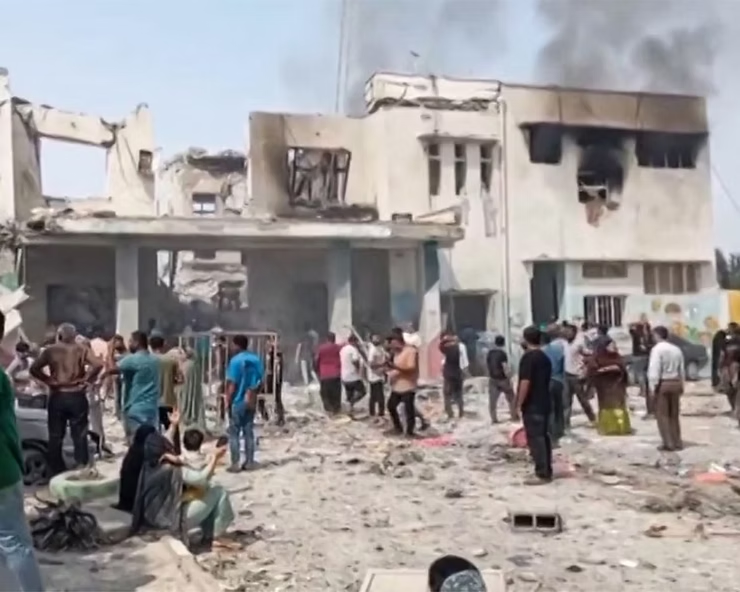
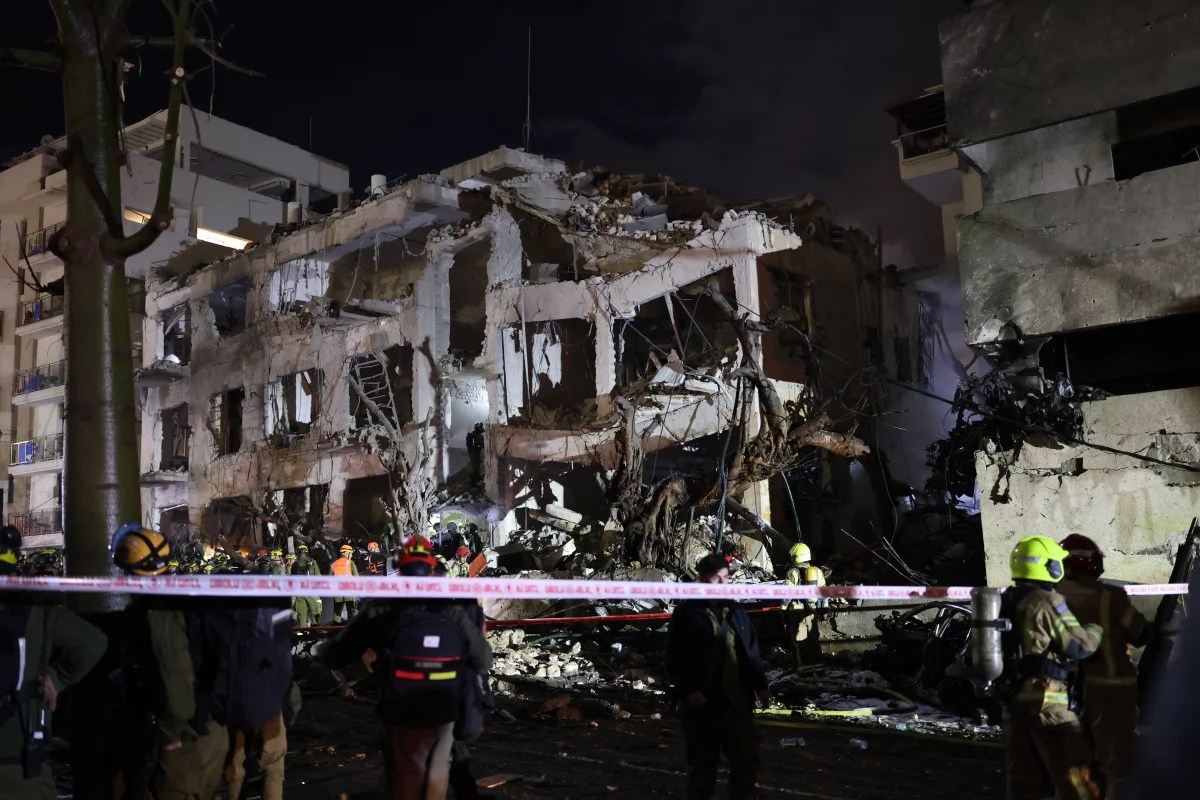
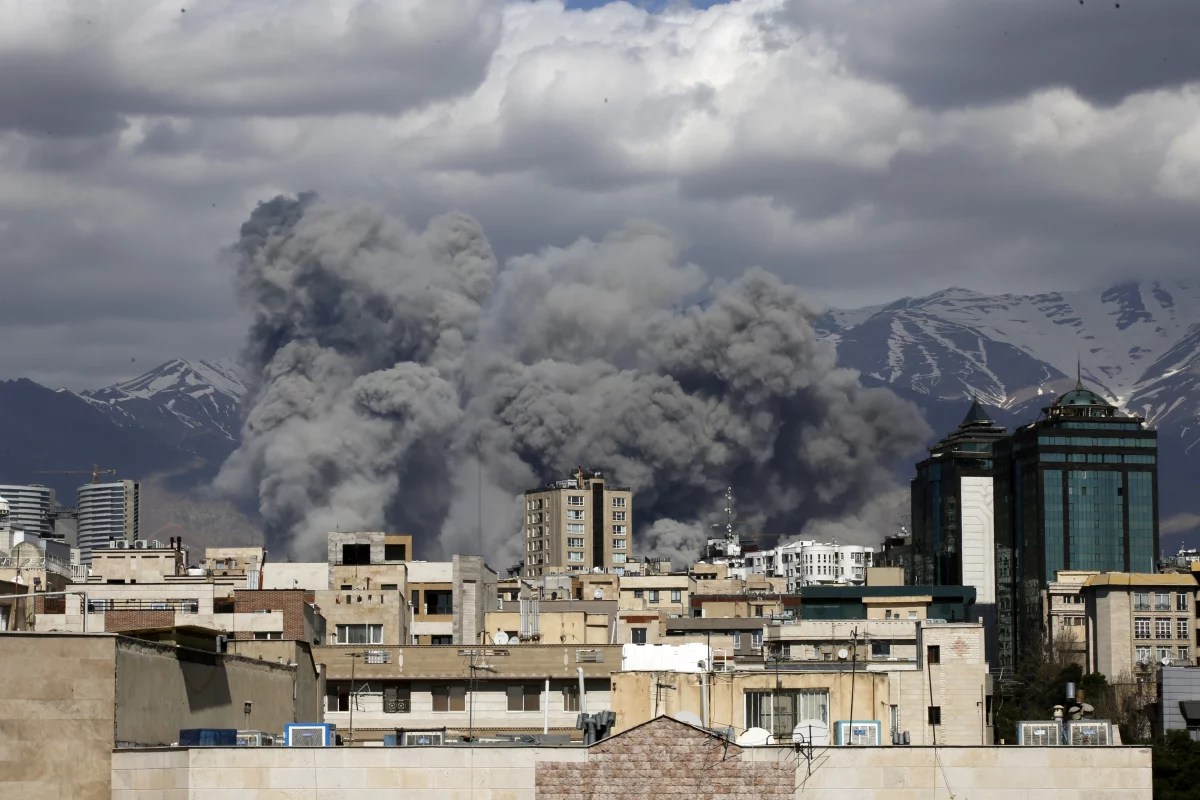
So, this post may be a little different, a little off our beaten path…because life happens.  I mean, what a time to write about peace!  We pray for it, we yearn for it, we talk about it and, yet, it continues to elude us.  I was like everyone else that woke up on Saturday morning to the news that the United States (along with Israel) had attacked Iran.  I know, I know…you can say we needed regime change there (we do); you can say that we were worried that Iran would attack us (yeah, they have at times…although I’m not sure they’re in a strategic posture to have done that effectively); you can say that the world needs this (really?  Is this what the world needs?).  You can come up with lots of reasons for attacking someone but I’m not sure any of them really account for what was done.

We understand the casualties of war.  We know them well.  We understand the loss of life (which has already happened—U.S. soldiers, a girl’s elementary school, normal people just trying to live their normal lives).  We understand the economic and financial strain that a drawn-out war puts on everyone.  We understand the loss of property, some of it historic and irreplaceable (we in our young 250-yr old country don’t fully appreciate this but Iran is at least 2600 years old!  (Look up Persia)).  But we make excuses and we go forward.  We let our greed or our fears or our need for power and influence outweigh the casualties.  We convince ourselves that it is for the best, that somehow the future will thank us.

So, we pray for peace.  We struggle for peace.  Well, here’s the deal…peace is not the absence of war.  The absence of war is nothing but a temporary vacuum that is all too easily filled with greed and fears and our need for power and influence.  Peace is not a vacuum.  Peace is hard.  Peace is work.  Peace is not something that is obtained and checked off of some sort of geographic list of the most tenuous places on this earth.  Peace is never “obtained”, never “locked in” because, frankly, the earth has all these pesky humans trying to live together.  Peacemaking is ongoing work.  And it is so, so important.  And it is so, so hard, so, so fragile, so, so misunderstood.  Peacemaking is the work of faith—regardless of which faith you espouse.

So, do we want peace?  No, I’m serious.  Do we really, really, really want peace?  Or do we just want everyone else to come over to our side?  We have seemed to become sadly comfortable with war.  We have seemed to accept it as a necessary evil.  It has somehow gravitated into some sort of sport, as if a mere pep rally would rally us up on our team and support what I think is pure idiocy.  No, we have to WANT peace, really, really, really want peace.  We have to want peace so badly that we will become peacemakers.  And becoming peacemakers mean that we begin to accept not the casualties of war as “necessary evils” but rather the casualties of peace as necessary for life.  What are the casualties of peace?  Peace is good.  It has no casualties.  No, there are things that you have to surrender to be a peacemaker.  You must surrender greed, the need to obtain what is not yours, to somehow profit from a perceived “zero sum” mentality of the world’s resources.  You must surrender fear—fear of the other, fear that your life will change, fear that you will no longer be able to control the world.  And you must surrender power and influence.  You must give up needing to have everyone on your team, everyone on your side.  You must give up the comfort of having everyone in the world think like you and worship like you and believe like you and govern like you and be like you.  Yes, there ARE casualties of peace.  And they are so, so necessary on this day.   

So, breathe out all this stuff.  Breathe out greed and fear.  Breathe out the need for power, the need to be right, the need to be comfortable.  And breathe out the misconception that peace can be achieved by one side “winning” over another.  Instead, breathe in peacemaking.  Breathe in listening; breathe in loving; breathe in looking at the world in a different way, a peaceful way.  Breathe in finding a way to live together in our diversity rather than expect us all to follow the winners of the sport of war.  Breathe in peace.  Being a peacemaker is not easy; being a peacemaker is what it means to be a person of faith.  Be a peacemaker.  Ask questions.  Work hard.  Listen…

11May the Lord give strength to his people! May the Lord bless his people with peace! (Psalm 29:11)

Oh Lord, lead us from the unreal to the real; from darkness to light; from death to immortality.
May there be peace in celestial regions.
May there be peace on earth.
(from a Hindu Peace Prayer)

There is no peace; Peace is the Way. (Mahatma Ghandi)

And Allah is all-hearing, all-knowing, and the servants of the Beneficent Allah are they who walk on the earth in humbleness, and when the ignorant address them, they say: peace. (Quran 25:63)

Shalom,

Shelli

Blessed…Over and Over and Over Again

Years ago, I was about to leave a wedding rehearsal that I had just finished when the bride’s parents came up to me and asked if I could give them a blessing.  I have to admit that I was surprised.  We give blessings at baptisms and blessings at weddings.  We bless meals and houses and ships and new buildings.  We even bless our animal companions at special services.  But for some reason, blessings just for the sake of blessing, just for the sake of being, has become almost non-existent. Perhaps we’ve become almost distrustful of it, as if it’s some sort of implied expectation that God will shower good things upon us.  Our language has taken that concept of being “blessed” as some sort of reward, as if God has somehow built a bubble of good things and protection around us.  Well, truthfully, that’s just bad theology.  No where are we promised that God will shield us from bad things or continually shower us with good.  Faithful living does not guarantee that one will become healthy, wealthy, and wise.  The promise is that God will journey WITH us through all that life holds, even through the valley of the shadow of death.

This Psalm is known by some as one of the psalms of ascent, a traveler’s psalm.  It was often used as one began a journey and was a reminder to look to that place where God was, to know that God was there, a traveler with the traveler.  It is also a Psalm of blessing, a blessing for one who is about to begin a journey.  In our translation, the scripture begins with a question.  But since there’s no real punctuation in the original Hebrew in which it was written, this may or may not be intended this way.  Maybe, rather than a sojourner looking for help, it is one who acknowledges that he or she is not alone.  “I lift up mine eyes to the hills from where my help will come.”  This is the Lord who, no matter what happens, will keep your life–through all that life holds, darkness and life.  The Lord is always and forever present, never drifting away or slumbering. The chorus from Elijah (Mendelssohn) uses this theme.  “He, watching over Israel, slumbers not nor sleeps.”  God is always there.  This is the promise of faith.

The Hebrew call to be a blessing (Parshas Lech Lecha) is used eighty-eight times in the Book of Genesis.  A blessing is a gift.  It involves every sphere of our existence.  It is not, as our language and our culture seems to depict, payment for a life well-lived or for looking or acting or believing a certain way; it is not taking the bad things of life as God’s way of strengthening us or something; it is not somehow straining to proclaim the bad as good; and it is certainly not living some unreal existence where darkness does not seep in at all.  Being blessed means to be recreated.  It takes time.  To be a blessing is to enter the story.  God calls, God promises, and, as the Psalmist depicts, God walks with us, ever-present and ever-faithful.  That is how God is revealed.  When we enter the story, we are truly blessed.  We begin again.  We are blessed to be a blessing, one who journeys with God.

A Blessing is a beginning, a new beginning, an acknowledgment that, even now, even on this day when war rages throughout the globe, even on this day when people are afraid of the economy, afraid of each other, and afraid of what their country may do to them, re-creation is happening.  Life is a blessing.  Even darkness and wilderness and desert spaces in our lives are blessings as they look ahead for the Light to come.  On Ash Wednesday, we were blessed with ashes as this Lenten journey began, as we were reminded who and whose we are.  We began again.  God walks with us on this journey.  We know that.  Intellectually, we know that.  But knowing it deep within our being is what being blessed is all about.

On this day, breathe out cynicism, breathe out fear, breathe out mistrust and breathe in blessing.  We are continually blessed.  It doesn’t mean our lives become easier; it doesn’t mean we become wealthier (I’m not a prosperity gospel person, in case you haven’t noticed); it doesn’t mean that our world will become more to our liking tomorrow.  What it means is that we’re starting again, maybe that we’re looking at things differently next time around—over and over and over.  What it means is that the God who created us and declared that creation good is doing it over and over and over again.  What a blessing!

Grace and Peace,

Shelli