(part of the “Breathing Out” Lenten Series)
Breathe out…
I adore you, O Christ, and I bless you, because by your holy cross, you have redeemed the world.
Breathe in…
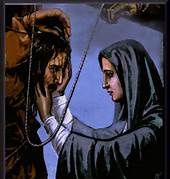
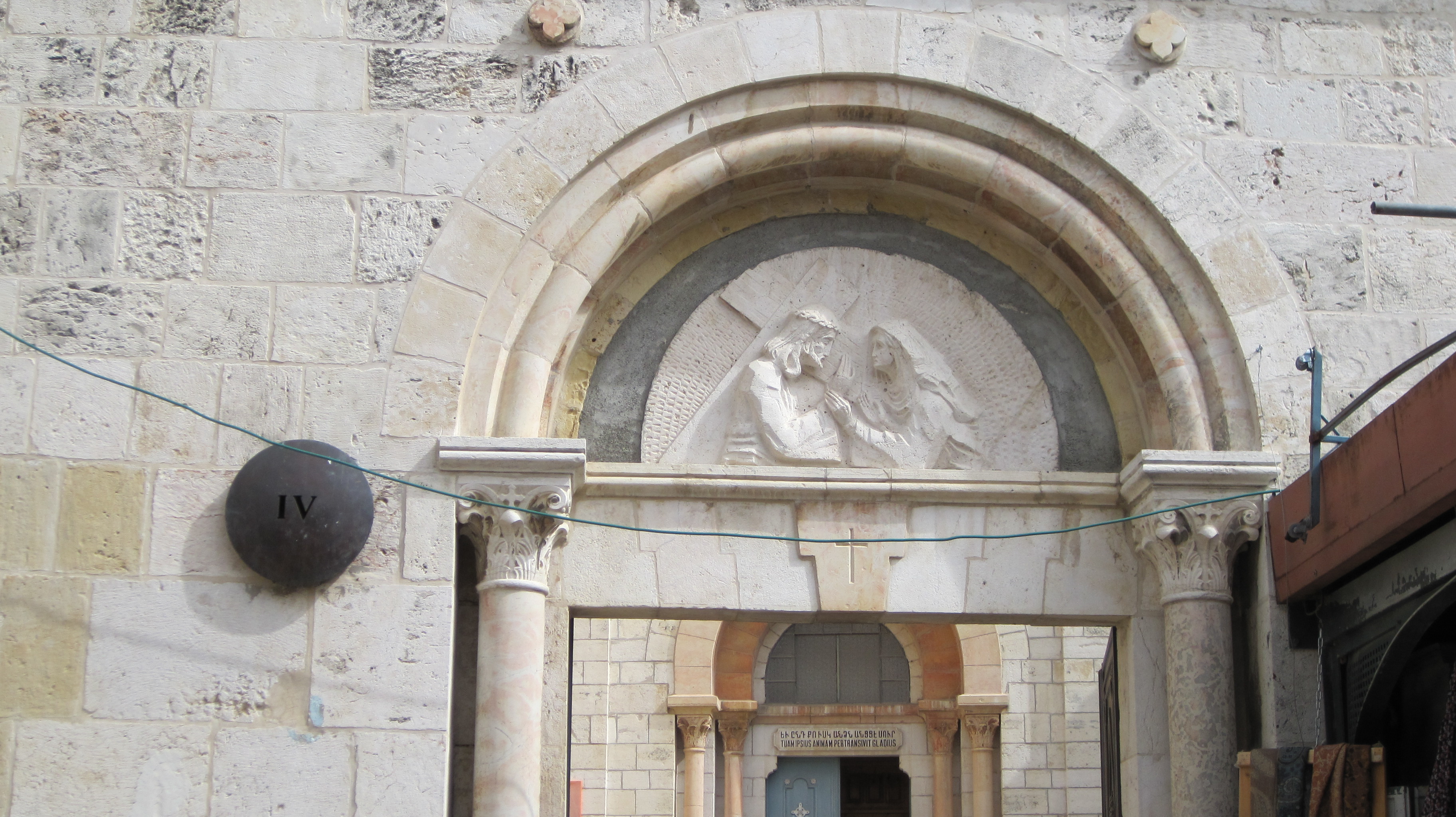
Station IV: Jesus meets his mother
Scripture: Luke 1: 35, 42b (Luke 1: 35-55)
The angel said to her, “The Holy Spirit will come upon you, and the power of the Most High will overshadow you; therefore the child to be born will be holy; he will be called Son of God.”…Blessed are you among women, and blessed is the fruit of your womb.
She loved her son…loved him with the deepest love that any mother would. After all, this was the child that she carried in her womb, birthed into the world in the rough hues of that cold desert night shielded only by a stable, or a cave, or a grotto, or something of the like. This was the child that she nurtured and saw grow into a successful young man. And now here he is…carrying the cross like a common criminal…bleeding and exhausted…but she is held back from approaching him. What she is called to do is atrocious. She must give him up.
But what about God? This is God’s child–the one that God created and love and with perfect love gave him to the world as a part of Godself. And this perfect love, this part of God, is being rejected by those to whom he was given.
But even in this we are called to forgiveness, the forgiveness that God showed us through the deepest love of a mother’s heart. Father, forgive.
Jesus, may your love, and that of your mother, be the spark of my zeal in the cause of spreading justice and peace through the human family. In the name of the One who brings all unity. Amen.
Station V: Jesus is helped by Simon the Cyrene to carry his cross
Scripture: Mark 15: 16, 21-22 (Mark 15:16-22)
Then the soldiers led him into the courtyard of the palace (that is, the governor’s headquarters); and they called together the whole cohort…Then they led him out to crucify him. They compelled a passerby, who was coming in from the country, to carry the cross; it was Simon of Cyrene, the father of Alexander and Rufus. They then brought Jesus to the place called Golgotha (which means the place of the skull).
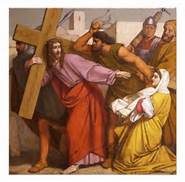
We really know very little about Simon–is he black, brown, white, olive-skinned? Does it matter? He was from Libya–a foreigner to the city of Jerusalem, an immigrant. Anonymously plucked out of the crowd to help a bleeding dying man, he stooped and hoisted the cross that Jesus was carrying to his own shoulder. Even at this late hour, God has orchestrated a Divine reversal in what the world expected.
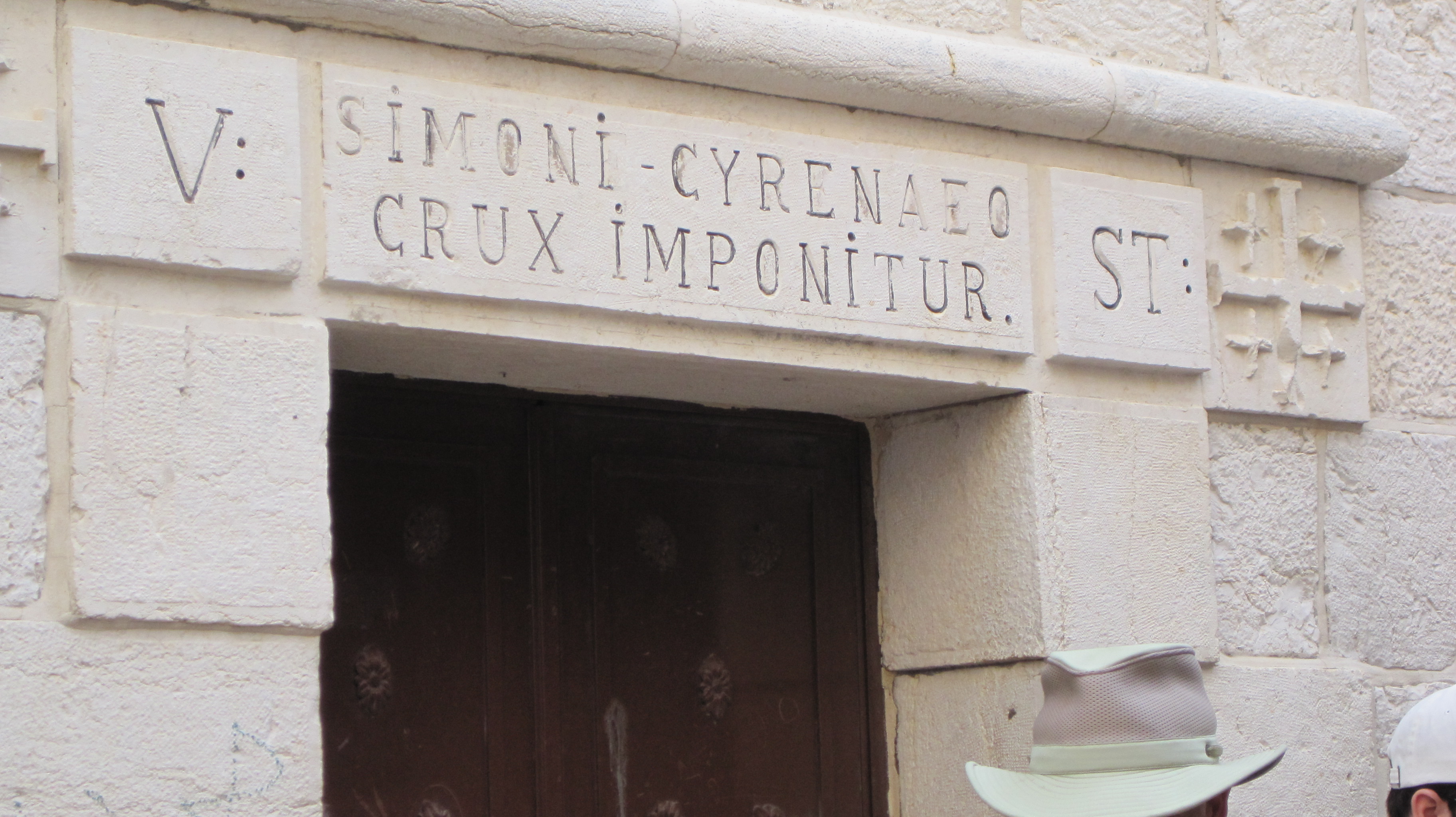
We are asked to contemplate how we are being asked to help Jesus carry the cross. This means letting go, breathing out our fears, our prejudices, and our justifications that hold us back from connecting with others, from completing the circle of God’s creation that is love. Father, forgive.
Jesus, may I be the one that carries your cross, that steps forward into the difficult venues of your love. In the name of the One who shows me what it means to be your Disciple. Amen.
Station VI: Veronica wipes the face of Jesus
Scripture: John 13: 4-5, 8b (John 13: 3-17)
Jesus…got up from the table, took off his outer robe, and tied a towel around himself. Then he poured water into a basin and began to wash the disciples’ feet and to wipe them with the towel that was tied around him…Unless I wash you…you have no share with me.
Tradition often identifies Veronica as the woman who Jesus had healed of a blood disorder (Luke 8: 43-48) who comes to be with him on the day of his crucifixion. This was a woman so moved by the compassion that she had been shown that she knows no other way to respond except with that same compassion. As she steps toward Jesus, she wipes the sweat and blood from his face and the imprint, the image of Jesus, is supposedly left on the cloth. In her compassion, Veronica was able to look through death and despair to the real image of Christ and, in doing so, found it in herself.
The story is not found anywhere in canonical Scripture. Tradition holds that this story probably originated in non-canonical texts, including the Acts of Pilate. The derivation of her name is from the words Vera (Latin, “true”) and Icon (Greek, “image”). Regardless of where the story originated, being human, being made in the true image of God, means that we are called to show compassion to others, who are also the “image of God”.
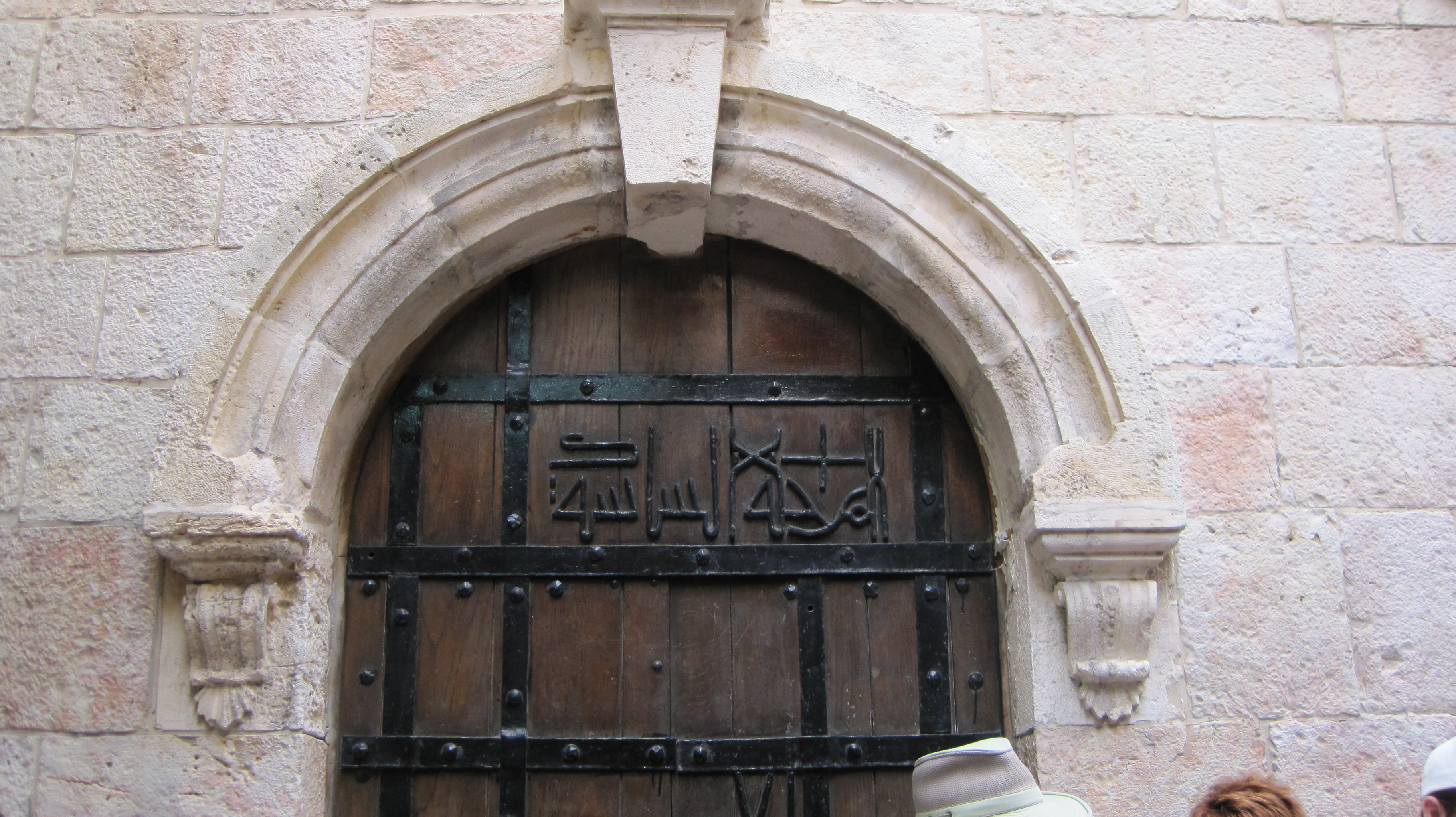
Being human means being made in the image of God. Being human is what we are called to be. Father, forgive.
Jesus, remind me again and again what it means to be human, what it means to be made in your image, that my life might be an imprint of your image for the world to see. Amen.
Christianity is an “even though” way of being in the world. Even though I walk through the valley of the shadow of death. (Sarah Lund)
“Requiem” by John Rutter, Movement III, “Pie Jesu” (Merciful Jesus)
Grace and Peace,
Shelli
 Dancing to God