(part of the “Breathing Out” Lenten Series)

Scripture Text: Matthew 21: 1-11 (Liturgy of the Palms A)
When they had come near Jerusalem and had reached Bethphage, at the Mount of Olives, Jesus sent two disciples, 2saying to them, “Go into the village ahead of you, and immediately you will find a donkey tied, and a colt with her; untie them and bring them to me. 3If anyone says anything to you, just say this, ‘The Lord needs them.’ And he will send them immediately.” 4This took place to fulfill what had been spoken through the prophet, saying, 5“Tell the daughter of Zion, Look, your king is coming to you, humble, and mounted on a donkey, and on a colt, the foal of a donkey.” 6The disciples went and did as Jesus had directed them; 7they brought the donkey and the colt, and put their cloaks on them, and he sat on them. 8A very large crowd spread their cloaks on the road, and others cut branches from the trees and spread them on the road. 9The crowds that went ahead of him and that followed were shouting, “Hosanna to the Son of David! Blessed is the one who comes in the name of the Lord! Hosanna in the highest heaven!” 10When he entered Jerusalem, the whole city was in turmoil, asking, “Who is this?” 11The crowds were saying, “This is the prophet Jesus from Nazareth in Galilee.”
So, when I was growing up in the church, Palm Sunday was exciting. I looked forward to it. It was fun to wave the palm branches and sing the familiar hymns and re-enact the joyous parade that brought Jesus into the city and honors him as our King. But, to be honest, we probably read a little bit more into this parade than is there. I used to think that this was a big parade, maybe the whole town of Jerusalem, welcoming Jesus into their midst. I used to think that Jesus entered the main gate of Jerusalem flanked by loving followers to a great celebration. But then it didn’t make much sense as to why it went so badly so fast. The truth is, Jesus was not “it” in Jerusalem. Jesus was heading what was then a small fledgling movement on the outskirts of established religion and recognized society.
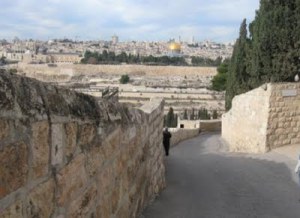
He was coming down a narrow road that winds down Mt. Olivet and was then entering through the eastern gate of Jerusalem, the “back door” of the city, for all practical purposes. The Western gate was the main gate. It was the one where all the military pomp and circumstance entered, a gate fit for royalty. Hmmm! It seems that Jesus makes a habit of coming in the back door—into forgotten grottos and wilderness baptisms and ministries that begin around a lake rather than a bustling Holy City. So, this seems only fitting. Maybe that’s the point. God doesn’t always enter in the way we expect, doesn’t always show up when it fits the best into our schedule or our circumstances. Instead, God slips in through the back door of our perfectly-planned lives when we sometimes barely notice and makes a home with us.
In their book The Last Week, Marcus Borg and Dominic Crossan posited a sort of “two parade” theory that actually makes a great deal of sense. What they propose was that since it WAS Passover, the holiest time in the city, there indeed would have been great celebration and so it makes sense that the Roman government would take advantage of that. The book begins by saying, “Two processions entered Jerusalem on a spring day in the year 30. . . One a peasant procession, the other an imperial procession. From the east, Jesus rode a donkey down the Mount of Olives, cheered by his followers. On the opposite side of the city, from the west, Pontius Pilate, entered Jerusalem at the head of a column of imperial cavalry and soldiers. Jesus’ procession proclaimed the kingdom of God; Pilate’s proclaimed the power of empire.”
The point was that the small (and it was small, particularly when you look at the size of what is now known as the “Palm Sunday Road” on Mt. Olivet) procession of Jesus and his band of followers was not the main event of the day. It was, in essence, a parody of the other parade—a stubborn donkey and a small colt in place of grand steeds adorned with rich fabrics and jewels, palm branches laid on the ground in place of fine and expensive carpets, cloaks instead of royal accoutrements, and an honoree that had preached nothing that the grand processional stood for. It was also an act of resistance. It was the way (and a dangerous one at that) to say, “no…our king is this Messiah, our Way is the Way of Love.” This King will bring peace rather than war, will bring mercy rather than rules and punishment, will bring life rather than death. This King is the way of resistance to the empire, to the powers of the world. It is the way of resistance to a government that doesn’t serve everyone equally, a regime that is more interest in power and riches than service.
So, the onlookers stay around for just a little while. And then the back-door parade fizzles. As the road goes by the Garden of Gethsemane and down toward Bethany and the outer walls of Jerusalem, many leave and go back to their lives. Maybe they had something to do; maybe they didn’t want to contend with all the holiday traffic in downtown Jerusalem; or maybe they were afraid of what might happen. So, Jesus enters the gate of the city almost alone, save for a few of the disciples.
Where are we in this moment? Jerusalem is here. As followers, we know that the road is not easy. It will wind through this week with the shouts of “Crucify him” becoming louder and louder. We will experience pain and grief and even betrayal. The road is steep and uneven. And the shouting stones and clanging iron against wood will be deafening. But this is the way—the way to peace, the way to knowing God, the way Home. This is our road; this is our Way; this is the procession to life. The way to the Cross, through the wilderness of this week is our Way to Life.
The truth is that all the breathing out and the breathing in that we have done to get us here was not for our health; it was to prepare us for this. And now we have to decide. Are we the ones running away or are we following Jesus? The ahead will be hard and painful. More than that, it will be dangerous. We know that. But it is the way to life. The gate is just up ahead. We can no longer sit on the steps outside the gate. Jerusalem awaits. And Jesus has begun his walk to the Cross. Breathe out…then breathe in.
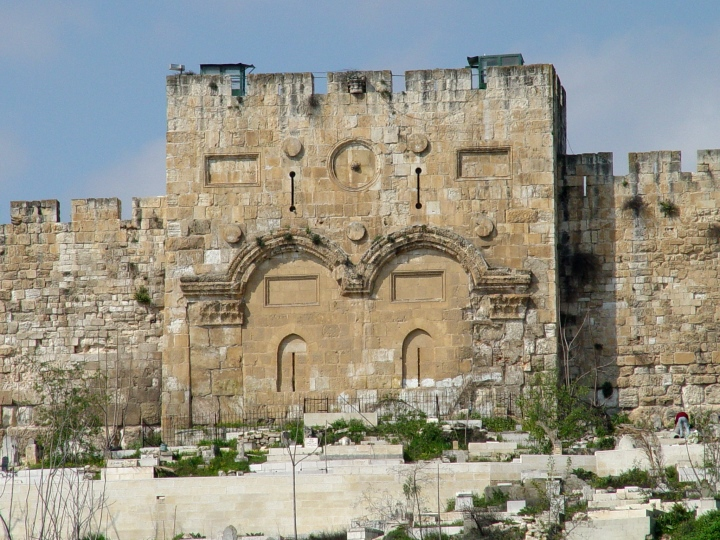
Just outside Jerusalem we came to a gate called Truth. We called to the gatekeeper to let us in. “The latch is not on,” he replied. “Anyone who will can enter.” We went closer, but seeing how great and how heavy was the gate we looked for a way around. There must be a way around. (Ann Weems, Kneeling in Jerusalem)
Eternal Rest, Grant Them O Lord
Grace and Peace,
Shelli
 Dancing to God