LENT 5A: Ru’ah

The Valley of The Dry Bones (Gustave Dore’, 1866)

Lectionary Text: Ezekiel 37: 1-14 The hand of the Lord came upon me, and he brought me out by the spirit of the Lord and set me down in the middle of a valley; it was full of bones. He led me all around them; there were very many lying in the valley, and they were very dry. He said to me, “Mortal, can these bones live?” I answered, “O Lord God, you know.” Then he said to me, “Prophesy to these bones, and say to them: O dry bones, hear the word of the Lord. Thus says the Lord God to these bones: I will cause breath to enter you, and you shall live. I will lay sinews on you, and will cause flesh to come upon you, and cover you with skin, and put breath in you, and you shall live; and you shall know that I am the Lord.” So I prophesied as I had been commanded; and as I prophesied, suddenly there was a noise, a rattling, and the bones came together, bone to its bone. I looked, and there were sinews on them, and flesh had come upon them, and skin had covered them; but there was no breath in them. Then he said to me, “Prophesy to the breath, prophesy, mortal, and say to the breath: Thus says the Lord God: Come from the four winds, O breath, and breathe upon these slain, that they may live.” I prophesied as he commanded me, and the breath came into them, and they lived, and stood on their feet, a vast multitude. Then he said to me, “Mortal, these bones are the whole house of Israel. They say, ‘Our bones are dried up, and our hope is lost; we are cut off completely.’ Therefore prophesy, and say to them, Thus says the Lord God: I am going to open your graves, and bring you up from your graves, O my people; and I will bring you back to the land of Israel. And you shall know that I am the Lord, when I open your graves, and bring you up from your graves, O my people. I will put my spirit within you, and you shall live, and I will place you on your own soil; then you shall know that I, the Lord, have spoken and will act,” says the Lord.

“Ru’ah.”  It is the Hebrew word that is here translated as “breath,” God breathing life.  It is also translated as “wind” or “spirit”.  Actually, we English-speakers don’t really have a translation that will do it justice.  It is not JUST breath; it is the very essence of God giving us life, God’s Spirit, God’s Word breathed into all of Creation, into all that is life.

Ezekiel was both a priest and a prophet in the 6th century BCE, before and during the time of the conquest of Judah and the Babylonian exile.  Ezekiel himself was taken into exile, into a land far away from the land of his birth and of his identity.  The temple was destroyed and the city lay in ruins.  All seemed hopeless and gone.  The bones here, whether taken literally or as metaphor, are dry, lifeless, and broken.  They symbolize all of the hopes and dreams that now lay in despair.  The kingdom of Israel is gone and their lives have gone away with it.  There is nothing left but corpse-like bones.

And then, according to Ezekiel, “the hand of the Lord came upon me.”  In The Message, Eugene Peterson says that “God grabs me”.  Think of that image.  Here was Ezekiel, probably feeling the weight of despair of those around him and virtual helplessness at what he could do as their leader.  But then “God GRABBED him…I have something to show you.”  And there in the middle of death and destruction and despair, God showed him what only God could see.  And then God breathes life into the bones and the bones come to life.  It is a story of resurrection.

The idea of God creating and recreating over and over again is not new to us.  But most of us do not this day live in exile.  We are at home; we are residing in the place where our identity is claimed.  So how can we, then, understand fully this breathing of life into death, this breathing of hope into despair?  The image is a beautiful one and yet we sit here breathing just fine.  We seldom think of these breaths as the very essence of God.  In the hymn, “I’ll Praise My Make While I’ve Breath”, Isaac Watts writes the words, “I’ll praise my God who lends me breath…”  Have you ever thought of the notion of God “lending you breath”?  Think about it.  In the beginning of our being, God lent us breath, ru’ah, the very essence of God.  And when our beings become lifeless and hopeless, that breath is there again.  And then in death, when all that we know has ended, God breathes life into dry, brittle, lifeless bones yet again.  Yes, it is a story of resurrection.

God gave us the ability to breathe and then filled us with the Breath of God.  We just have to be willing to breathe.  It involves inhaling.  It also involves exhaling.  So exhale, breathe out all of that stuff that does not give you life, all of that stuff that dashes hopes and makes you brittle, all of that stuff that you hold onto so tightly that you cannot reach for God.  Most of us sort of live our lives underwater, weighed down by and environment in which we do not belong.  We have to have help to breathe, so we add machines and tanks of air.  But they eventually run out and we have to leave where we are and swim to the top.  And there we can inhale the very essence of God, the life to which we belong.  God lends us breath until our lives become one with God and we can breathe forever on our own.

I’ll praise my God who lends me breath;
 and when my voice is lost in death,
praise shall employ my nobler powers. 
My days of praise shall ne’er be past,
while life, and thought, and being last,
or immortality endures.
                         (Isaac Watts)
So, in this Lenten season, ask yourself, “What is it that gives me life?”, and then, exhale…and then inhale the very Breath of God.  That will give you life.
Grace and Peace,
Shelli

Lenten Discipline: Bowing and Becoming

“Then Jesus went to a place called Gethsemane…” (Matt. 26: 36)

During the Sundays of this season of Lent, I am posting some thoughts on different spiritual disciplines.  Today I have chosen prayer.  Who am I to talk about prayer?  After all, it is probably “THE” spiritual discipline, the one that we all do (or think we should do more often!), that we all know (or think we should know better!), that we all feel like we should be doing better.  So, what is prayer to you?  At its simplest it is a conversation with God, a connection with the holy and the sacred.  So why is it that most of us claim that we need a deeper prayer life.  Are we not satisfied with the conversation?  Are we not getting the answers we want?  Or do we think that God wants more from us?  My guess is that it would be a little of all of the above.

In my “previous life” before ordained ministry, I sang in the choir as a layperson.  We almost always did a choral response following The Lord’s Prayer.  So, to this day, I cannot say that prayer in worship without looking up when I get to the last line, as if I’m still watching for the cue from the director.  (Of course, if you who go to St. Paul’s and you already know that, I guess it means you don’t have your eyes closed either!)  But, the point is that I cannot NOT do it and when I catch myself looking up while everyone’s heads are still bowed in prayer, I’m always a little embarrassed.  But, when you think about it, maybe that’s not such a bad thing.  Prayer is a way of  “attuning ourselves to a conversation that is already going on deep in our hearts”, as Marjorie Thompson says (in Soul Feast, p. 31.). It does not end with “Amen.”  It, like most good spiritual disciplines and all good faith stories, ends with a beginning.  It ends with our becoming engaged with God and joining what began long before we came along to the story.

There is a story from the Sufi mystical tradition of a disciple that comes to an elder for direction.  “Where shall I find God?” the disciple asked the elder.  “God is with you,” the Holy One replied.  “But if that is true,” the disciple asked, “why can I not see this Presence?” “Because you are like the fish who, when in the ocean, never notices the water.”  It is not that God is not with us; it is that we are unaware of that incredible Presence. (From There is a Season, by Joan Chittister, p. 14.)

And yet, most of us tend to pray prayers as if we’re throwing something out to a God that is “out there” somewhere, hoping against hope that God will pick them up and answer them (hopefully with the answer that we desire!).  We are told to “turn everything over to God.” I don’t think, though, that God meant to be in this alone.  Our prayers should not resemble our Christmas list of desires or even our grocery list of needs.  Rather, our prayers are our way of connecting to and entering the heart of that incredible Presence that is everywhere that we can imagine and everywhere that we will never know, the Presence of God.  Think of prayer as reaching and grasping, connecting and attuning, enfolding and becoming a part of the holy and the sacred God that is everywhere in our lives.  Prayers are indeed answered.  We just have to attune ourselves to the answer that is already present in our lives.  God’s desire is to fulfill our heartfelt prayers by filling our open heart with God.

Prayer is indeed “THE” spiritual discipline.  In fact, prayer is everything we are and everything we do, our whole life, every breath, every person we meet, every word we say, every thought we think that brings us closer to knowing this God who is already there.  Think of your “amen” as the beginning of that journey of holiness and wholeness that fills your life.  Maria Boudling says of prayer:  “All your love, your stretching out, your hope, your thirst, God is creating in you so that God may fill you…God is on the inside of the longing.”  And needing to pray, or wanting to pray, or just knowing that you “should” be praying means that you have already entered the conversation.  Amen.

Prayer is the soul’s sincere desire, unuttered or expressed,
the motion of a hidden fire that trembles in the breast.
Prayer is the burden of a sigh, the falling of a tear, 
the upward glancing of an eye, when none but God is near.
Prayer is the simplest form of speek that infant lips can try;
prayer the sublimest strains that reach the Majesty on high.
Prayer is the contrite sinners’ voice, returning from their way,
while angels in their songs rejoice and cry, “Behold, they pray!”
Prayer is the Christians’ vital breath, the Christian’s native air;
their watchword at the gates of death; they enter heaven with prayer.
O Thou, by whom we come to God, the Life, the Truth, the Way:
the path of prayer thyself hast trod; Lord, teach us how to pray!
                                           (James Montgomery, 1818, in The United Methodist Hymnal, # 492) 

So, in this Lenten season, become your prayer and let your prayer become part of all that is God.


Sometimes You Just Have to Wait…(See “A Season for Pruning”, 03/31/2011)

 Grace and Peace,

Shelli

There’s Always a Plan B

It is comfortable for us to think about the ideal life as one that moves in a straight line–no bumps, no turns, no dead-ends.  It is comfortable for us to think that God has some sort of grand plan for our lives and that God then leads us down this straight, narrow road to get to the glorious end.  Really?  Do you really think that’s it?  I mean, think about it, would you have traded some of the “bumps” and twists in your life’s pathway?  Would you give up who you are today for walking through those?  And what if your life HAD continued down one of the roads on which you started?  Where would you be today?

I’m not really convinced anymore that God lays out some road on which I am to walk.  (I suppose some of you would say that’s the reason I wander off of it as much as I do!)  After all, there’s that free will thing.  If there was one road for each of us and we then chose to wander from that road or just detour around part of it or if we ended up on someone else’s road altogether, would we then be a failure in God’s eyes?  Would we have messed up God’s perfect pre-ordained plan?  Nah…I don’t think that’s the way God works.

I think that God does have a plan, a plan that brings us to a place where we encounter God, to a place where all of who we are–our gifts, our talents, our minds, our hearts, those things we’ve learned and those things we made up on our own, those mistakes and those choices that we’ve made in our lives–comes together into who God calls us to be.  But I don’t think there is one pre-determined road down which we are required to travel to make that happen.  God is much more grace-filled than that!  When we wander from the road on which we’re traveling, when we cut our own path through life, and even when we follow others on a well-worn route, God, with infinite mercy and wisdom does not pull us back to the center of our road;  rather, God moves the path itself and continues journeying with us.  There’s always a Plan B.

God has done this before.  I have a hard time buying in to the idea of God sending Jesus to this earth specifically to die a painful and horrific death just so we slackers could have eternal life.  I hate the thought of Jesus’ sole mission on this earth being born to die.  Oh, don’t get me wrong–the eternal life thing was God’s purpose.  God had that in mind all along; in fact, God had that in mind from the very beginning of Creation.  We just didn’t get it.  So God came and walked this earth, Emmanuel, God with us, to show us the Way, to show us that at the end was the beginning.  I don’t think it went completely as planned.  (Oh, really now, does life EVER go completely as planned?)  Instead of embracing the Way, humanity put an end to it, hanging it on a cross and walking away.  But God, with infinite mercy and wisdom, did something different.  God took the end that we handed God and recreated it into a beginning.  There’s always a Plan B.

In this Lenten season, we’ve talked a lot about roads and pathways.  Maybe Lent is the time to realize that the end of the road is always the beginning, so the purpose of the journey is the journey.  Maybe that’s a good Plan B.

It may be that when we no longer known what to do, we have come to our real work.  And when we no longer know which way to go, we have begun our real journey.  (Wendell Berry)

Grace and Peace,

Shelli

LENT 4A: Peering From the Darkness

Lectionary Text:  John 9: 1-14, (15-38) 39-41
As he walked along, he saw a man blind from birth. His disciples asked him, “Rabbi, who sinned, this man or his parents, that he was born blind?” Jesus answered, “Neither this man nor his parents sinned; he was born blind so that God’s works might be revealed in him. We must work the works of him who sent me while it is day; night is coming when no one can work. As long as I am in the world, I am the light of the world.” When he had said this, he spat on the ground and made mud with the saliva and spread the mud on the man’s eyes, saying to him, “Go, wash in the pool of Siloam” (which means Sent). Then he went and washed and came back able to see.  The neighbors and those who had seen him before as a beggar began to ask, “Is this not the man who used to sit and beg?” Some were saying, “It is he.” Others were saying, “No, but it is someone like him.” He kept saying, “I am the man.” But they kept asking him, “Then how were your eyes opened?” He answered, “The man called Jesus made mud, spread it on my eyes, and said to me, ‘Go to Siloam and wash.’ Then I went and washed and received my sight.” They said to him, “Where is he?” He said, “I do not know.”   They brought to the Pharisees the man who had formerly been blind. Now it was a sabbath day when Jesus made the mud and opened his eyes…Jesus said, “I came into this world for judgment so that those who do not see may see, and those who do see may become blind.” Some of the Pharisees near him heard this and said to him, “Surely we are not blind, are we?” Jesus said to them, “If you were blind, you would not have sin. But now that you say, ‘We see,’ your sin remains.

Our Gospel text for this the fourth Sunday of Lent is the account of the healing of the man blind from birth in the Pool of Siloam (or the Pool of Shelah or the waters of Shiloah). We tend to read this story as a great miracle or healing story where, once again, Jesus comes out as the glorious hero. But what would happen if you flipped the thinking a little bit? Did the man become able to see because Jesus healed him, pulling him out of his disability, his “sin”, and into “righteousness”? Or was the man able to see because he was in darkness and had nowhere else to look but toward the light? Maybe rather than a healing story, this is a story that calls us to look into our own blindness, our own way that we miss seeing God. 19th century artist Paul Gauguin once said that “I shut my eyes in order to see.” It is harder to see light on light. There is no definition, no contrast. It is harder to discern which light is the one that will allow us to see. Light cannot light light.  I mean, really, when was the last time you went outside and gazed at the stars at noon?  Do you think the stars disappear during the day?  Do you think that when the sun goes down, a myriad of stars begin to peek through the ozone layer for our enjoyment?  No, they are there all the time, just waiting for us to peer from the darkness and finally glimpse their light.  It is when we are in the darkness that the light is illuminating, seemingly consuming the darkness, if only for a time.
 
But read the first chapter of Genesis.  The light did not expel the darkness; it pushed it away, replacing it with light.  The darkness and the light were separated not because one was bad and one was good but because it is in the darkness that we see the light.  That is why the man born blind from birth in our story could so easily gain his sight.  Jesus knew that.  The man lived in darkness.  Light was all he could see.  But those who lived in the light of their own spiritual perfectionism–it was they that were blinded by the light, unable to see, unable to distinguish the light of the their own making from the light of God.

Lent is as much about looking into our own darkness as it is looking into the light.  Think about it…all that is created begins in darkness–the darkness of the great void that existed before we were, the darkness of the womb that held us for a time, and the darkness that encompassed that Friday afternoon when the world was once again plunged into darkness so that it could be created once again.  If the darkness was completely bad, not “of God”, so to speak, why in the world would God leave it in Creation at all?  There is nothing “evil” about darkness.  In fact, I would submit the real possibility that there is a lot more evil going on in broad daylight nowadays, out where we can see it, whether or not we choose to pay attention!

Darkness is a real part of life–the darkness of sin, the darkness of depression, the darkness of poverty and economic hardships, the darkness of substance abuse, the darkness of failure, the darkness of living a life that has not turned out the way we thought it would, the darkness of ______________ (just fill in the blank).  We all begin in darkness.  But it is from the darkness that we can peer into the light, groggy-eyed and body-bent, and see beyond the shadows, beyond the flickering lights of the world, to the illuminating Light of Christ that shows us the Way of Life, the Way of God, the way to see as God sees, the Way to Love, the Way of Grace.  It is from the darkness that we can see what we’ve never seen before.  Helen Keller said that “I believe that life is given us so we may grow in love, and I believe that God is in me as the sun is the colour and fragrance of a flower…I believe that in the life to come I shall have the senses I have not had here, and that my home there will be beautiful with colour, music, and speech of flowers and faces I love. Without this faith there would be little meaning in my life. I should be “a mere pillar of darkness in the dark.”

Amazing Grace, how sweet the sound,  That saved a wretch like me.
I once was lost but now am found, Was blind, but now I see.
T’was Grace that taught my heart to fear. And Grace, my fears relieved.
How precious did that Grace appear the hour I first believed.
When we’ve been here ten thousand years bright shining as the sun.
We’ve no less days to sing God’s praise than when we’ve first begun.
                                                                                       (John Newton)

So, in this Lenten season, close your eyes…and open them that you might finally see!

Grace and Peace,

Shelli

A Season for Pruning

I haven’t had a whole lot of time to spend in my yard.  I really want to.  My neighbor and I struck what turned out to be a good deal for both of us and he cleared all of the “dead” stuff out and now I want to plant and work and see what happens.  There just hasn’t been time.  But the roses seem to know what to do anyway.  Drowning in deadness for so long, they seemed to breathe a longed-for breath once it had been cleared away.  I did get out there one day and pruned them, deadheading, removing all of the old blossoms and dried up leaves that were no more.  Again, they seemed relieved, almost free.  And then I waited.  First the bush with the medium pink roses began to bloom.  It is now full of about eight roses.  After that, the dark pink one began to fill itself with color.  Then the two yellow-flowered bushes followed by the white ones.  My favorite bush always blooms last. (Isn’t that typical?  Does it bloom last because it’s my favorite or is it my favorite because it blooms last?)  Right now it has about eight or ten buds on it that are trying desperately to burst forth with the most incredible strata of yellow, coral, and red colors on every flower.  And so I wait a little longer.  I thought yesterday would be the day but last night there were still tightly-closed but expectant buds.  All I can do is wait now.  There is nothing that I can do to hurry the process along.

You know, we comfortably think of God as omnipotent, all-powerful, assuming that if we can’t or won’t get it done, God will somehow be able to swoop in and clean up our mess, somehow force our blooms out of hiding.  I don’t know.  At the risk of questioning the Almighty’s power, is that really the way it works?  Is God really omnipotent?  I don’t see it.  Because you see, God, in infinite wisdom and omniscience, gave away a piece of the Godself and, in turn, denied God’s own omnipotence.  God chose to give away the power to choose.  It’s called free will.  And so God lovingly and patiently waits.

But what God does is give us a season for pruning.  It’s called Lent.  It is the season when God with the profound skill of a master gardener shows us how to prune and deadhead our lives, clearing away all the dried up growth and giving us room to breath and grow.  And God waits for us to choose life, waits for us to choose to bloom into the most magnificent creation, waits for us to choose to walk toward God and become what God intended us to be.  And still God waits until even the last bloom springs forth.  There is nothing that God can do to hurry the process along except to wait with us everyday and try to pluck the deadness that we hold so tightly from our grip.  God gave omnipotence away so that we could choose life.  We cannot do it without God but God will not do it without us.  So ponder anew what the Almighty can do!

So, in this Lenten season, this time for pruning, choose Life.  God is waiting.

Grace and Peace,

Shelli

LENT 4A: Images of Light

Lectionary Text: Ephesians 5: 8-14
For once you were darkness, but now in the Lord you are light. Live as children of light— for the fruit of the light is found in all that is good and right and true. Try to find out what is pleasing to the Lord. Take no part in the unfruitful works of darkness, but instead expose them. For it is shameful even to mention what such people do secretly; but everything exposed by the light becomes visible, for everything that becomes visible is light. Therefore it says, “Sleeper, awake! Rise from the dead, and Christ will shine on you.”

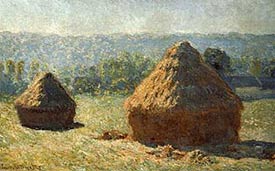
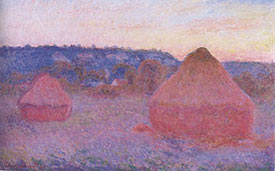
I’m sure most of you are familiar with the art of Claude Monet, the French Impressionist painter who is probably best known for his incredible landscapes and works of nature as well as for his paintings of those things that were a normal part of his own life. Probably the most fascinating part of Monet’s work are those paintings that he did as part of several series representing similar or even the same subjects—his own incredible gardens, poppy fields, a woman with a parasol, and those unusual haystacks.

The paintings in this series of haystacks were painted under different light conditions at different times of day. Monet would rise before dawn, paint the first canvas for half an hour, by which time the light had changed. Then he would switch to the second canvas, and so on. The next day and for days and months afterward, he would repeat the process. In each painting, the color of the haystack is different because the amount and quality of the light shining on the haystack is different. The subject is the same but the perspective from which it is viewed changes with the light. 

Up until this time, color was thought to be an intrinsic property of an object, such as weight or density. In other words, oranges were orange and lemons were yellow, with no variation as to the lens through which they were viewed. But with Monet’s studies in light and how it affects our view of life, that all changed. As Monet once said, “the subject is of secondary importance to me; what I want to reproduce is that which is in between the subject and me.” (I guess you could say he was painting hay while the sun shines! (sorry, couldn’t resist!))  But, seriously, Monet wasn’t merely painting images of haystacks; he was painting images of light.

I don’t really think of this light of Christ as a bright, blinding spotlight.  It’s really much more nuanced and subtle than that.  Think illuminating, rather than blinding.  And it doesn’t dispel the darkness but rather enlightens it.  It casts a different light, a light that illuminates all.  God, with infinite wisdom, gave us the power and the desire to see through the darkness and glimpse the light shining through, to see the Light that is Christ.  It is a light that is always present regardless of our view, that exposes all that is visible and makes that on which it shines light itself. 

There is a Maori proverb that says “turn your face to the [light] and the shadows will fall behind you.”  They are not consumed; they are still there, light streaming into their midst.  Shadows do not exist without light.  Light is what makes them visible.  We are like that.  Exposed by the Light of Christ, we become visible; and by becoming visible, we become light, children of light, images of the Light that is Christ, the Light that is God.  As I said before, what Monet painted was light.  He captured the visibility of a blank canvas and created a set of masterpieces.  Become visible; become light; become a blank canvas on which God can paint a masterpiece of light.

So, in this Lenten season, be visible, be light!

Grace and Peace,

Shelli


Dancing With the Disciples

You know how you do those things that aren’t that terrible but that you would rather most people not know–like (a.) watching soap operas, (b.) eating a whole pint of ice cream, (c.) singing along to The Sound of Music, or (d.) all of the above?  Yes, my answer is, sadly, “(d.)” and that’s probably not all of the stupid things that I do!  So as long as we’re inviting true confessions, I have to admit that I love Dancing With the Stars.  I know it’s stupid.  But I love dancing and, perhaps even more than that, I like watching people that have never danced before, that are scared to death, that are sure that they are the next ones to be voted off by ten or so million of their closest friends, come completely out of themself and have the courage to feel a rhythm that they’ve never felt before.

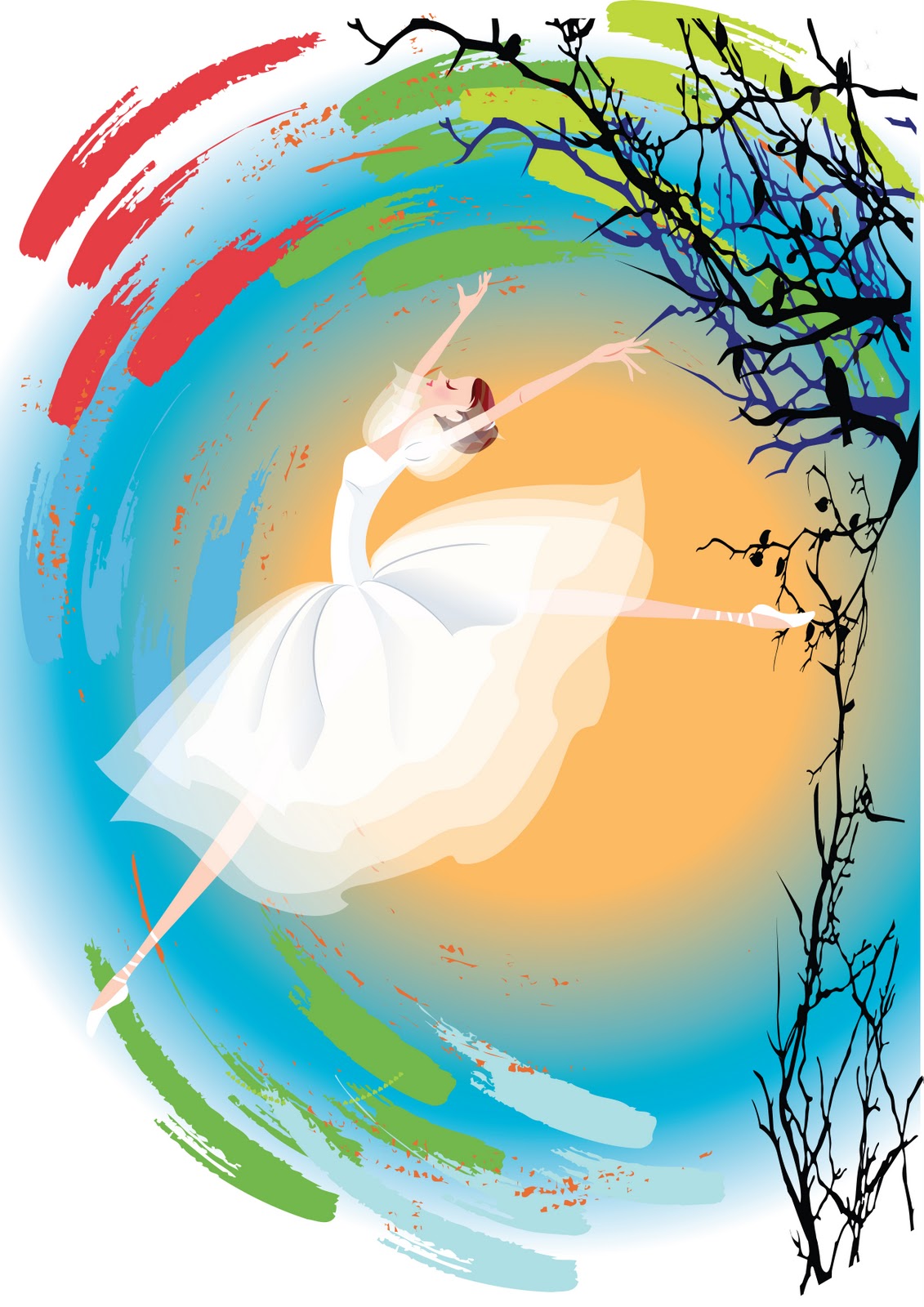
I pray for all of us that we can do that this Lenten season.  No, not dance with one of the dance pros but, rather, to have the courage to feel a rhythm that we’ve never allowed ourselves to feel before. What would it take to allow ourselves to do that?  What would it take to put aside all of our preconceived ideas, needless inhibitions, and carefully laid plans and just dance?  What would it take for us to finally feel that rhythm of God that runs through us all and truly dance like no one is watching?  You know, I think that one reason my guilty pleasure “Dancing” show is so popular is not that people like to watch others fail (and sometimes even fall!), but that we admire someone who can get out of their element, who can step out of their role that they are “supposed” to live in their life.  Deep down, I am convinced, we all dream of that.  We all know that we’d be better for it.  We all know that there is a dance in our lives that we have yet to dance.  Part of what we’re called to do during this season is do just that–to let go of what we think we should be doing and listen for that rhythm that runs through each of our lives, the rhythm of God calling us to dance whether or not we think we’ve practiced enough.

When Jesus called the disciples, one by one, I’m pretty clear that none of them were practicing dancing in their room when everyone thought they were asleep.  The truth is, they were anything but prepared.  (Hence the continual competition to be the “favorite” and to make sure they understood!)  They had planned something else for their lives–something reasonable, something realistic, something sane.  But then the beat began and they couldn’t help themselves.  They could only dance.  I want to be like that.  I want to dance with the disciples.

I was watching Dancing With the Stars last night.  (Well, gee, I guess there’s no hiding that now so why bother anymore!)  In one of the pre-recorded “practices”, one of the “pros” told one of the “stars” that the reason he couldn’t do the Jive is because he was thinking too much.  She said that he needed to feel it and follow it.  Maybe that’s our problem:  We’re trying to think too much, trying to reason out what God is calling us to do, trying to figure out how to fit it into our carefully-planned life.  The music has already started.  We need to start dancing!

Do you remember the T-Mobile Dance in Liverpool Station, UK about two years ago?  Look at it at: T-Mobile Dance and THEN, go to how it was made: The Making of the T-Mobile Dance.  Enough said…I guess life really is for sharing!  Perhaps we disciples could take some lessons!

“You’ve gotta dance like there’s nobody watching, Love like you’ll never be hurt, Sing like there’s nobody listening, And live like it’s heaven on earth.”  (William W. Purkey)

So, in this Lenten season, dance to the music that’s been there all along and live like it’s heaven on earth.  Who’s stopping you?  What are you hiding?

Grace and Peace,

Shelli