LENT 2A: Parshas Lech Lecha

LECTIONARY PASSAGE:  Genesis 12: 1-4a
Now the Lord said to Abram, “Go from your country and your kindred and your father’s house to the land that I will show you. I will make of you a great nation, and I will bless you, and make your name great, so that you will be a blessing. I will bless those who bless you, and the one who curses you I will curse; and in you all the families of the earth shall be blessed.” So Abram went, as the Lord had told him; and Lot went with him.

It means “to be a blessing”, parshas lech lecha.  This passage begins what is often called the Patriarchal history of Genesis. All of a sudden the camera zooms into a single family of nomads in a small town in Mesopotamia and, finally, to a single individual.  This is where the history of Israel begins.  The truth is, Abram never saw his future.  And yet his response shaped it.  Abram is chosen to be the one through whom God’s blessing is showered upon the whole world. But in order for this to happen, Abram is told to leave what he knows, to in effect sever ties and go to a new place. (We at this point immediately jump to what that would mean for us–to leave our home, our family, our life.  What, we imagine, a great act of faith!) But remember that Abram’s family was nomadic. They probably didn’t really have a concept of home anyway. And there really wasn’t a family, to speak of—Abram had probably long ago outlived his parents and he had no children. So what was he leaving? Maybe God was calling him away from hopelessness and loneliness and finally showing him purpose, showing him home.

And the Lord promises that Abram will not be alone. And, more than that, God promises blessing. No longer is this just one person or one family; it is the conduit to God showering blessing throughout the world.
Abram is called to be a blessing, the Hebrew Parshas Lech Lecha. It becomes an integral part of the Genesis story and is used eighty-eight times in the book. A blessing is a gift. It involves every sphere of existence. It is more than what we 21st century hearers have allowed it to be. It is not payment for a life well-lived. “Being blessed” is being recreated. (For Abram, this meant moving from a life of nomadic purposelessness to being the “father of a great nation” and, thousands of years later, the patriarch of three world religions.) It takes time. I think to be a blessing means that one enters the story. God calls, God promises, and God walks with us. That is how God is revealed. But the blessing doesn’t come and the blessing doesn’t continue unless one enters the story. God calls, God promises, and God blesses.

Blessing is one of the ways that God makes the presence of God known here and now.  (Joan Chittister)

So, go and be a blessing!
 
Grace and Peace,
 
Shelli

Lenten Discipline: Seeking and Tuning

Today we lost an hour to the dreaded Daylight Savings Time adjustment.  I hate this day.  What is that about?  The claim is that we get “more daylight”.  Really? Have these people not had math or astronomy?  It is very bizarre.  So, I woke up at 5:00 (which was really, as my body clock pointed out to me, 4:00).  And while I went around and did all of my Sunday morning things for what was already an early day, Maynard (the dog) slept in.  He knew better and just didn’t want to be bothered with anything that might get in the way of his schedule.  Maynard is a rescue lab that I got in August and as this was our first “spring forward” day together, I think it confirmed to him that I really am nuts. 

I drove to the church at the time that I was usually privileged to view the sunrise on Sunday mornings.  There was no sunrise but rather a sky that held varying degrees of light as the sunrise began to stretch and get ready for the day, not really wanting to be bothered with anything that might get in the way of its schedule.  It really was rather beautiful, though (sans light, of course).  I stopped at the same red light at the same intersection that I do twice each year. It seems that I always change my car clock at the same place.  And I always have to once again figure out how to do it.  You punch “Clock” and then the radio screen lights up with the directions:  “H-Seek…M-Tune”.  (It’s telling you to use the “seek” and “tune” buttons to recalibrate your time and adjust its setting so that it makes more sense.)

The meaning was not lost on me even in my somewhat blurry state.  What a great metaphor for this Lenten season–seeking and tuning.  Usually when we see the word “seek”, our finely-trained minds go immediately to “finding”.  But on this spiritual path, that doesn’t work as well.  This is not a path of seeking and finding God.  God is not lost.  God is not hiding out waiting for some grand hide and seek game to end.  God is right here waiting for us, waiting for us to hear, waiting for us to listen.  And so this time of Lent is a time of our seeking and tuning, a time of recalibrating our lives so that we will be in line with the time of God, a time of adjusting our setting, so to speak, so that it will make more sense.  God is never out of the bounds of our life; sometimes we just have to stop and tune ourselves to the music that was there all along.  And once a year, the church year gives us a chance to do just that.  My memory is a little rusty.  I usually have to figure out how to do it all over again.  But God is patiently waiting for me to spiritually tune myself.  And if I don’t get it completely right, God, in infinite grace and mercy, always moves a little closer to me anyway.

So in this Season of Lent, tune yourself to the place where you best connect with God!

Grace and Peace,

Shelli

LENT 1A: Ego-Control

LECTIONARY PASSAGE:  Matthew 4: 1-11
Then Jesus was led up by the Spirit into the wilderness to be tempted by the devil. He fasted forty days and forty nights, and afterwards he was famished. The tempter came and said to him, “If you are the Son of God, command these stones to become loaves of bread.” But he answered, “It is written, ‘One does not live by bread alone, but by every word that comes from the mouth of God.’” Then the devil took him to the holy city and placed him on the pinnacle of the temple, saying to him, “If you are the Son of God, throw yourself down; for it is written, ‘He will command his angels concerning you,’ and ‘On their hands they will bear you up, so that you will not dash your foot against a stone.’” Jesus said to him, “Again it is written, ‘Do not put the Lord your God to the test.’” Again, the devil took him to a very high mountain and showed him all the kingdoms of the world and their splendor; and he said to him, “All these I will give you, if you will fall down and worship me.” Jesus said to him, “Away with you, Satan! for it is written, ‘Worship the Lord your God, and serve only him.’” Then the devil left him, and suddenly angels came and waited on him.

The Judean Wilderness, Israel
February, 2010

Well, here we are back at the temptation story.  I suppose that means it’s the first Sunday in Lent.  It doesn’t even matter what lectionary year you’re in. All three synoptic Gospels have it in some form. So it just seems to find us each and every year on this Sunday.  It is the day that never budges on our spiritual itinerary, as if  it is a place through which we have to pass to get to anywhere else.  So, is the point that you have to travail the wilderness or that you have to survive the temptation?  I think maybe it’s both those things, but the main thing is that wherever we are and whatever we are doing, now is the time to get our egos under control.  This Lenten journey is not for the faint of heart.  It is serious business.  We have to get our own selves out of the way before we can continue.  Maybe that’s why we read this story every single year on the first Sunday in  Lent.  It’s our annual spring cleaning of all that stuff that is piled up in our way so that the path to Jerusalem will be visible.

Many people struggle a bit with this story.  After all, he was Jesus–as in the Christ–as in God Incarnate–as in the Savior of the World.  Shouldn’t he have been above all that?  But, remember, Jesus was human, fully human.  And even the ones in our midst who do humanness the best have things that get in the way of our relationship with God from time time.  If Jesus had been “above it all”, so to speak, what, really would have been the point at all?  Jesus was not a superhero.  Jesus was showing us the way to God.  And along the way, Jesus was enough of a realist and loved us enough to be honest about what all of us would encounter on this journey.  Jesus’ style was not really to show us all the stuff that we were messing up; rather, he showed us how to name and own what comes along so that we would have the strength and the grace and the faith not to walk away but to walk through it, to leave it behind as we continue on.  I think that’s a whole lot better than a superhero that just flies above the fray and scoops us out of harm’s way at the last minute.

Henri Nouwen says that the three temptations depicted are what we all encounter–the desire to be relevant, spectacular, and powerful.  Who doesn’t want to be relevant, to be liked, to be affirmed, to realize that you have made an impact?  The ironic thing is that most of us spiritual ones live our whole lives like that.  We are told that we are supposed to bear fruit.  And yet how many of us forget who planted it in the first place?  And, at least once in a while, it would feel good to be spectacular.  And the third?  Well, good grief, our whole society is about power.  If we are not one of the powerful, then we are one of the powerless, right?  In a society with a caste system such as ours (yes, I said caste system), there has to be SOMEBODY on the top!  But, here’s the crux…to those who are relevant, spectacular, and powerful, Jerusalem looks like a failure, a dark blotch on an otherwise pristine story.  But to those who have left their egos at this first week, Jerusalem looks like life. 

So get your egos in check and prepare for the journey!

Grace and Peace,

Shelli 

LENT 1A: Tsinami

LECTIONARY PASSAGE:  Romans 5: 12-19
Therefore, just as sin came into the world through one man, and death came through sin, and so death spread to all because all have sinned— sin was indeed in the world before the law, but sin is not reckoned when there is no law. Yet death exercised dominion from Adam to Moses, even over those whose sins were not like the transgression of Adam, who is a type of the one who was to come. But the free gift is not like the trespass. For if the many died through the one man’s trespass, much more surely have the grace of God and the free gift in the grace of the one man, Jesus Christ, abounded for the many. And the free gift is not like the effect of the one man’s sin. For the judgment following one trespass brought condemnation, but the free gift following many trespasses brings justification. If, because of the one man’s trespass, death exercised dominion through that one, much more surely will those who receive the abundance of grace and the free gift of righteousness exercise dominion in life through the one man, Jesus Christ. Therefore just as one man’s trespass led to condemnation for all, so one man’s act of righteousness leads to justification and life for all. For just as by the one man’s disobedience the many were made sinners, so by the one man’s obedience the many will be made righteous.

As I watch the news coverage of the tsunami wave rolling across the earth, I am at this moment somewhat painfully aware of how interdependent this whole of Creation is.  The beginnings of an earthquake are probably considered almost nothing, something that on the surface doesn’t even matter at all.  And yet what begins as a shift in the depths of the earth, something that seemingly is nothing more than a veritable sigh, releases a force that shakes the earth at is very core, taking life with it, and then sending its waves far beyond itself, to lands that it barely knows.  By the time it gets to our country’s western coast in a few hours, it will have pulled all of humanity and all of Creation into its deadly force.  And when it is finally snared by a stretch of calm, peaceful flatlands, its wake will contain pieces of lives that will never be the same again.

In our lectionary epistle this week, Paul mentions sin or some form of it (sinner, transgression, disobedience, etc.) sixteen times by my count.  In fact, five of the mentions are in the first sentence!  Do you think he was trying to make a point?  Sin, I’m afraid, is a fact of life.  It is part of all us.  We claim that perhaps our own sins are not that bad.  You’ve heard all the claims and the questions:  So, if I don’t KNOW I’m sinning, is it really sin?  So which sins are the “unforgiveable” ones? I mean, really, it was only a little sin, just a little “white lie”.  Yes, in the big scheme of things, it was probably nothing more than a veritable sigh of a sin.

But in our interconnectedness, sin affects us all.  And even the smallest of sins can release such a force that none of us can control it.  Now don’t get me wrong.  I do not in any way believe that “sin” is something outside of us.  It is not a “force to be reckoned with”, so to speak.  I’m pretty clear that when I sin, it is me.  It is my bad choice.  It is me that has messed up, that has not honored myself or my place in the beauty of this interconnected Creation, rather than it being caused by some sort of little red man with horns or something.  I am the one to be blamed.  I have to own it.  It is mine.  It is mine, that is, until it is done.  And then it spills into Creation and begins cutting a path with a force more powerful than anything I imagined, a veritable “tsinami” of destruction through this interdependent earth.  (And you thought I spelled the title of this blog wrong!)

But as Paul reminds us, we are forgiven.  We are forgiven with a force greater than any of our sin.  Christ came that we would know that.  I don’t really think in terms of Christ forgiving my little white lie.  It’s bigger than that.  “Christ came to take away the sin of the earth.”  Christ came not to take away the sins, ticking them off one by one or keeping track of whether or not I’ve reached my quota.  Christ came to take that tsinami away from us, that collective ball of SIN that ravages the earth and leaves destruction in its path.  God does what we cannot.  And in forgiveness, we finally find peace–not innocence, but real peace.  And then we will pick the pieces of our lives up and continue walking with God.

In the Name of Jesus Christ, you are forgiven!

Grace and Peace,

Shelli 

LENT 1A: Failed Gardeners

LECTIONARY PASSAGE:  Genesis 2: 15-17, 3: 1-7
The Lord God took the man and put him in the garden of Eden to till it and keep it. And the Lord God commanded the man, “You may freely eat of every tree of the garden; but of the tree of the knowledge of good and evil you shall not eat, for in the day that you eat of it you shall die.”  Now the serpent was more crafty than any other wild animal that the Lord God had made. He said to the woman, “Did God say, ‘You shall not eat from any tree in the garden’?” The woman said to the serpent, “We may eat of the fruit of the trees in the garden; but God said, ‘You shall not eat of the fruit of the tree that is in the middle of the garden, nor shall you touch it, or you shall die.’“ But the serpent said to the woman, “You will not die; for God knows that when you eat of it your eyes will be opened, and you will be like God, knowing good and evil.”  So when the woman saw that the tree was good for food, and that it was a delight to the eyes, and that the tree was to be desired to make one wise, she took of its fruit and ate; and she also gave some to her husband, who was with her, and he ate. Then the eyes of both were opened, and they knew that they were naked; and they sewed fig leaves together and made loincloths for themselves.

Gideon’s Spring, Israel, Feb. 2010

Spring has begun to peek out from behind the winter clouds.  In fact, here in Houston where I live, we have had some incredibly beautiful days.  But my gardens look like anything but spring.  I just haven’t been able to find the time to get something done.  So every time I walk outside my house, I am reminded of my current status as a failed gardener, reminded that where there once had been beauty, there is nothing but desolate dirt.

It’s interesting that we read this passage the first Sunday of Lent.  We just had Ash Wednesday.  We were just reminded that we are dust.  But from dust comes life.  Perhaps this is as much a story about life as it is about death and sin.  After all, as the story goes, they didn’t actually die from eating of the tree.  Or did they?  What was gone was innocence.  What was gone was that unblemished connection to God.  What was gone was that childhood view that nothing could ever go wrong.  There are those whose faith understanding is that we are called to return to the Garden.  That sounds stupid to me.  Why would God create this whole incredible universe and then expect us to stay locked in a garden?

But the truth was, they did die—they died to themselves.  And God began to show humanity the way home, the way through temptation and exile and wandering in the wilderness.  God began to show humanity what it was like to return.  Our whole faith journey may be more about returning home, returning to God, than about anything else.  I, personally, don’t think we’re headed back to this metaphorical Garden; otherwise, it would seem that God would be apparently content with plunking us down into some sort of pre-perfected existence where we could just enjoy the beauty.  I think that was only the beginning.  God has a whole lot more in store for us.  Maybe the point of the story is not that Adam and Eve messed it up for all of humanity and got us banished from some imaginary garden.  Maybe the point of the story is that our eyes can be opened, that we can gain vision beyond ourselves.  Maybe the point of the story is to remind us what tilling and tending really is.   It’s hard work.  It’s more than just cleaning up a few weed scragglers that have snuck into one’s otherwise-pristine existence.  It’s about going where you have not; it’s about navigating weeds and storms and the temptation to plant what will not grow; it’s about getting your hands dirty; it’s about learning to see life where there is only dust and dirt.  It’s about going into the world with a faint memory of what beauty and life is and bringing it to be around you.  It’s not about returning to the Garden; it’s about returning to God.  So, actually, there is no such thing as a failed gardener.  There is always more planting and tending to do for the life that God continually offers.

So, go and be tenders of the life that God offers! 

Grace and Peace,

Shelli 

Ashed

Have mercy on me, O God, according to your steadfast love; according to your abundant mercies, blot out my transgressions.  Wash me thoroughly from my iniquity and cleanse me from my sin…Create in me a clean heart, O God and put a new and right spirit within me. (Psalm 51: 1-2, 10)

Ashes

I sit here this evening with some semblance of an ashen cross partially hidden under my bangs.  It’s actually the second time I’ve been ashed today.  I washed the other one off so that I would appear clean and “unashed” for the second service of the day.  The truth is, this annual ashing, so to speak, is nothing less than odd.  We get all dressed up (well some of us) and we make our way to what is a sort of dark and sullen sanctuary to say out loud that we have once again not been the people that we really ought to be.  I supposed you could call it our annual cleansing, a spring cleaning, as we ask God to create in us a clean heart.

But ashes?  It is rather odd, when you think about it–remnants of a life gone, reminders of death and destruction, of finality.  And yet, ashes are also a symbol of a great leveler.  Destruction is like that.  A fire burns and knows no bounds.  In its path is both beauty and ugliness, both wealth and poverty, success and failure, right and wrong, righteousness and evil.  The fire burns, consuming whatever is there, and leaves nothing but ashes.  So, being ashed this night is a reminder not merely of what I have done wrong, not only of those places where I have wandered off the pathway, but rather that, when it is all said and done, we are really all the same.  We are dust, blown helplessly through the winds of the earth until, until God breathes into us the breath of life and we are born alive and renewed.  And the oddest thing of all is that God does that over and over and over again, never seeming to tire of sweeping through our lives and giving us a clean heart.
It is a good thing, this clean heart, because that is what it takes to make the trip to Jerusalem.

So, this night, I am ashed, but, if only for a moment, I am clean enough to begin the journey.  From these ashes, comes life.  Again and again and again.

Our journey to the Cross has begun.  Go in peace.  Go with a clean heart.

Grace and Peace,

Shelli

Counterpoint (A Sermon for Ash Wednesday)

This, Not That

We live in a world filled with choices. We live in a world where we are continuously bombarded by directives to buy this (not that), eat this (not that), drink this (not that), drive this (not that), wear this (not that), say this (not that), and do this (not that). To be honest it is completely overwhelming. There are so many competing voices vying for our loyalty that most of us easily lose perspective of what’s really important, what really matters in our lives. But perhaps it really is easier to know which way to go if someone tells us exactly what path should be taken, if someone points us ahead by saying “Go this way. Do not go this way.” Maybe that’s the point. Those who are vying for our attention have figured that out. By presenting counterpoints, contrasts or opposites, they are assuming that they are leaving us with no choice but to follow down the road that they want us to go.

It appears that Jesus is doing the same thing in the Gospel passage that we read. The words “do not” appear in the translation from which we read five different times: “Do not do something so that you are noticed when giving offerings,” “Do not let others know what you are doing when you give them,” “Do not pray so that others notice you,” “Do not call attention to yourself when you fast,” and (probably the most challenging for us twenty-first century hearers) “Do not store up or hoard your treasures or your wealth here on earth.” Jesus presents these directives as counterpoints. It’s like saying, “you know the way the world tells you to do things; do not do things that way. There is a better way.”

Intellectually, I think we as Christian hearers know that. We know that there are many things about our contemporary worldly lives that are not exactly in line with the Gospel of Jesus Christ. But change is hard. And, after all, we’re only human, right?

A Season for Change

But today we begin the journey of change. As we move from the season of Epiphany and the celebration of God’s light manifest in the world, we now begin the time when we are called to shift our own perspective and our own vision in relation to that light. This is the beginning of a time in which we are called to redirect our lives and realign them with what they are supposed to be, a time to look at what it is that fills our lives, at those things that we do, and at those things that we treasure. Because as we go along, it is so incredibly easy for us to become swept up into whatever it is that makes up our lives and somehow convince ourselves that that is what life is supposed to look like. We like having choices. Being directed toward “this and not that” is difficult. But, my friends, this is the season of change.

Lent, which, literally, means “springtime” is a time of nurturing and preparation. It is the great Christian festival of new life. It is a greening and bringing back to life of our souls. Going back to the fourth century, Lent was traditionally associated with penitence, fasting, almsgiving, and prayer. Lent, like springtime, is a time of growth and renewal and, yes, change. Our forty days of Lent are reminiscent of the forty trying days that Jesus spent in the dry and secluded wilderness as he readied himself for his ministry. In the same mode, the early church used Lent as a time to prepare believers for baptism, to prepare them to begin their walk with Christ. It is a time to allow God’s spirit to point out to you those habits, attitudes, and behaviors that may be blocking you from a deeper walk with God.

Joan Chittister says that “Lent is not an event. It is not something that happens to us. It is at most a microcosm of what turns out to be a lifelong journey to the center of the self. The purpose of Lent is to confront us with ourselves in a way that’s conscious and purposeful, that enables us to deal with the rest of life well.” Truth be known, Ash Wednesday invites us into what is for some of us some fearsome territory where we might find healing and renewal from those things that get in the way of the real “us” that we are called to be. It is not a day where we begin to deprive ourselves of things we need or even things we want; it is the point at which we begin to look at things differently. We are called to look at things through the heart of Christ rather than through the eyes of the world.

So on this day, as we begin this journey, we are called to repentance, to a turning around, to change. Think of it, though, as a threshold that begins a journey into new life, a window to a new way of seeing, and a doorway to a new way of being. It is the day when we finally tell ourselves “not that, but this.”—this way of life to which Jesus calls us, a way of recreation and renewal. And it is the day when we finally admit that we cannot do it alone.

A Parody of Life

To the rest of the world, I suppose this practice of putting ashes on our foreheads is extremely odd. Who are we kidding? If we back away from the ritual of this day, most of US would probably think this practice is extremely odd. Because, once again, in the big scheme of what the world has laid out as normal, being Christian, following Christ, is probably just odd.

In fact, even in the first century setting in which these words were heard, what Jesus says is almost a parody of life. Think about it. These good, righteous people were told their whole life to act righteous, to show themselves holy, to set themselves apart. They were told that part of penitence was letting others see that they were penitent. It was who they were; it was part of their identity. But Jesus is telling them, “No, that’s not it. Righteousness has nothing to do with what you look like to others. It has nothing to do with proving yourself good or righteous. It simply has to do with quietly and inconspicuously turning toward God so that you are no longer seen. It has to do with changing your life so that when people look at you, they do not see what you are doing for God in your life; rather, they see the very image of Christ in you.

This passage is indeed a parody of life. It presents a counterpoint to what we humans have figured out life should be. And at its deepest meaning, it is not merely calling us to a different way of acting or a new way of doing things. It is instead a call to in essence die to oneself that we might become one with God.

And From the Ashes…

Hence, the ashes. Ashes have traditionally been a sign of repentance and mourning. They inherently represent the passing of something—a tree that once grew tall, a house destroyed by fire, a once-vibrant city now a victim of volcanic eruption. Historically, the ashes used on Ash Wednesday were burned palms of last year’s Palm Sunday. They carried the reminder of all those grandiose hopes and triumphal offerings that without the proper perspective can in just a short time turn easily turn to betrayal, persecution, and even death. Ashes represent what is left when all that we know, all that we have built, all that we hold dear is gone. It is a reminder that nothing really matters unless it is part of our returning to God.

And so, traditionally, the sign of the cross was made with ashes on the forehead. The traditional wording, “remember that you are dust, and to dust you shall return,” evokes the story of our creation in the second chapter of Genesis: “and the Lord God formed humanity from the dust of the ground, and breathed into humanity’s nostrils the breath of life, and humanity became a living being.” Instead of this wording, we usually say the words, “repent, and believe the Gospel.” The meaning is similar: “Turn, turn back toward God and toward what you were created to be and believe in the good news that is Christ, that takes you forward to new life.”
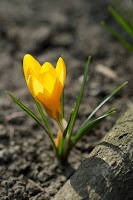
That is the point. From the ashes comes new life. It is a mark of our returning to God, as the reading from Joel depicts. It is our beginning again. At the end of the service, we will sing a hymn that is one of my favorites. It is not in our hymnal that we use every week. It is something new—a new reminder of the new life that we are offered each and every day. It speaks of this returning, of our realization that we have not been who God created us to be. We have not remembered our baptism; we have not loved our neighbors; we have lost perspective. But from the ashes comes life, renewal, recreation, a new heart now right and one with God. It is this, not that, the true counterpoint to what this world offers.

A Harmonious Counterpoint

There’s another definition for what a counterpoint is, though. In music, a counterpoint is the relationship between two or more voices that are independent from each other in contour and rhythm and yet are harmonically interdependent. The focus, then, is not on the differences between the two but, rather on the way they fit together, the way they are transformed into something new. As I realized this, I suddenly began to look at this Scripture differently. Perhaps Jesus was not telling his hearers to do this and not that; perhaps instead he was calling us to a different way, a new perspective in how we pray, how we fast, how we give offerings, and, most importantly how we live. After all, Jesus was not calling us to leave this world and all of its worldly entrapments, but to rather be instruments of transformation. Jesus was reminding us, like the ashes do, that we are human.

But Pierre Teilhard de Chardin contended that “we are not human beings having a spiritual experience. We are spiritual beings having a human experience.” The truth is, we need to be reminded every once in awhile that we are indeed human. But it is not merely a reminder that we are only human and in need of God’s love and forgiveness; it is also a glorious reminder that, as humans, we are indeed made in the image of God. We are indeed created as spiritual beings whose home is with God.

I’ve used this before on Ash Wednesday, but it’s such a great reminder, I couldn’t resist. A rabbi once told his disciples, “Everyone must have two pockets, with a note in each pocket, so that he or she can reach into the one or the other, depending on their needs. When feeling high and mighty one should reach into the left pocket, and find the words: “Ani eifer v’afar; I am dust and ashes. But when feeling lowly and depressed, discouraged or without hope, one should reach into the right pocket, and, there, find the words: “Bishvili nivra ha’olam…For my sake was the world created.”

It is the perfect counterpoint, a harmonious symphony. We are dust and ashes, dark remnants of something that once was. But even within those ashes are the imprints of new life. That seems to be God’s pattern. From endings and death, comes beginnings and new life. But as Leo Tolstoy once remarked, “there are many reasons for the failure to comprehend Christ’s teachings…but the chief cause which has engendered all these misconceptions is this: that Christ’s teaching is considered to be such that it cannot be accepted, or even not accepted, without changing one’s life.” New life, new beginnings, are not replays. They are brand new symphonies.

As you leave today with the mark of both death and life on your forehead, remember that there is always something more. The Kingdom of God has already come and yet there is much for us to do before it becomes what it was fully created to be. Many ask the question, “How long do I need to keep these ashes on my forehead?” “When can I wash it off?” In fact, it has been pointed out to me that it is odd to read warnings about practicing our piety for all to see and then marking ourselves in this way for all to see. You know, I’m clear that it doesn’t matter at all. It has nothing to do with anyone else. It’s not for show. It is just a reminder to you only of who you are and to whom you should return. It is a reminder to “repent and believe the gospel”. It is a reminder that there is always more to life than we thought but at the same time, we have to let go of what we thought. Let these ashes be an ending and a beginning, darkness and light, benediction and invitation, a counterpoint to what was and a harmonious overture to what comes next. So, wash your face when your heart is ready. Just don’t forget what it is like to be dust into which God has breathed life.

Let us now begin our journey to the Cross and follow the One who leads us down a different way.

Grace and Peace,

Shelli