This, Not That
We live in a world filled with choices. We live in a world where we are continuously bombarded by directives to buy this (not that), eat this (not that), drink this (not that), drive this (not that), wear this (not that), say this (not that), and do this (not that). To be honest it is completely overwhelming. There are so many competing voices vying for our loyalty that most of us easily lose perspective of what’s really important, what really matters in our lives. But perhaps it really is easier to know which way to go if someone tells us exactly what path should be taken, if someone points us ahead by saying “Go this way. Do not go this way.” Maybe that’s the point. Those who are vying for our attention have figured that out. By presenting counterpoints, contrasts or opposites, they are assuming that they are leaving us with no choice but to follow down the road that they want us to go.
It appears that Jesus is doing the same thing in the Gospel passage that we read. The words “do not” appear in the translation from which we read five different times: “Do not do something so that you are noticed when giving offerings,” “Do not let others know what you are doing when you give them,” “Do not pray so that others notice you,” “Do not call attention to yourself when you fast,” and (probably the most challenging for us twenty-first century hearers) “Do not store up or hoard your treasures or your wealth here on earth.” Jesus presents these directives as counterpoints. It’s like saying, “you know the way the world tells you to do things; do not do things that way. There is a better way.”
Intellectually, I think we as Christian hearers know that. We know that there are many things about our contemporary worldly lives that are not exactly in line with the Gospel of Jesus Christ. But change is hard. And, after all, we’re only human, right?
A Season for Change
But today we begin the journey of change. As we move from the season of Epiphany and the celebration of God’s light manifest in the world, we now begin the time when we are called to shift our own perspective and our own vision in relation to that light. This is the beginning of a time in which we are called to redirect our lives and realign them with what they are supposed to be, a time to look at what it is that fills our lives, at those things that we do, and at those things that we treasure. Because as we go along, it is so incredibly easy for us to become swept up into whatever it is that makes up our lives and somehow convince ourselves that that is what life is supposed to look like. We like having choices. Being directed toward “this and not that” is difficult. But, my friends, this is the season of change.
Lent, which, literally, means “springtime” is a time of nurturing and preparation. It is the great Christian festival of new life. It is a greening and bringing back to life of our souls. Going back to the fourth century, Lent was traditionally associated with penitence, fasting, almsgiving, and prayer. Lent, like springtime, is a time of growth and renewal and, yes, change. Our forty days of Lent are reminiscent of the forty trying days that Jesus spent in the dry and secluded wilderness as he readied himself for his ministry. In the same mode, the early church used Lent as a time to prepare believers for baptism, to prepare them to begin their walk with Christ. It is a time to allow God’s spirit to point out to you those habits, attitudes, and behaviors that may be blocking you from a deeper walk with God.
Joan Chittister says that “Lent is not an event. It is not something that happens to us. It is at most a microcosm of what turns out to be a lifelong journey to the center of the self. The purpose of Lent is to confront us with ourselves in a way that’s conscious and purposeful, that enables us to deal with the rest of life well.” Truth be known, Ash Wednesday invites us into what is for some of us some fearsome territory where we might find healing and renewal from those things that get in the way of the real “us” that we are called to be. It is not a day where we begin to deprive ourselves of things we need or even things we want; it is the point at which we begin to look at things differently. We are called to look at things through the heart of Christ rather than through the eyes of the world.
So on this day, as we begin this journey, we are called to repentance, to a turning around, to change. Think of it, though, as a threshold that begins a journey into new life, a window to a new way of seeing, and a doorway to a new way of being. It is the day when we finally tell ourselves “not that, but this.”—this way of life to which Jesus calls us, a way of recreation and renewal. And it is the day when we finally admit that we cannot do it alone.
A Parody of Life
To the rest of the world, I suppose this practice of putting ashes on our foreheads is extremely odd. Who are we kidding? If we back away from the ritual of this day, most of US would probably think this practice is extremely odd. Because, once again, in the big scheme of what the world has laid out as normal, being Christian, following Christ, is probably just odd.
In fact, even in the first century setting in which these words were heard, what Jesus says is almost a parody of life. Think about it. These good, righteous people were told their whole life to act righteous, to show themselves holy, to set themselves apart. They were told that part of penitence was letting others see that they were penitent. It was who they were; it was part of their identity. But Jesus is telling them, “No, that’s not it. Righteousness has nothing to do with what you look like to others. It has nothing to do with proving yourself good or righteous. It simply has to do with quietly and inconspicuously turning toward God so that you are no longer seen. It has to do with changing your life so that when people look at you, they do not see what you are doing for God in your life; rather, they see the very image of Christ in you.
This passage is indeed a parody of life. It presents a counterpoint to what we humans have figured out life should be. And at its deepest meaning, it is not merely calling us to a different way of acting or a new way of doing things. It is instead a call to in essence die to oneself that we might become one with God.
And From the Ashes…
Hence, the ashes. Ashes have traditionally been a sign of repentance and mourning. They inherently represent the passing of something—a tree that once grew tall, a house destroyed by fire, a once-vibrant city now a victim of volcanic eruption. Historically, the ashes used on Ash Wednesday were burned palms of last year’s Palm Sunday. They carried the reminder of all those grandiose hopes and triumphal offerings that without the proper perspective can in just a short time turn easily turn to betrayal, persecution, and even death. Ashes represent what is left when all that we know, all that we have built, all that we hold dear is gone. It is a reminder that nothing really matters unless it is part of our returning to God.
And so, traditionally, the sign of the cross was made with ashes on the forehead. The traditional wording, “remember that you are dust, and to dust you shall return,” evokes the story of our creation in the second chapter of Genesis: “and the Lord God formed humanity from the dust of the ground, and breathed into humanity’s nostrils the breath of life, and humanity became a living being.” Instead of this wording, we usually say the words, “repent, and believe the Gospel.” The meaning is similar: “Turn, turn back toward God and toward what you were created to be and believe in the good news that is Christ, that takes you forward to new life.”
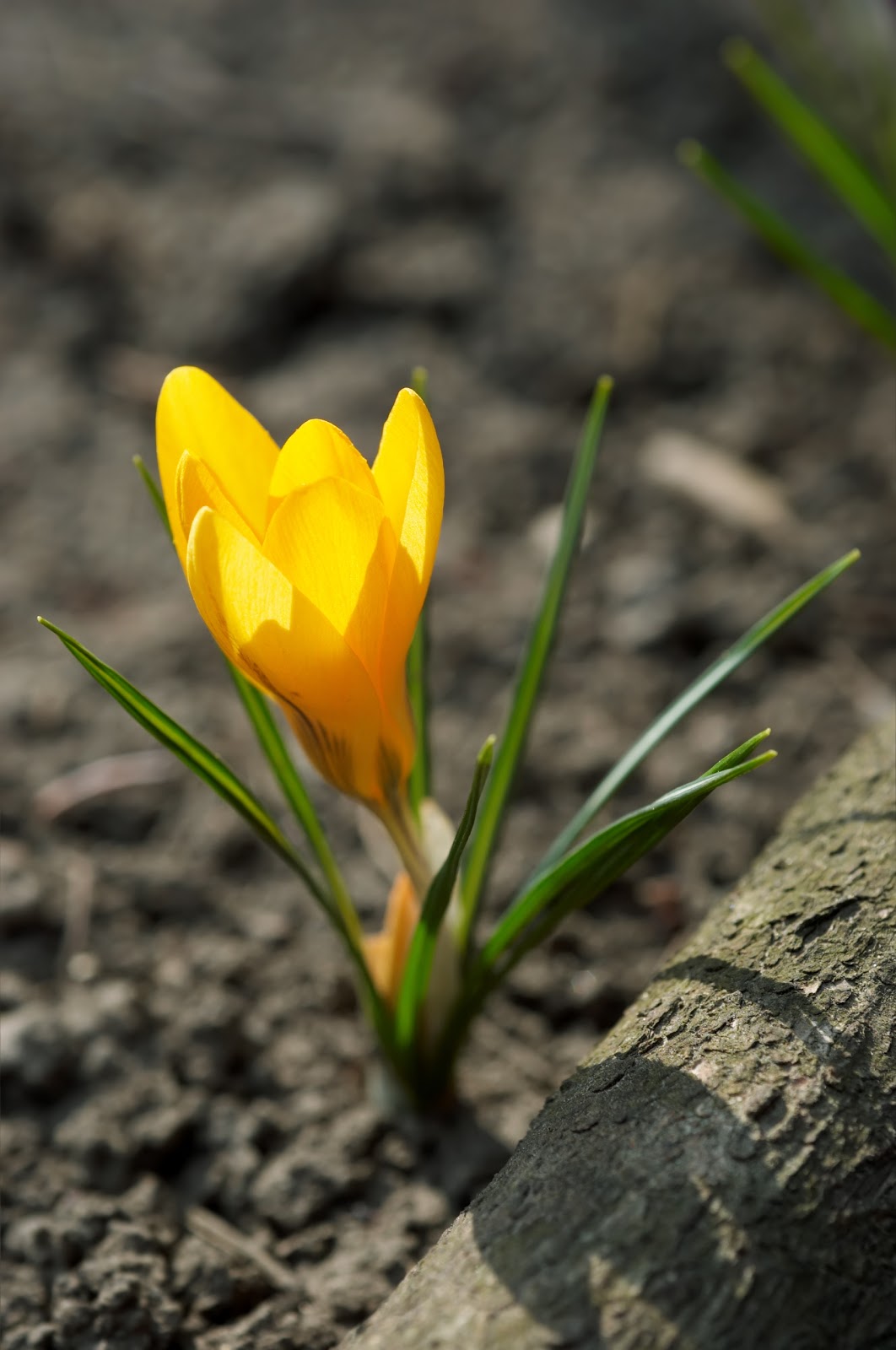
That is the point. From the ashes comes new life. It is a mark of our returning to God, as the reading from Joel depicts. It is our beginning again. At the end of the service, we will sing a hymn that is one of my favorites. It is not in our hymnal that we use every week. It is something new—a new reminder of the new life that we are offered each and every day. It speaks of this returning, of our realization that we have not been who God created us to be. We have not remembered our baptism; we have not loved our neighbors; we have lost perspective. But from the ashes comes life, renewal, recreation, a new heart now right and one with God. It is this, not that, the true counterpoint to what this world offers.
A Harmonious Counterpoint
There’s another definition for what a counterpoint is, though. In music, a counterpoint is the relationship between two or more voices that are independent from each other in contour and rhythm and yet are harmonically interdependent. The focus, then, is not on the differences between the two but, rather on the way they fit together, the way they are transformed into something new. As I realized this, I suddenly began to look at this Scripture differently. Perhaps Jesus was not telling his hearers to do this and not that; perhaps instead he was calling us to a different way, a new perspective in how we pray, how we fast, how we give offerings, and, most importantly how we live. After all, Jesus was not calling us to leave this world and all of its worldly entrapments, but to rather be instruments of transformation. Jesus was reminding us, like the ashes do, that we are human.
But Pierre Teilhard de Chardin contended that “we are not human beings having a spiritual experience. We are spiritual beings having a human experience.” The truth is, we need to be reminded every once in awhile that we are indeed human. But it is not merely a reminder that we are only human and in need of God’s love and forgiveness; it is also a glorious reminder that, as humans, we are indeed made in the image of God. We are indeed created as spiritual beings whose home is with God.
I’ve used this before on Ash Wednesday, but it’s such a great reminder, I couldn’t resist. A rabbi once told his disciples, “Everyone must have two pockets, with a note in each pocket, so that he or she can reach into the one or the other, depending on their needs. When feeling high and mighty one should reach into the left pocket, and find the words: “Ani eifer v’afar; I am dust and ashes. But when feeling lowly and depressed, discouraged or without hope, one should reach into the right pocket, and, there, find the words: “Bishvili nivra ha’olam…For my sake was the world created.”
It is the perfect counterpoint, a harmonious symphony. We are dust and ashes, dark remnants of something that once was. But even within those ashes are the imprints of new life. That seems to be God’s pattern. From endings and death, comes beginnings and new life. But as Leo Tolstoy once remarked, “there are many reasons for the failure to comprehend Christ’s teachings…but the chief cause which has engendered all these misconceptions is this: that Christ’s teaching is considered to be such that it cannot be accepted, or even not accepted, without changing one’s life.” New life, new beginnings, are not replays. They are brand new symphonies.
As you leave today with the mark of both death and life on your forehead, remember that there is always something more. The Kingdom of God has already come and yet there is much for us to do before it becomes what it was fully created to be. Many ask the question, “How long do I need to keep these ashes on my forehead?” “When can I wash it off?” In fact, it has been pointed out to me that it is odd to read warnings about practicing our piety for all to see and then marking ourselves in this way for all to see. You know, I’m clear that it doesn’t matter at all. It has nothing to do with anyone else. It’s not for show. It is just a reminder to you only of who you are and to whom you should return. It is a reminder to “repent and believe the gospel”. It is a reminder that there is always more to life than we thought but at the same time, we have to let go of what we thought. Let these ashes be an ending and a beginning, darkness and light, benediction and invitation, a counterpoint to what was and a harmonious overture to what comes next. So, wash your face when your heart is ready. Just don’t forget what it is like to be dust into which God has breathed life.
Let us now begin our journey to the Cross and follow the One who leads us down a different way.
Grace and Peace,
Shelli


 Dancing to God