STATION IV: Jesus Meets His Mother

Before the station, pray: I adore you, O Christ, and I bless you, because by your holy cross, you have redeemed the world.

Read Luke 1: 35-55

The angel said to her, “The Holy Spirit will come upon you, and the power of the Most High will overshadow you; therefore the child to be born will be holy; he will be called Son of God.”…Blessed are you among women, and blessed is the fruit of your womb.

She loved her son…loved him with the deepest love that any mother would. After all, this was the child that she carried in her womb, birthed into the world in the rough hues of that cold desert night shielded only by a stable, or a cave, or a grotto, or something of the like. This was the child that she nurtured and saw grow into a successful young man. And now here he is…carrying the cross like a common criminal…bleeding and exhausted…but she is held back from approaching him. What she is called to do is atrocious. She must give him up.

But what about God? This is God’s child—one that God created and loved and with perfect love gave him to the world as a part of Godself. And this perfect love, this part of God, is being rejected by those to whom he was given.

But even in this we are called to forgiveness, the forgiveness that God showed us through the deepest love of a mother’s heart. Father, forgive.

Jesus, may your love, and that of your mother, be the spark of my zeal in the cause of spreading justice and peace throughout the human family. In the name of the One who brings all unity. Amen.

STATION III: Jesus Falls the First Time

Before the station, pray: We adore you, O Christ, and we bless you, because by your holy cross, you have redeemed the world.

Read Matthew 27: 27-31
Then the soldiers of the governor took Jesus into the governor’s headquarters, and they gathered the whole cohort around him. They stripped him and put a scarlet robe on him, and after twisting some thorns into a crown, they put it on his head. They put a reed in his right hand and knelt before him and mocked him, saying, “Hail, King of the Jews!” They spat on him, and took the reed and struck him on the head. After mocking him, they stripped him of the robe and put his own clothes on him. Then they led him away to crucify him.

Jesus was exhausted and trembling under the weight of the cross-beam. He could not take it any longer and fell to the ground, face down in the dust and dirt of the well-traveled path. Someone jerked him up from his moment’s rest and prodded him on. And the world stands and watches, seemingly unmoved by the visceral treatment of one who was once so renowned. “Hail, King of the Jews”, now fallen, now face down in the dust and dirt of the well-traveled path.

Where are we? Do we lay there in the pathway of forgotten footprints? Do we stand by the sidelines too afraid to move? We must get up and get going. It is time to follow. Father, forgive.

Jesus, may your courage be my stamina for getting up again and again, realizing that only the weak fall once. In the name of the One who raises me up on eagle’s wings. Amen.

Patiently Waiting

Today’s Lectionary Scriptures:
         Joshua 5: 9-12
         2 Corinthians 5: 15-21
         Luke 15: 1-3, 11b-32

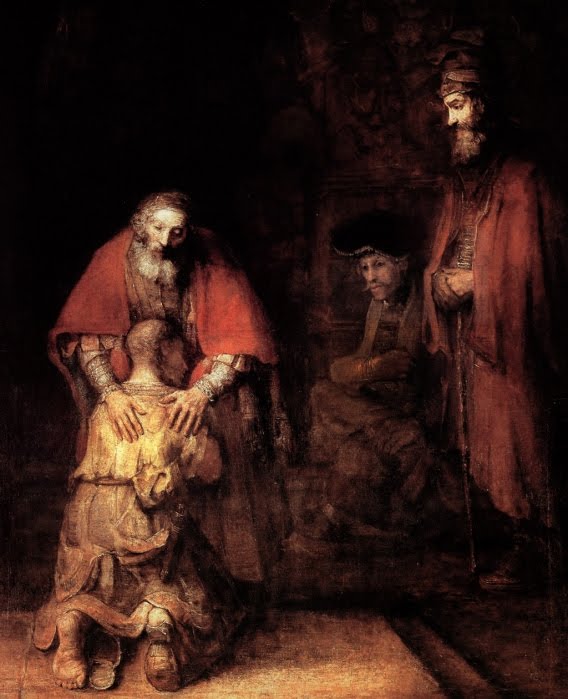
Today’s Gospel passage is a familiar one.  The story of the two sons and their father is one of our favorites.  It reminds us that no matter how prodigal we may be, God always welcomes us home.  We like this story.  It gives us an assurance to which we can cling even in the most distant countries of our lives.  We take comfort in its themes of forgiveness and reconciliation no matter what we do.

But I want to back up a minute.  Today’s prescribed lectionary starts at the beginning of the fifteenth chapter of Luke and then it skips several verses.  I think those verses are important for the context of our story.  First Jesus tells of a lost sheep and the rejoicing of the master at its finding.  Following that is the account of a woman who loses a coin.  And now this…a father loses his most precious thing–his son and then rejoices at his finding.  But notice that the father does not go in search of the son the way the other two did.  When a coin is lost, the owner searches for it to bring its home.  As important as it obviously is to the owner, it is still an inanimate object.  The coin cannot choose to come home.  And the sheep, while a living being, does not possess the gift of free will.  The sheep will follow when its master comes to find it.  But the son is different.  The father does not stop what he’s doing and leave the older son and his property and home behind to chase after him.  The son, as opposed to the coin and the sheep, must choose to come home.

 Perhaps the point of this familiar story is not simply that God forgives us; perhaps the point is that we must choose to come home.  After all, God’s forgiveness, grace, and unconditional love are always there for us whether or not we choose to claim them.  Our journey of faith is not about God finding us but, rather, about our return to God.  I don’t think these are three related stories of loss and finding.  I think that instead the first two point to the third.  God’s deepest desire is that we are indeed all found.  But God, filled with love and compassion, is patiently waiting for us to decide once and for our deepest desire is to return home.

Grace and Peace,

Shelli

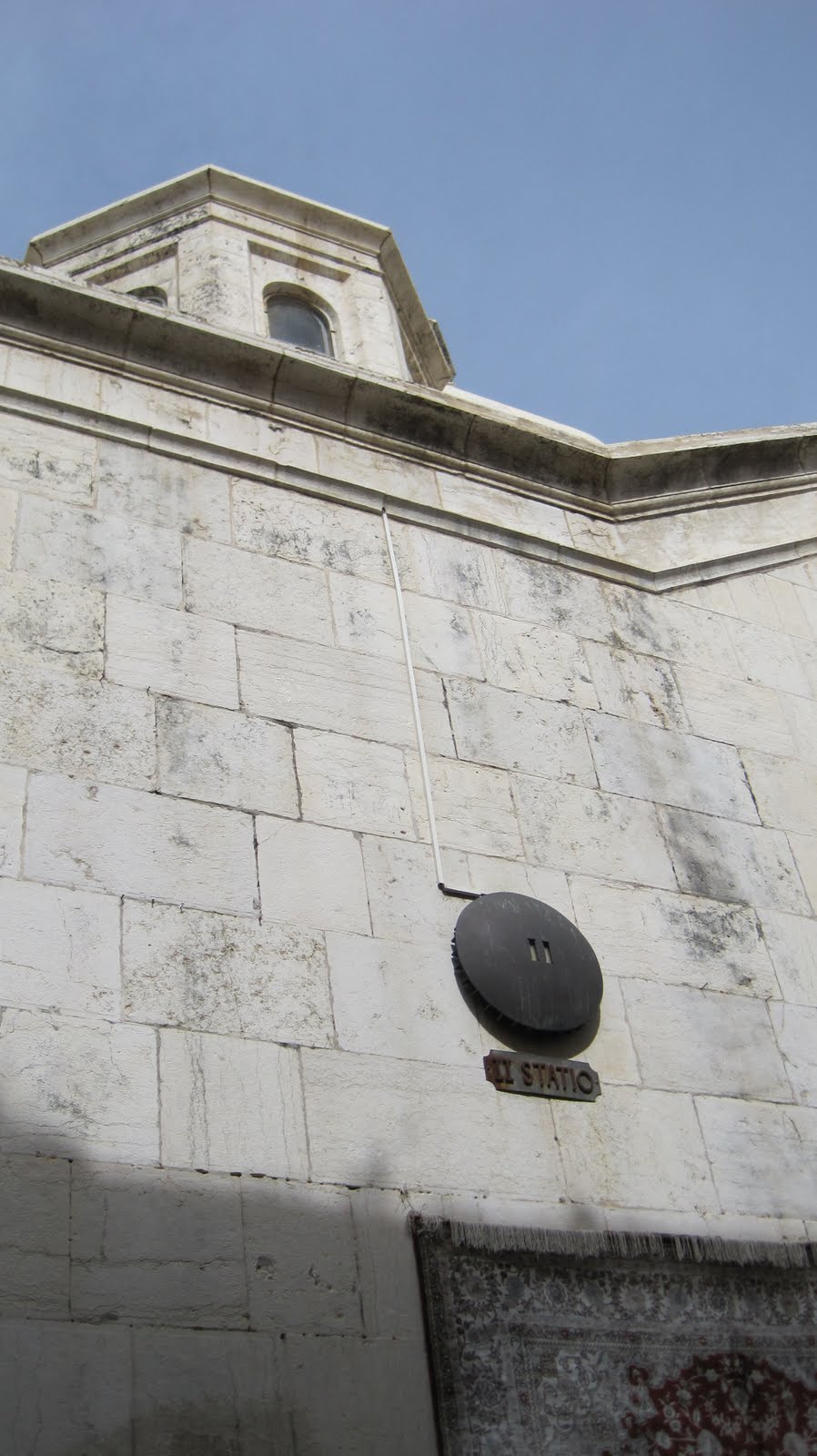
STATION II: Jesus Takes Up His Cross

Before the station, pray: I adore you, O Christ, and I bless you, because by your holy cross, you have redeemed the world.

Read John 19: 16-17
Then he handed him over to them to be crucified. So they took Jesus; and carrying the cross by himself, he went out to what is called The Place of the Skull, which in Hebrew is called Golgotha.

And Jesus, carrying his own cross, starts his “Way of the Cross”. Weak and alone, but with great dignity, Jesus emerges from the fortress. And yet…there was so much that he still had to accomplish. It was almost too great to bear.

This wooden cross was a tree—a tree that God created, that God nurtured, that God showered with the joy of life—a tree that would become the instrument of Christ’s death. We are asked, then, to bear the cross, to bear the instrument of death. We are asked to bear life.

Sadhu Sundar Singh says that “if we do not bear the cross of the Master, we will have to bear the cross of the world, with all of its earthly goods.” Which cross is yours to bear? Father, forgive.

Jesus, may your willingness to carry your cross be my strength in losing my life that I may find it. In the name of the One who bears all things. Amen.

STATION I: Jesus is Condemned to Death

Before the station, pray: I adore you, O Christ, and I bless you, because by your holy cross, you have redeemed the world.

Read Luke 23: 1-24
Pilate then called together the chief priests, the leaders, and the people, and he said to them, “You brought me this man as one who was perverting the people; and here I have examined him in your presence and have not found this man guilty of any of your charges against him.”…”Crucify, crucify him!”…So Pilate gave his verdict that their demand should be granted.

Jesus is the victim of the consummate power struggle, conflicting purposes that are exacerbated by the personalities and fears of those involved. The person whose life is at stake seems to be ignored. And justice fails. The truth is, Jesus stands for all those things that are different from what we know. Jesus says those things that the world does not want to hear. He speaks against the status quo. He speaks for those rejected and cast aside by acceptable society. Jesus creates chaos in the midst of our orderly lives. He must be silenced.

Oh, we stand in awe of these convictions. We are amazed that someone has the courage to look into the face of death and, without fear, say nothing. And yet many of us are silenced by our fears and our anxieties and our attempts to maintain our carefully preserved lives.

And now he stands…in silence. “And darkness covered the face of the deep.” (Gen. 1:2a). Father, forgive.

Jesus, true and silent victim, let the power of your life, the beauty of your silence, be my courage. In the name of the One who redeems me. Amen.

The Way of the Cross

In this season of Lent, we are called to deepen our own walk with Christ. This means moving beyond what Christ does for us. This means entering the Way of Christ itself, the Way of the Cross. It means experiencing on the deepest Christ’s dying, so that we can experience on the deepest level, Christ’s rising. It means moving from being an observer to being a participant with Christ.

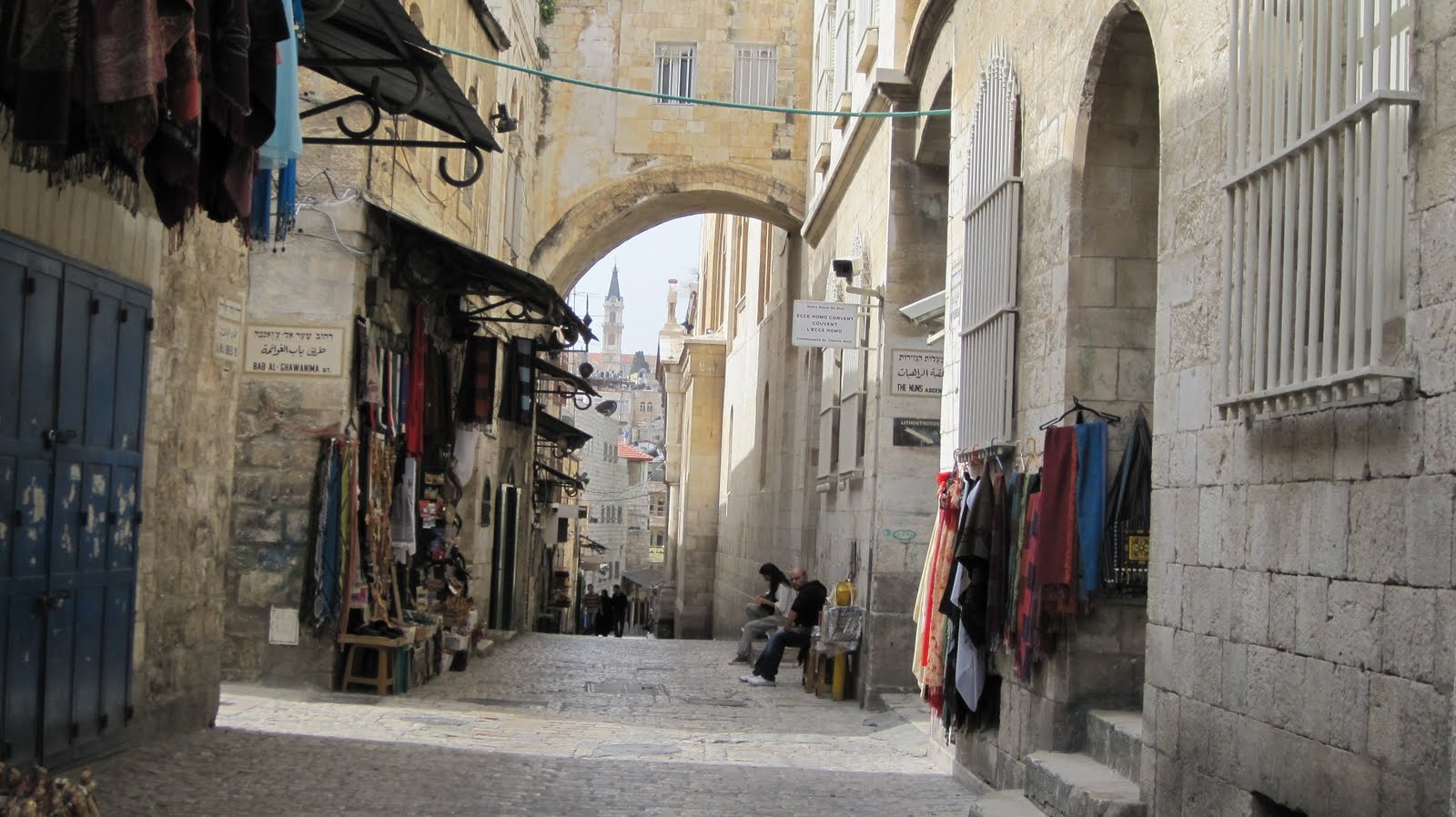
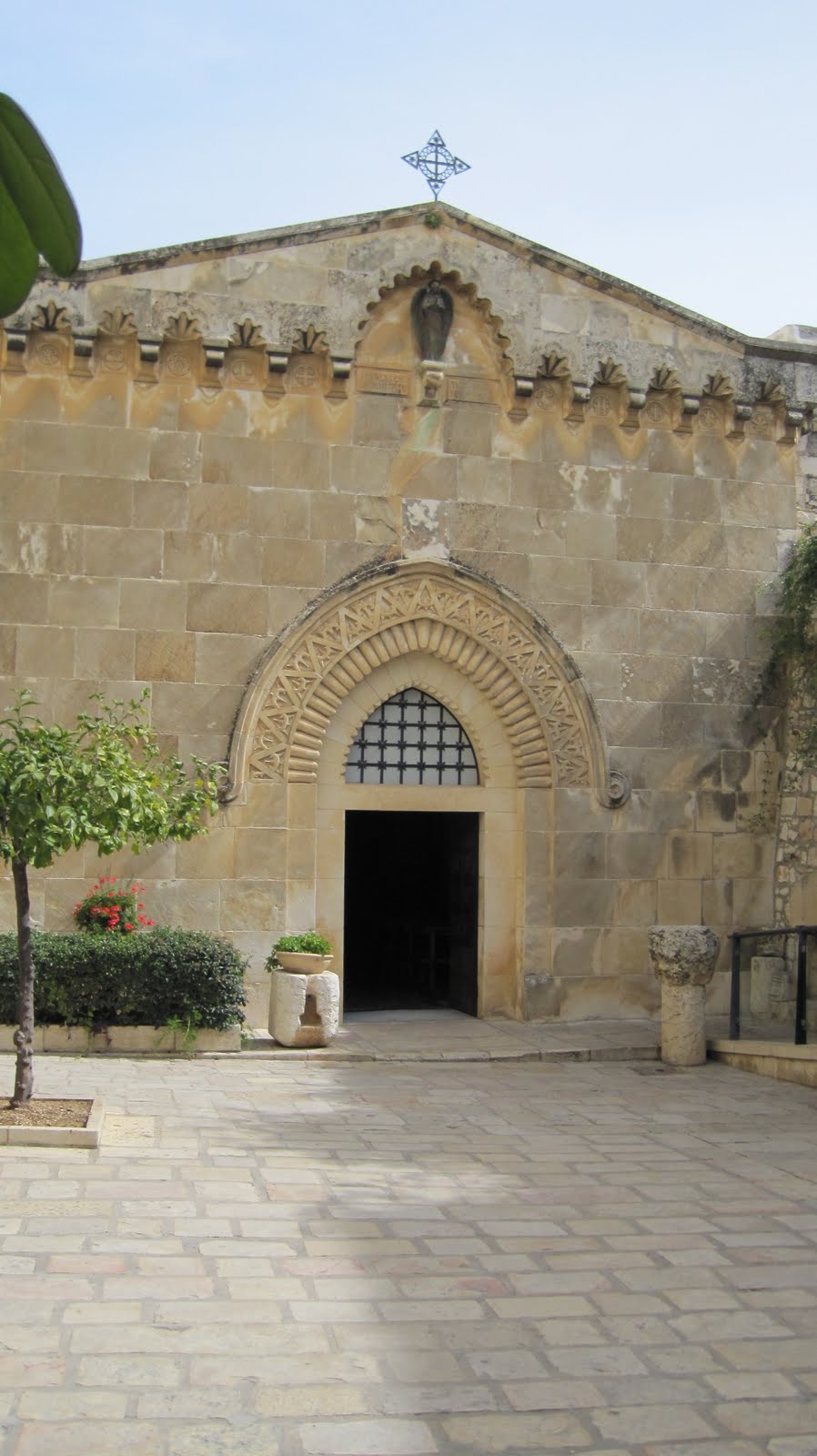
The Stations of the Cross generally refers to a devotion that originated in the 4th century when pilgrims flocked to the Holy Land from all parts of the world to visit the land of Jesus. When they got there, the most popular place visited was the Church of the Holy Sepulchre, which had been built by the Emperor Constantine in 335 A.D. over what was believed to be the tomb of Jesus. Over the years, the route of pilgrim processions—beginning at the ruins of the Fortress Antonia near the Church of the Flagellation (pictured) and ending at the Church of the Holy Sepulchre (the tomb)—was accepted as the way that Jesus had walked to his death. It became known as the “Via Dolorosa”, the “Sorrowful Way”, or “Way of the Cross”.

The Via Dolorosa marks the path Jesus traveled as he carried the cross from the place he was sentenced to the place of his resurrection. Through the years, “stations” developed as early pilgrims honored places where events were likely to have taken place. Many of these stations are only a guess since the Jerusalem of Jesus’ day was almost completely destroyed by the Roman armies in 70 AD. But since the majority of Christians throughout the world could not journey to Jerusalem to walk the Via Dolorosa, the Stations became a spiritual tool that would give them an opportunity for a “mini-pilgrimage”. It became a way for every Christian to enter that Holy Walk, the “Way of the Cross”, the way that takes us through the sorrows and despair of Holy Week that we, too, might emerge victorious in the glory of the Resurrection.

So, walk this way. It may not be easy or pleasant or calming to the soul. But by walking the Way of Sorrows, by entering the walk that Christ walked, one will truly encounter the incredible Feast of Joy. Begin your walk with the prayer below and then, as you walk, stop and gaze upon each station. Say the prayer of contemplation. And look…Think about what it means. Place yourself in its center. And when you are ready, move on…The Path is yours to walk. This is the Way of the Cross.

Lord Jesus Christ, take me along that holy way you once took to your death; Take my mind, my memory, above all my reluctant heart, and let me see what once you did for love of me and all the world.  Amen.  (From Victor Hoagland, C.P., “The Stations of the Cross and Other Devotions to the Passion”, available at http://www.cptryon.org/prayer/xstations/egeria.html, accessed 10 February, 2008.) 

Believing in Trust

“Trust” and “Belief” are interesting terms.  Are they the same?  If not, what is the difference?  We are told to “just believe”, as if that will make everything alright, as if that will somehow make us worthy or deserving of God’s attention.  What does that mean?  Believe in what???  Believing is an odd thing.  It moves us beyond where we are, beyond ourselves.  Believing in God means that we realize that God exists, that God is part of our lives, that we need God.  And yet, believing, in and of itself, means that on some level, we have systemitized our understanding of God (or, for that matter, whatever it is in which we claim that we believe).  Once we “believe”, we have in some way locked in our understanding of something.  So, for us God-believers, God has become our own doing, our own creation, our own imagining of how God works and who God is.  In some way, to say “I believe….” is to affirm, yes…to confess, yes…and to claim it as part of who we are, yes.  But saying those words also means that we have in that moment boxed God in to who we think God is.

Why can’t we just trust in God?  Why can’t I just trust in however and whoever God manifests Godself in my life?  God is God.  Why is that so hard to trust?  You see, when you get right down to it, God is not really something that can be defined, or systematized, or limited to my belief system.  Sure, God is comfortable and reliable and one on whom we can count to set our lives on track.  Thanks be to God!  But, God is also wild and unfathomable, unpredictable and imaginative and one on whom we can count on to throw our carefully-cultivated and perfectly-planned lives into a complete and unadulaterated tailspin.  Thanks be to God!

You see, there is a difference between believing in who you think God is and trusting in God who is.  God is beyond who we can imagine in our dreams.  God is beyond who we can claim as our belief.  And God is beyond what we have planned and cultivated and saved for the certainty in our lives.  God is God.  Nothing else.  Why is trusting in God so hard?  Because to trust in something, we have to surrender to the idea that it’s more than what we’re capable of conceiving.  Trust in God…and be surprised at what you find!  Trust in God…and find that in which you should have always believed.

Grace and Peace,

Shelli

Picture:  Jerusalem, Israel, 2010